
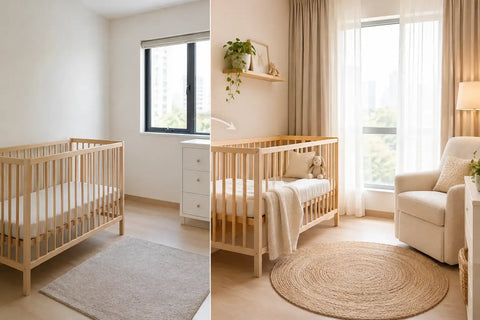
A spare room can feel surprisingly tight once a cot, changing area, storage and a comfortable chair all compete for space. This small nursery makeover example shows how a compact room can feel calm and considered without filling every corner with baby furniture.
The aim is not to create a picture-perfect room that only works for the first few weeks. It is to create a practical space that supports feeding, changing, settling and everyday tidying, while leaving enough visual breathing room for parents too.
The starting point: a compact room with one clear purpose
Imagine a nursery measuring around 2.4 by 3 metres, with a window on one short wall and the door opening inwards from the opposite side. It has just enough floor area for the essentials, but not enough for oversized furniture or several decorative zones.
Rather than trying to fit in every item that may be useful one day, start with the routines that happen there most often. For many families, that means sleep, changing, dressing and a little quiet time. Floor play may happen elsewhere in the home at first, especially when space is limited.
This approach makes decisions easier. Each piece needs a job, and ideally more than one. A chest of drawers can support a changing mat. A supportive chair can be used for feeds, cuddles and story time. Storage baskets can hold daily supplies now, then toys later.
A small nursery makeover example, zone by zone
The most effective layout places the cot along the longest solid wall, away from direct window coverings and without blocking the door swing. Keeping this wall visually simple gives the room a restful focal point. Choose a cot size that suits the room, and follow the manufacturer's instructions for assembly, mattress fit and use.
Opposite the cot, a low chest of drawers creates a changing station. This is usually more useful than a dedicated changing table in a small room because it remains valuable as the child grows. Keep the top clear apart from the changing mat and a compact basket for immediate essentials. Nappies, wipes and spare clothing can sit inside the top drawer, within easy reach for the adult but neatly out of sight.
A chair belongs near the window if the position allows a clear route around the room. Natural light makes the space pleasant during daytime feeds, but a blind or curtain that suits the room can help soften bright light when needed. A small side table beside the chair is enough for a water bottle, burp cloth and book. There is no need for a large nursing corner when the room cannot comfortably carry one.
The centre of the room stays deliberately open. That open patch of floor is what stops a small nursery from feeling like a storage cupboard. It also makes everyday movement simpler when carrying a baby, using a laundry basket or changing bedding.
Build the room around daily reach
In a compact nursery, the difference between peaceful and frustrating is often where the small things live. The most-used items should be available with one hand, while occasional items can go higher up or into deeper drawers.
Set up the changing drawer in simple groups: nappies and wipes in one section, clean bodysuits and sleepsuits in another, then muslins, socks and spare sheets below. Drawer organisers are helpful, but they do not need to be elaborate. Small fabric boxes or dividers are often enough to prevent the familiar pile of tiny clothes becoming unmanageable.
Use the wardrobe for the next size up, seasonal clothing and items that do not need daily access. If a built-in wardrobe is already in the room, make it work harder with shelf baskets and labelled containers. There is no need to buy a freestanding wardrobe simply to make the nursery look complete.
A narrow basket beside the chair can hold a few regular-use items. Keep it edited. When it becomes a place for every loose item in the home, it quickly adds visual clutter. A separate lidded laundry basket also helps, particularly in a small room where a pile of washing is always noticeable.
Choose a calm palette, then add warmth carefully
Neutral does not have to mean bland. In this makeover, the walls are kept in a soft warm white, with pale oak or light wood furniture adding warmth. The textiles introduce gentle character: perhaps oatmeal curtains, a muted sage storage basket and one small framed print.
A limited palette makes a compact room feel more connected. Choose two or three main tones and repeat them quietly through the room. For example, warm white, natural wood and soft green work well together. If you prefer more colour, use it in removable pieces such as bedding, a lampshade or artwork rather than committing every surface to a theme.
Pattern is best used with restraint. One patterned curtain or rug can bring personality, while several competing prints can make a small nursery feel busy. The same applies to wall décor. A single picture at adult eye level may have more impact than a gallery wall squeezed above every piece of furniture.
Lighting deserves attention too. A ceiling light is useful for general tasks, but a small lamp can make evening care feel less stark. Select lighting that is suitable for its intended use, position cords thoughtfully and keep the layout straightforward.
Buy for the room you have, not the nursery you saved online
Many nursery images are designed around generous rooms. They may include a full-size cot, changing unit, rocking chair, bookcase, toy storage, large rug and decorative shelving. In a smaller Singapore bedroom, trying to recreate that exact look can make the room harder to use.
Measure before buying anything substantial. Note the door swing, window position, skirting, plug points and built-in cupboards. Then mark the footprint of key furniture on the floor with masking tape. This simple step reveals whether there is enough room to open drawers, walk around the cot and use the chair comfortably.
It also helps to think beyond the newborn stage. A changing unit with a fixed top may suit the first months, while a dresser with a removable changing mat can continue serving the room later. Open shelving may look light and airy, but closed drawers often make more sense for families who prefer a calmer view at the end of a busy day.
There are trade-offs. A larger cot may offer longer-term use, but it can dominate a very small room. A compact option may preserve floor space, but parents should consider how long it will suit their family and check the relevant product guidance before purchasing. The right choice depends on the room, budget and how the household uses its space.
Keep decoration useful, not just pretty
The finishing layer should make the nursery feel personal without creating more to dust, move or store. A framed family photograph, a soft-textured curtain and a favourite book displayed on the dresser can be enough. Choose pieces that are easy to clean and unlikely to crowd the surfaces you need every day.
Avoid treating every empty wall as a problem to solve. Empty space can be part of the design, especially in a room where rest and routine matter. The nursery will naturally gain personality over time through books, clothes, gifts and the small objects that become part of family life.
Make room for change
A well-planned nursery does not need to stay frozen in its original layout. As routines change, the chair may move to another room, the changing mat may come off the dresser and the lower drawers may begin to hold toys instead of nappies. Planning for that shift makes the initial investment feel more considered.
Before calling the room finished, stand at the door and look for one thing to remove. It might be an extra basket, a decorative stool or a piece of furniture bought out of habit rather than need. In a small nursery, a little space left open is not missing something. It is often what makes the room work beautifully every day.