
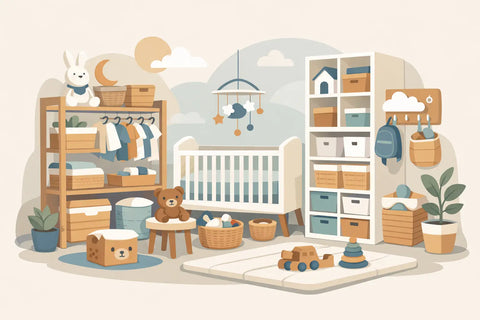
The first week home with a newborn has a way of making every surface disappear. One minute the nursery feels calm and beautifully prepared, and the next it is covered with muslins, nappies, creams, spare sleepsuits and half-open packets of wipes. The best nursery storage solutions do not simply hide the mess. They make daily care easier, keep essentials within reach, and help the room stay safe as your baby grows.
For most families in Singapore, space is part of the decision. Nurseries are often compact, and many parents are working with one bedroom, a shared room, or a corner of the master bedroom before moving into a dedicated baby space. That means storage has to work harder. It needs to be practical, easy to clean, and visually calm enough to suit a modern home.
What makes the best nursery storage solutions work
Good nursery storage should support the way parents actually move through the day. During nappy changes, you need wipes, nappies, cream and a spare outfit close by. At bedtime, swaddles, sleep bags and soft lighting matter more than decorative baskets on a high shelf. Later on, when your child becomes mobile, safety and easy access become far more important than styling alone.
That is why the best approach usually combines closed storage with open access. Closed drawers or cabinets help the room look tidy and reduce dust on folded clothes and linens. Open trays, caddies or top shelves are useful for the items you use repeatedly. If everything is hidden away, daily care becomes awkward. If everything is left out, the room quickly feels cluttered.
Materials matter too. In a baby’s room, storage is handled constantly, wiped often and expected to last through spills, humidity and routine cleaning. Smooth finishes, sturdy construction and non-toxic materials are worth prioritising. A cheaper unit may look similar at first glance, but unstable frames, sharp corners or poor drawer runners can become frustrating very quickly.
Start with a changing station that doubles as storage
If there is one piece that earns its place every day, it is the changing station. A well-designed unit gives you a safe changing surface while storing the products you reach for most often. This is especially useful in smaller nurseries, where every piece of furniture needs more than one function.
Drawers are usually the strongest option for this zone because they keep supplies clean and tidy. The top drawer can hold nappies, wipes and creams, while lower drawers store extra bedding, muslin cloths and changes of clothes. Open shelves can also work, but they require more discipline to keep neat and may collect dust more easily.
The trade-off is footprint. A full changing unit takes up more floor space than a portable mat on a dresser. However, many parents find that the convenience of having everything in one place makes it worthwhile, especially in the first year. If you choose this route, look for a stable, well-finished piece with a layout that still works once the changing stage has passed.
Use drawer storage for clothing, not just folded piles
Baby clothes are small, but they create surprising visual clutter. Tiny socks, bibs, mittens and vests vanish into larger wardrobes unless they are separated properly. Deep drawers with dividers tend to work better than hanging rails for everyday baby clothing, simply because most items are lightweight and easier to fold than hang.
A chest of drawers can hold far more than many parents expect. One drawer for sleepsuits, one for vests, one for towels and cloths, and one for larger sizes waiting ahead can keep the whole nursery running smoothly. Dividers make a real difference here. Without them, drawers become mixed within days.
If you prefer a wardrobe, try combining hanging space for occasionwear or outer layers with lower drawers or boxes for daily essentials. That gives you a more flexible system, though it can take up more visual space in a small room.
Wall shelves are useful, but placement is everything
Shelving is often one of the best nursery storage solutions for compact spaces because it uses vertical room without reducing floor area. Used well, shelves hold books, keepsakes, folded blankets or decorative pieces that make the nursery feel finished.
Used badly, they become either unsafe or inconvenient. Shelves should never be positioned where items can be pulled down into the cot or changing area, and they should be securely fixed. This is not the place for makeshift installations. In a nursery, safety always comes before styling.
Higher shelves are ideal for infrequently used items such as larger packs of nappies, spare toiletries or memory boxes. Lower shelves can work for books or soft toys once your child is older, but in the newborn stage they are often better kept simple and uncluttered.
Baskets and caddies help with the daily rush
Soft baskets and portable caddies are not the main storage system, but they are excellent support pieces. They help group the small, easy-to-lose essentials that tend to migrate around the home. A caddy by the changing station, one near the sofa, or a basket for bath products can save time and reduce stress during busy moments.
This is where many nurseries become more functional with very little effort. Instead of keeping wipes in one drawer, creams in another place and muslins somewhere else entirely, you create small zones that reflect your routine. It is a simple idea, but one that works particularly well for newborn care.
The limitation is that baskets can start to look untidy if overfilled. They are best for soft items and daily supplies rather than heavy or mixed-use storage. Choosing matching textures or colours also helps the room feel coordinated rather than improvised.
Toy storage should be simple from the start
Even before your baby has a full collection of toys, it helps to plan for them. Gifts arrive early, and developmental toys, books and comfort items quickly build up. The best nursery storage solutions anticipate this growth instead of waiting for clutter to appear.
Low toy bins or lidded boxes can work well, but avoid heavy lids or complicated mechanisms. As your child becomes more active, easy-open storage is safer and encourages independence. Open bins are practical, although they look neater if you limit how many are on display.
If the nursery also includes a play area, choose storage that sits neatly alongside it rather than competing with it. Many parents prefer furniture and accessories that match the room’s overall design language, especially in modern interiors where the nursery is visible from other parts of the home.
Under-cot and under-bed space can be useful, with limits
Hidden storage under furniture sounds like the perfect answer for a smaller room, and sometimes it is. Spare sheets, unopened nappies, larger clothes sizes and less-used blankets can all be stored neatly in shallow containers below a cot or bed.
That said, this should be backup storage, not your main system. If you need to bend down and pull a box out every time you change your baby, the setup will soon feel inconvenient. Under-furniture storage is best for overflow, stock and seasonal items rather than everyday essentials.
It is also worth being realistic about dust. In a nursery, anything stored low to the floor should be contained properly and easy to wipe clean.
Matching storage to your nursery style matters more than it seems
Parents often think of storage as a purely practical decision, but design has a real effect on how a nursery feels. Calm, coordinated furniture can make even a small room feel more spacious and settled. In contrast, a mix of mismatched boxes, bulky organisers and bright plastic tubs can make the same room feel busy.
This does not mean every item needs to be identical. It means choosing storage with a clear direction - clean lines, soft tones, durable finishes and shapes that suit the room rather than overwhelm it. Scandinavian-inspired nursery furniture remains popular for good reason. It tends to balance warmth, simplicity and function, which is exactly what many young families want.
A specialist nursery retailer such as RaaB Family understands this balance well. Parents are not only looking for somewhere to put baby things. They are building a room that feels safe, comfortable and easy to live with every day.
How to choose the right setup for your home
If you are furnishing from scratch, start with the furniture that handles the biggest daily tasks: a cot, a changing station or dresser, and one main clothing storage piece. Then add secondary storage only where a genuine gap remains. This prevents the nursery from becoming overfilled before the baby even arrives.
If the room is already small, choose fewer, better pieces. A multi-function unit with drawers is often more useful than several smaller organisers. If you have more space, you can be more flexible with wardrobes, toy units and shelving.
Think ahead as well. The best nursery storage solutions are not only good for the newborn months. They still make sense when your baby becomes a toddler and the room needs to handle books, toys, larger clothing and a more active daily rhythm.
A well-organised nursery should feel reassuring, not rigid. When storage is safe, thoughtfully placed and easy to maintain, the room works harder for you - and that gives you more attention for the moments that matter.