
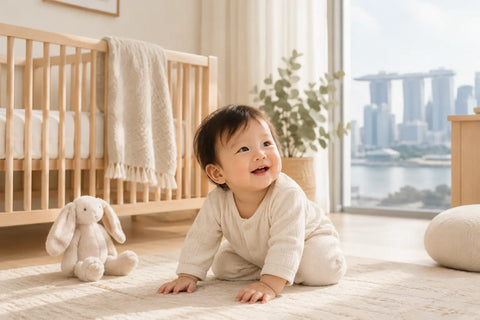
A nursery in Singapore often has to work harder than it looks. It may sit within a compact flat, share space with a home office, or need to change quickly as a baby becomes a busy toddler. That is why Singapore nursery trends are moving beyond picture-perfect styling. Parents are choosing calm, practical rooms with pieces that are comfortable to use, simple to maintain and flexible enough for everyday family life.
The most appealing nurseries still feel personal, but they are no longer designed around a single moment. They are planned around feeds, changes, tidying up, floor play and the many small routines that make up a day at home.
Singapore nursery trends: calm, useful and flexible
The strongest trend is a more considered approach to the whole room. Instead of filling every corner with baby items, families are choosing fewer, better-planned pieces that create a sense of ease. This suits modern interiors, but more importantly, it makes daily care less complicated.
A well-designed nursery does not need to be large or highly decorated. It needs clear zones, accessible storage and materials that can cope with regular use. For many parents, this means starting with the practical foundations before choosing decorative details.
Soft neutrals with a little personality
Warm white, sand, oat, soft grey and muted wood tones remain popular choices for nursery walls and furniture. These colours help a room feel light without becoming stark, and they sit naturally alongside the finishes often found in Singapore homes.
Neutral does not have to mean plain. A painted arch, a patterned rug, framed prints or a single accent colour can bring warmth to the space without overwhelming it. Sage, dusty blue, terracotta and gentle peach are often used in small touches rather than across every surface.
This approach is especially useful when a nursery will eventually become a toddler’s room. A calm base can stay in place while bedding, artwork and small accessories change with your child’s interests. It also means the room is less likely to feel dated after a short time.
Furniture that earns its place
Parents are increasingly looking for nursery furniture that has a clear purpose and a longer useful life. A changing surface with nearby drawers, a compact wardrobe with adjustable storage, or a low shelf for books and baskets can make routines feel more organised without taking over the room.
The right choice depends on your layout. In a smaller bedroom, it may be more practical to use vertical storage and keep the floor open. In a larger room, a dedicated changing area and a comfortable seat may be worth making space for. Measure carefully, including door swings, drawers and the route through the room. Furniture that looks compact online can feel very different once it is in place.
There is also growing interest in pieces that can adapt. A chest of drawers may continue to be useful after the changing stage, while open shelving can move from storing nappies and muslins to holding books, toys and art supplies. This is not about buying everything at once. It is about selecting items with a role beyond the first few months.
Easy-care surfaces for real family life
A beautiful nursery should not create extra work. Easy-care materials are becoming a priority as parents look for finishes that are straightforward to wipe, wash or refresh. Removable covers, washable textiles and wipeable play surfaces can make a meaningful difference during busy weeks.
Texture still has a place in the room, but it is being used thoughtfully. Quilted fabric, natural-look baskets, cotton curtains and soft floor coverings add depth to a neutral scheme. The key is balancing cosy details with pieces that suit regular cleaning and daily use.
In Singapore’s warm, humid climate, it can also help to avoid overfilling the room with heavy layers and unnecessary soft furnishings. A more edited space is easier to air, clean and rearrange. Choose fabrics according to their care instructions, and consider where an item will be used before falling for its appearance alone.
The rise of the flexible play corner
Nurseries are no longer only rooms for sleep and changing. Many families want a small, defined area for supervised floor time, reading and quiet play. A comfortable play mat, a few favourite books and simple storage baskets can create a useful corner without turning the entire room into a playroom.
This is where modular choices are particularly helpful. A playpen can provide a contained space when needed, while a foldable or easy-to-move mat can be used in different rooms as routines change. The best arrangement is often one that can be reset in minutes, especially for homes where the living area also serves as the main family space.
Keep the play corner visually calm by rotating a small number of toys rather than displaying everything at once. Open baskets make tidying easier and allow older children to see what is available. For babies and toddlers, follow the product instructions for every item and keep the space suitable for their current stage and level of supervision.
Storage that reduces visual noise
Storage is one of the least glamorous nursery decisions, yet it has a major effect on how the room feels. The current preference is for storage that keeps essentials close at hand while preventing surfaces from becoming crowded.
Closed drawers are useful for nappies, care items and spare clothing. Open baskets work well for everyday items such as muslins, books and soft toys. A small tray on top of a drawer unit can keep frequently used items together, provided it is positioned and used appropriately for your routine.
Before buying storage, consider what you reach for most often. Place daily essentials where they are easiest to access, and keep less-used items higher up or in a separate cupboard. This simple approach can make the nursery feel calmer than adding more containers ever will.
A more personal approach to nursery styling
Another shift in nursery design is the move away from strict themes. Rather than building a whole room around one character or colour, parents are creating a softer, more personal mix. A favourite storybook, family photographs, a handmade mobile or a print chosen for its colour can make the room feel meaningful without locking it into a short-lived look.
This is a practical choice as well as a styling one. Small decorative items are easier to change than wallpaper, large furniture or a fully themed wall. If your tastes evolve, you can update the room gradually and keep the main investment pieces in place.
Lighting also deserves careful thought. A combination of general room lighting and a softer lamp can make late-evening routines feel less disruptive. Position lighting so it is useful for feeding, changing and finding essentials, rather than treating it as an afterthought. Always use electrical items according to their instructions and keep cords managed appropriately.
Buying less, choosing more carefully
The most lasting trend may be a quieter one: parents are becoming more selective. Instead of trying to prepare for every possible scenario, many are beginning with the essentials and adding items once they understand their household routine.
When comparing nursery furniture and baby essentials, look closely at dimensions, care guidance, assembly requirements and the manufacturer’s stated use instructions. If a product has material, testing or certification information that matters to you, check the details supplied for that specific item rather than relying on broad claims. Reliable local guidance and delivery arrangements can also make a difference when you are planning around a move, renovation or baby’s arrival.
At RaaB Family, the focus is on thoughtfully designed nursery and play essentials that support calm, practical family spaces. The aim is not to create a showroom at home. It is to help parents choose pieces that feel good to live with, day after day.
A nursery does not need to be finished all at once. Start with the routines that matter most, leave room for your family to settle in, and let the space grow into its own character over time.