
A cot can look beautifully proportioned online, then feel surprisingly large once it is beside your bed, changing station and wardrobe. Understanding baby cot dimensions before you buy helps you create a nursery that is safer to move around in, easier to use at night and comfortable for your little one from their earliest sleeps.
The right size is not simply the biggest cot that fits through the door. It is the one that gives your baby a correctly fitted mattress, gives you practical access for feeds and nappy changes, and works with the room you have now. For many families, particularly those furnishing a compact bedroom or flat, a few centimetres can make a meaningful difference.
What baby cot dimensions should you check?
When comparing cots, look beyond one measurement. Retailers may state the cot’s external size, the mattress size it takes or both. These figures serve different purposes, so treating them as interchangeable can lead to an awkward layout or, more seriously, an unsafe mattress fit.
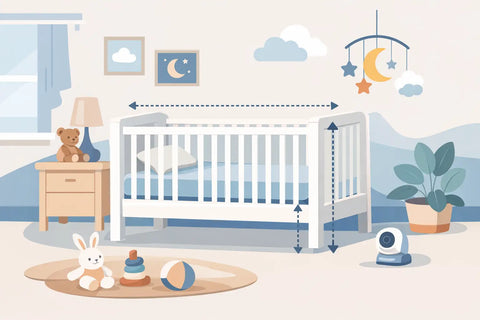
The external dimensions tell you how much floor space the cot occupies. Measure its length, width and height, including feet, curved rails or a changing attachment where applicable. This is the measurement to use when planning furniture placement.
The internal mattress dimensions tell you the size of mattress required. A mattress should sit firmly within the cot, with no significant gaps at the sides, ends or corners where a baby could become trapped. Always buy the mattress size specified by the cot manufacturer rather than assuming a similarly named size will fit.
Finally, check the height of the mattress base in each setting. A higher setting can make it more comfortable to lift a newborn in and out. Once your baby begins to sit independently or pull up, the base must be lowered according to the manufacturer’s instructions to reduce the risk of climbing or falling.
Common cot sizes and what they mean
There is no single universal cot size. Dimensions vary by brand, country and product design, so the product specification is always the final authority. That said, these common categories can help you narrow down what suits your home.
Crib and bedside cot sizes
A crib or bedside cot is typically designed for newborns through the first several months, depending on your baby’s size and developmental milestones. It has a smaller sleeping area than a full cot and can be a sensible choice if you are keeping baby in your room at first.
Its compact footprint is helpful in smaller spaces, but it is a shorter-term solution. Check the maximum weight limit and the point at which the product must no longer be used, particularly if your baby begins rolling, sitting or pushing up earlier than expected.
Standard cot sizes
A standard cot is often the most practical all-round nursery choice. Many models use a mattress around 120 cm by 60 cm, though this is not guaranteed. It can suit babies from birth into toddlerhood when used with the correct mattress and in line with the product’s age, height and weight guidance.
For parents who want a dedicated sleep space without overwhelming the room, this size usually offers a strong balance of longevity and floor-space efficiency. It also makes it easier to find fitted sheets, provided you buy to the precise mattress measurement.
Larger cot bed sizes
Cot beds are designed to last longer and may convert into a junior bed once your child is ready. A widely seen cot-bed mattress size is around 140 cm by 70 cm. The additional length and width can offer more room for a growing child, but it also requires a larger footprint and more clearance around the cot.
A convertible cot bed can be excellent value when you have the space and prefer fewer furniture changes over the years. The trade-off is that it may feel substantial in a compact nursery. Measure carefully before committing, especially if the cot will share a room with a double bed or storage furniture.
Plan for clearance, not just the cot footprint
A cot should never be squeezed into the last available corner simply because its external dimensions fit. Parents need room to approach the cot comfortably, bend safely and lift baby without knocking into furniture. Aim to leave a clear route beside the cot and enough space to open doors, drawers and wardrobes fully.
Consider how the room works during a tired 3 am feed. Can you reach the cot without stepping over baskets or cables? Is there space for a nursing chair, or will a compact changing station make the routine easier? A practical nursery is rarely about filling every blank wall. It is about preserving clear, calm movement around the pieces you use most.
Position matters too. Keep the cot away from windows, blind cords, radiators, heaters, lamps, shelves and furniture that a child could later use to climb. Avoid hanging mobiles, wall décor or picture frames within reach. Even the best-sized cot needs a thoughtfully planned sleep area.
Mattress fit is the safety detail that cannot be guessed
A premium cot and a premium mattress only work well together when their dimensions are compatible. The mattress should be firm, flat and designed for infant sleep. It should fit snugly, without a visible or hazardous gap around the edge.
Do not use an undersized mattress to make do, and do not force an oversized one into the cot. A mattress that bends at the corners or sits unevenly does not provide the intended sleep surface. Equally, thick toppers, loose padding and makeshift inserts can create avoidable risks.
For a cleaner, more convenient sleep setup, choose a waterproof mattress protector made for the mattress size, then use fitted sheets that stay taut. Washable layers are particularly useful for everyday spills, but the sleep surface should remain flat and uncluttered. Pillows, duvets, cot bumpers, loose blankets and soft toys should be kept out of a baby’s cot while they sleep.
Measure your room before you shop
Use a tape measure rather than estimating by eye. Mark the cot’s external footprint on the floor with masking tape, then stand where you would normally pick up your baby. This simple exercise reveals whether a cot will block a drawer, make a walkway too narrow or leave insufficient room for a door to swing open.
Measure skirting boards, window ledges and radiator projections too. If you are choosing a cot with built-in storage, account for the space needed to open its drawers. If the cot converts to a junior bed, check whether its final configuration requires extra length.
For families furnishing a Singapore home, room dimensions may be especially considered. A streamlined cot with a well-designed changing solution and purposeful storage can feel more liveable than a larger cot surrounded by extra furniture. Choosing compactly does not mean compromising on quality. It means selecting a product that supports safe daily routines in the space you truly have.
Look beyond size when choosing a cot
Dimensions are a starting point, not the whole decision. Prioritise a cot that is made from durable, child-appropriate materials, has a smooth finish and meets relevant recognised safety requirements for where it is sold and used. Inspect the construction, hardware and adjustable base mechanism, and follow the assembly instructions precisely.
Adjustable mattress heights are useful, but make sure the cot remains appropriate as your child becomes more mobile. Teething rails can help protect the cot edges, while good ventilation around the mattress supports a fresher sleep environment. The design should also suit your home: a clean, Scandinavian-inspired profile can sit beautifully in a modern nursery without making it feel crowded.
At RaaB Family, we believe parents should be able to choose nursery furniture with confidence - combining dependable safety details, thoughtful proportions and a finish that feels at home in family life. The best cot is one you can use calmly every day, from the first sleepy lift to the busy toddler years ahead.
Before placing your cot order, confirm the product’s external size, compatible mattress dimensions, recommended age guidance and required room clearance. A little measuring now gives your baby a secure sleep space and gives you one less thing to second-guess when they arrive.