
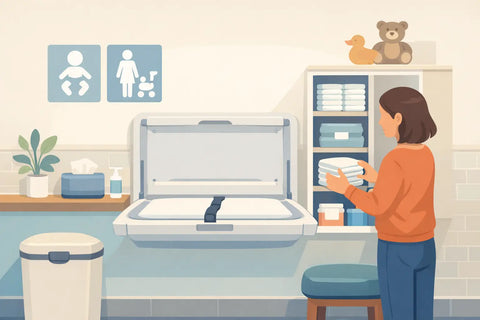
A nappy change rarely involves just nappies. There is the cream you need one-handed, the spare vest after a leak, the muslin you thought was nearby, and the wipes packet that somehow ends up in another room. That is exactly why a baby changing station with storage can make such a noticeable difference in everyday family life. It keeps the routine calmer, the space more organised, and the essentials where you actually need them.
For many parents, this piece of nursery furniture starts as a convenience and quickly becomes one of the hardest-working stations in the home. The right design supports safety, simplifies those middle-of-the-night changes, and helps a nursery look tidy rather than overfilled. If you are choosing one for a compact flat, a dedicated nursery, or a shared family bedroom, the details matter more than they first appear.
Why a baby changing station with storage makes sense
A changing surface on its own can work, but it often pushes the practical problem elsewhere. If nappies, cotton pads, spare clothing and skincare are stored in separate baskets across the room, you end up stepping away or reaching awkwardly during a task that should stay focused and secure.
A baby changing station with storage brings everything into one place. That matters for safety because your attention stays on your baby, and it matters for comfort because you are not constantly bending, searching, or improvising. For new parents settling into a routine, that kind of layout can make daily care feel far less rushed.
Storage also helps keep hygiene standards higher. Clean items can be separated from used ones, creams can stay upright and accessible, and changing essentials are less likely to end up on beds, sofas or dining tables. In a home where every surface quickly becomes multi-purpose, a dedicated station creates a clear care zone.
What to look for before you buy
The best choice is not simply the one with the most shelves or the largest top. It needs to suit your room, your changing habits, and the way your home works day to day.
Safety and stability come first
A changing station should feel solid, balanced, and well-built. The top surface needs to be secure and appropriately sized for a changing mat, with raised edges or a design that helps reduce shifting. Stability is especially important if the station includes drawers or open shelving below, as the unit should remain steady even when storage is in regular use.
Materials matter too. Parents are right to look closely at non-toxic finishes and baby-safe construction. Nursery furniture sits close to your child every day, so certified safety and quality assurance are not extras. They are part of buying with confidence.
Storage that matches real routines
Some families prefer open shelves because wipes, nappies and creams are visible at a glance. Others prefer drawers or enclosed compartments to maintain a cleaner look and keep clutter hidden. Neither is automatically better. It depends on whether speed, aesthetics, or dust protection matters most in your space.
A useful middle ground is a station that combines both. Open storage can hold daily essentials, while drawers keep backup stock, folded clothes and less frequently used items neatly tucked away. This is often the most practical choice for parents who want quick access without a nursery looking crowded.
A size that suits your home
In Singapore homes especially, proportions deserve attention. A wide unit may offer excellent storage, but if it narrows movement around the cot or wardrobe, the room can start to feel cramped. A compact footprint often works better than a bulky design, particularly when every nursery item needs to earn its place.
It is worth checking not only the station dimensions but also how drawers open, how much clearance you need in front, and whether the height is comfortable for both parents. A piece that looks manageable online can feel very different once placed into a real room.
Design matters more than many parents expect
Nursery furniture should be practical, but it also lives in your home every day. A baby changing station with storage that complements the room can make the entire space feel calmer and more considered.
Clean lines, soft neutral tones and Scandinavian-inspired styling tend to work well because they fit naturally with modern homes and do not date quickly. This is particularly helpful if the station may later be repurposed as storage furniture once the nappy-changing phase passes.
That long-term value is often overlooked. Babies outgrow changing routines faster than parents expect, so furniture that can continue as a drawer unit or nursery organiser may offer better overall value than a highly specialised item with a short useful life.
Open shelves or drawers?
This is one of the most common buying questions, and the answer depends on your priorities.
Open shelves are fast and convenient. During frequent newborn changes, being able to grab wipes or a fresh nappy instantly can feel like a small luxury. They also make stock levels easy to monitor, so you are less likely to run out without noticing.
Drawers create a tidier visual finish. They are ideal for parents who want a polished nursery look, especially in rooms that double as guest spaces or are visible from other living areas. Drawers can also help keep curious toddlers away from creams and changing accessories later on.
If you value both function and appearance, a mixed-storage design is often the strongest all-round option. It gives you fast access where needed and order where it counts.
How to set up the storage properly
Even a premium changing station works best when the storage is arranged with intention. The top level or easiest-to-reach section should hold daily essentials only - nappies, wipes, cotton pads, cream and one or two spare outfits. This reduces clutter and keeps your hands moving efficiently.
Secondary storage can hold refill packs, burp cloths, extra changing mats, swaddles or baby toiletries. If the station has multiple compartments, it helps to group items by task rather than by product type. A complete changing setup in one zone is more practical than storing all creams together and all clothing elsewhere.
Parents who prepare a small night-time section often find overnight changes easier as well. A soft light nearby, a few nappies, wipes and a clean sleepsuit can spare you from switching on bright lights or rummaging through drawers at 3 am.
Cleaning and maintenance should be easy
Changing stations deal with spills, creams, powder residue and the occasional surprise leak. Surfaces should be simple to wipe down and resistant to daily wear. Smooth finishes and thoughtfully designed edges tend to make cleaning faster, while overly textured materials can trap dust and residue.
This is where quality construction earns its place. Nursery furniture should withstand repeated cleaning without peeling, warping or looking tired after a few months. For families furnishing a nursery with longevity in mind, durability is not just a premium feature. It protects value over time.
When a compact model is the better buy
Bigger is not always better. If your nursery is small or your baby sleeps in your bedroom for the first months, a compact station can be the smarter choice. It gives you the same core function without overwhelming the room.
Smaller units can also encourage better organisation because they limit what gets stored there. Instead of becoming a catch-all for random baby items, the station stays focused on changing essentials. That often leads to a neater routine and less visual clutter.
The trade-off is reduced backup storage. If you buy nappies and wipes in bulk, you may need an additional cupboard or shelf elsewhere. For many families, that is still preferable to sacrificing floor space around the cot or feeding chair.
Buying with confidence
Parents are not just buying furniture. They are buying reassurance that the piece is safe, durable, easy to live with, and suited to daily family use. That is why product quality, trusted materials and specialist nursery expertise carry real weight.
When a retailer understands nursery furniture properly, the details tend to show in the selection. You are more likely to find practical dimensions, modern styling, baby-safe materials and designs that reflect how parents actually use the product. For families who want both visual polish and dependable function, that balance matters.
At RaaB Family, that approach is central to what makes nursery shopping feel more certain. Parents want products that look refined, support safer routines, and fit naturally into modern homes without compromising on everyday usability.
Is it worth the investment?
For most families, yes - provided you choose the right one. A baby changing station with storage is worth it when it saves time, reduces mess, supports safe handling, and continues to serve your home beyond the newborn stage. It may feel like one more nursery purchase at first, but it often becomes one of the few items used repeatedly, every single day.
The strongest choices are the ones that respect both sides of parenting: the emotional need to create a beautiful, welcoming nursery and the practical reality that babies require constant care, cleaning and organisation. When those two sides come together well, the nursery feels less like a showroom and more like a space that truly supports family life.
If you are choosing one now, think beyond the first week at home. Picture the midnight changes, the busy mornings, the smaller spaces, and the moments when one free hand is all you have. The right station will not just hold baby essentials - it will quietly make the whole routine feel more manageable.