
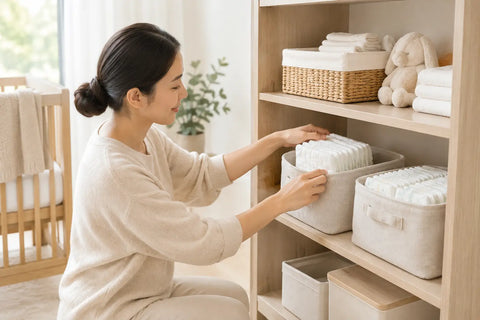
A midnight change is not the moment to search through three drawers for wipes. Knowing how to store diaper supplies well means creating a small, dependable system that keeps the essentials within reach, makes restocking simple and still suits the calm look of your home.
The right setup does not need a dedicated nursery or a large changing table. It needs to reflect where you actually change your baby, how often you move between rooms and how much storage you have. Start with the routine, then choose storage that supports it.
Start with the place you change most often
Before buying baskets or organisers, notice where most changes happen. It may be a changing station in the nursery, a corner of the living room or a surface in your bedroom during the early months. Your primary changing spot should hold enough supplies for a full day, so you are not constantly leaving your baby to fetch another diaper or clean outfit.
Keep this everyday collection together: diapers in the current size, wipes, a changing mat, nappy cream if you use it, disposable bags or a bin nearby, and one or two spare changes of clothes. A small muslin or cloth can also be useful for quick clean-ups. The aim is not to fill every available shelf. It is to keep the items you reach for most in one predictable place.
If you use a changing table, assign one drawer or shelf to each category. For example, place diapers in the top drawer, clothing in the next and larger refill packs below. This makes the station easier for both parents, grandparents and caregivers to use without asking where everything is.
Choose storage that works with your space
The best way to store diaper supplies depends on the room. Open storage is convenient, but it asks for regular tidying. Closed storage creates a neater visual finish, particularly in a shared living area, but should still be easy to open with one hand when needed.
In a nursery, a chest of drawers with a changing mat on top can offer a clean, long-lasting solution. Use shallow drawer organisers to stop small items from disappearing beneath stacks of diapers. A labelled basket on an open shelf is helpful for items used frequently, such as wipes and spare bodysuits.
For compact homes, consider vertical space. A slim shelving unit, wall-mounted storage designed for your room, or a narrow trolley can make practical use of a small footprint. Keep heavier refill packs on lower levels and everyday items at a comfortable height. Avoid overloading shelves, and choose furniture that feels stable and appropriate for its intended use.
In the living room, a lidded basket or storage ottoman can keep supplies close without making the room feel like a permanent changing area. Choose a material that is easy to wipe clean and a neutral colour or texture that sits comfortably alongside your existing furniture. RaaB Family’s approach to family spaces is simple: practical pieces should support daily care while still allowing the home to feel considered and calm.
Create a grab-and-go diaper caddy
A portable caddy is one of the most useful additions when your changing routine happens in more than one room. It saves you from building several full stations, while ensuring the basics travel together. Look for a caddy with sturdy handles and divided sections, rather than a deep basket where everything collects at the bottom.
Keep the caddy lightly stocked. Around a day’s worth of diapers, a pack of wipes, a foldable changing mat, cream if needed and a spare outfit are usually enough. Add items according to your own routine, but resist treating it as a storage space for every baby product you own. A lighter caddy is easier to carry from the bedroom to the living room or to bring along when visiting family.
Return the caddy to the same place after use. A dedicated shelf, lower cupboard or corner beside the sofa makes it much more likely to be ready when you need it. This small habit is what turns a basket of supplies into a genuinely useful system.
Separate daily supplies from bulk backups
Large diaper packs can quickly take over a nursery, especially when you are stocking up or moving between sizes. Keep only the opened pack and a manageable number of extras at the changing station. Store sealed backups elsewhere, such as a dry cupboard, a wardrobe shelf or a storage box under suitable furniture.
This separation has two benefits. Your changing area stays easier to use, and you can see at a glance when the everyday supply is running low. If space is limited, stand diaper packs upright in a labelled basket or fabric cube rather than stacking them loosely. It is easier to count what remains and simpler to lift out the size you need.
Store wipes and other moisture-sensitive supplies according to their packaging instructions, away from direct sunlight and excessive heat. Check dates on items that have them, and place newer purchases behind older ones so the first items bought are used first.
Make restocking part of the routine
Even the most attractive storage will not help if it is empty at the wrong time. A short weekly check is usually more useful than waiting until the last diaper is gone. Choose a regular moment that already fits your household rhythm, perhaps before your weekly shop or when folding laundry.
Check the diaper count, wipes, creams, bags and spare clothing. Refill the portable caddy at the same time. If you are trying a new diaper size or brand, keep a small amount of the previous size until you know the new fit works well for your baby. This avoids an unnecessary scramble if you need to switch back temporarily.
A simple note on your phone can make replenishing easier. Write down supplies as you open the last pack rather than relying on memory later. For households with more than one caregiver, a small label inside a cupboard or drawer can also show where backups belong.
Keep changing supplies tidy and easy to clean
Diaper storage works hard, so choose containers that can cope with everyday spills and frequent handling. Wipeable plastic organisers are practical inside drawers, while washable fabric baskets can soften the look of open shelving. If you prefer natural materials, consider using a removable liner so crumbs and small spills are easier to manage.
Avoid keeping too many loose products on the changing surface. A clear area makes cleaning simpler and gives you room to prepare what you need before a change. Put lids back on containers promptly, close wipe packs securely and return items to their designated place when you are finished.
It is also worth reviewing the setup as your baby grows. The number of diapers you use may change, clothing becomes larger and a once-useful top drawer may need a different purpose. Flexible storage - baskets, adjustable dividers and portable caddies - adapts more easily than a system built around one short stage.
A calm system is one you can maintain
There is no single perfect way to store diaper supplies. A parent changing a baby mainly in the bedroom will need a different arrangement from a family using a nursery and play area throughout the day. What matters is that your essentials are easy to find, your backups are easy to replenish and your storage fits naturally into the way your family lives.
Begin with one well-stocked changing spot, then add a portable caddy or backup basket only where it genuinely makes life easier. A few thoughtful choices can make those repeated daily moments feel more organised, leaving a little more room for the moments that matter.