
A nappy change rarely happens at the most convenient moment. When one hand is steadying your baby and the other is searching for wipes, a well-planned nursery stops being a styling exercise and becomes genuine daily support. The best baby room storage solutions keep essentials within easy reach, protect little hands from hazards and make a compact room feel calmer rather than crowded.
For many families, the goal is not to fill a nursery with matching furniture. It is to create a practical space that works from the newborn weeks through to toddlerhood, while still looking considered in a modern home. The right combination of changing storage, closed cabinets and flexible baskets can do exactly that.
Start with the routines that happen every day
Before choosing a drawer unit or storage basket, think about where and when you use each item. Nappies, muslins, clean sleepsuits and skincare products should sit near the changing area. Bedtime essentials belong close to the cot. Toys need a home near the play space, particularly if your child has a dedicated playpen and mat set in the living room rather than a separate nursery.
This approach prevents a common mistake: buying attractive storage first, then discovering that it is placed too far from where it is needed. A beautiful cabinet across the room is less useful than a modest organiser beside the changing station.
Try to arrange the room in simple zones. The changing zone needs fast access. The sleep zone benefits from a smaller supply of night-time essentials. The play zone needs storage that can be packed away easily once the day is done. When every category has a logical place, tidying takes minutes rather than becoming another task at the end of an already full day.
Choose baby room storage solutions with safety built in
Storage furniture should be judged by more than its finish and capacity. Babies quickly become curious toddlers, and furniture that was harmless during the early months may become a climbing opportunity later on.
A sturdy, well-made chest of drawers or cabinet is a strong long-term choice, provided it can be securely fixed to the wall where appropriate. Avoid overloading high shelves, and place heavier items in lower drawers to keep furniture stable. Drawers should open smoothly without sharp exposed edges, while handles should be secure and positioned so they are not easily pulled loose.
Closed storage is especially useful for medicines, nail clippers, creams, batteries and other small items that should never be accessible to a child. Open shelving has its place for folded blankets, books and decorative keepsakes, but it requires more regular tidying and becomes less practical once your child can reach it.
Material quality matters too. Select nursery furniture made with child-conscious finishes and non-toxic materials, particularly for pieces that will remain in the room as your baby grows. Easy-clean surfaces are equally valuable. Spills, milk splashes and sticky fingers are part of family life, so storage should be simple to wipe down without special care.
Make the changing station work harder
The changing station is often the nursery's busiest worktop. It needs enough storage for frequent changes without turning into a cluttered surface where items can roll or get misplaced.
Keep only the immediate essentials on or beside the changing area: nappies, wipes, nappy cream, a change mat and a few spare clothes. Everything else can live in a lower drawer or nearby cabinet. This creates a safer, clearer surface and helps you keep one hand on your baby whenever needed.
Drawer dividers are useful here because they separate small items that otherwise disappear into a pile. Group supplies by task rather than by product type. For example, keep all nappy-changing items together, and store bath products separately. It sounds simple, but it makes a significant difference during a late-night change when you are tired and working in low light.
A changing unit with built-in drawers can be an excellent investment in a smaller home because it combines two large nursery needs in one footprint. Once the changing stage has passed, the drawers can continue holding clothes, toys, books or bedding. That longer lifespan often makes a well-designed piece better value than several temporary organisers.
Keep a small back-up supply nearby
Rather than storing every packet of nappies beside the changing station, keep one open pack within reach and reserve the rest in a lower cupboard or wardrobe. This avoids visual clutter and makes it easier to see when stock is genuinely running low. The same applies to wipes and skincare products.
Use vertical space without making the room feel busy
Compact nurseries need thoughtful use of height, but vertical storage should feel purposeful rather than overfilled. A tall wardrobe, a narrow cupboard or a carefully placed wall shelf can add useful capacity without taking over the floor area.
The key is to store according to frequency of use. Everyday items should stay between waist and shoulder height for easy access. Out-of-season clothing, keepsake boxes and spare bedding can go higher up, as long as they are stored securely. Never place heavy boxes or large objects above a cot, changing station or play area.
Wall-mounted shelves are best kept for lightweight items such as board books, soft toys and framed prints. If you prefer a more minimal look, use one or two shelves rather than covering every wall. A nursery needs visual breathing room, especially when there is already a cot, play mat and changing furniture in the space.
Build storage that adapts as your child grows
Newborn storage is mostly about adult convenience: nappies, feeding supplies, tiny clothing and laundry. Toddler storage has a different purpose. It needs to encourage simple independence while keeping the room orderly.
Low baskets and open bins can work well for a small edit of toys, as children can see what is available and help with tidying. Choose soft-sided or rounded storage for the play zone, and avoid filling every container to the brim. A rotation of toys keeps the area more manageable and makes familiar toys feel interesting again.
For clothes, adjustable wardrobe rails and labelled fabric boxes can adapt as sizes change. Store clothing by current size first, then move outgrown pieces into clearly marked boxes for passing on, keeping or donating. There is little value in using prime nursery storage for clothes that no longer fit.
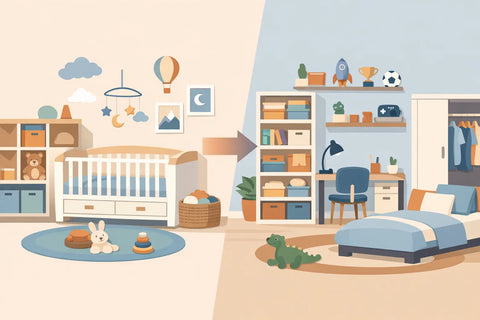
A versatile storage cabinet is often the anchor piece. During the baby stage, it might hold feeding equipment, spare nappies and bedding. Later, it can become a toy cupboard, a book store or practical family storage elsewhere in the home. This is where a premium-quality piece earns its place: it should be durable enough to move with your family rather than being discarded after one short stage.
Keep the nursery calm with a simple visual system
A tidy room is easier to maintain when every container has a clear purpose. You do not need elaborate labels on every basket, but broad categories help: laundry, spare bedding, bath items, toys and keepsakes. If more than one adult cares for your baby, a simple system also means everyone can find and return essentials without asking.
Choose a limited palette of storage materials and colours to create a calmer look. Natural wood, soft neutral fabric baskets and clean-lined cabinets suit Scandinavian-inspired interiors while remaining practical for daily use. Matching every item is not necessary, but repeating two or three finishes makes a busy room feel more intentional.
Be honest about what deserves to stay on display. A few favourite books or a treasured soft toy can add warmth. Bulk supplies, packaging and spare accessories are better behind closed doors. This balance lets the nursery feel personal without creating another surface to dust and rearrange.
A quick test before you buy
Before committing to nursery storage, check four practical details:
- Measure the available floor space, drawer clearance and door swing, not just the furniture footprint.
- Consider whether the piece can be secured safely and whether it has child-friendly finishes.
- Check that its drawers, shelves or compartments suit the items you actually use each day.
- Ask whether it will still be useful when nappies give way to toys, books and larger clothing.
At RaaB Family, nursery furniture is selected with this balance in mind: reassuring safety considerations, durable materials and clean design that fits naturally into family homes. A thoughtful storage plan should make the room easier to use from day one, not give you more to manage.
The most successful nursery is not the one with the most storage. It is the one where a fresh sleepsuit is easy to find, the changing area stays clear and every item has a sensible place when the lights go down. Start with the routines you rely on most, choose furniture that can grow with your child, and let the room support the quieter moments as well as the busy ones.