
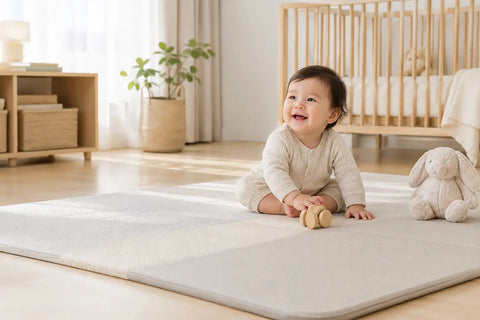
A play mat often becomes the busiest surface in the home. It is where tummy-time toys gather, first blocks are stacked, snacks occasionally land and parents sit down for a few precious minutes of floor play. The right play mats make this everyday space feel more comfortable, easier to manage and more in keeping with the rest of your home.
For families, the choice is rarely just about colour. Size, surface feel, cleaning routine and how the mat sits within your living area all shape whether it remains useful beyond the first few months. A thoughtful choice can support the changing rhythm of family life, from a baby’s early floor time to a toddler’s imaginative games.
Start with the room, not the product
Before comparing designs, consider where the mat will live most of the time. A large open-plan living room may suit one generous mat that defines a play zone without making the whole room feel like a nursery. In a smaller flat, a compact option or a mat that can be moved easily may be more practical.
Measure the clear floor space rather than estimating by eye. Leave enough room to walk around the edge and open nearby cupboards or doors. If the mat will sit beneath a playpen, check the playpen’s footprint and allow for a tidy border if that is the look you prefer.
It is also worth thinking about the floor underneath. Tile, marble and timber floors can feel very different underfoot. A mat may add welcome comfort in a living space with hard flooring, while a thick rug may mean you need a flatter option that sits more steadily on top. Avoid forcing a mat into an uneven area or over loose rugs where it may not lie flat.
What to look for in play mats
The most suitable play mat is one that works for your household without creating another demanding chore. Focus on the practical details you will notice every day.
Comfort and surface feel
Floor play is part of daily life for many babies and toddlers, so a comfortable surface matters. Consider the level of cushioning that feels right for your floor and the activities likely to happen there. A firmer mat can provide a stable base for toys, books and seated play, while a more cushioned style may be preferable where the floor is particularly hard.
Texture matters too. Some parents prefer a smooth surface that wipes down quickly, while others like a textile finish that feels softer and warmer in the room. Neither is automatically better. The right choice depends on your cleaning routine, the room’s use and your family’s preferences.
Materials and product information
Parents should be able to understand what they are buying. Look for clear, product-specific information about materials, construction, care instructions and intended use. If a brand refers to testing or certifications, these should be stated clearly for that individual product rather than assumed across an entire range.
A mat’s edges and finish are also worth checking. A well-finished mat should sit neatly in the room and be designed for regular family use. Follow the manufacturer’s setup and care guidance, particularly for mats with folding sections, removable covers or interlocking pieces.
Cleaning that suits real life
A beautiful mat is easier to enjoy when its care routine is realistic. Consider how you normally deal with spills, crumbs and everyday marks. Wipe-clean surfaces can be convenient for frequent small messes. Fabric-covered mats may need washing or more involved spot cleaning, but can bring a softer look to a nursery or family room.
Check care instructions before buying rather than after a spill. Find out whether the cover is removable, whether cleaning products are restricted and how the mat should be dried. Gentle, regular cleaning is usually easier than leaving marks to build up. Allowing the surface to dry fully before use also helps keep the space fresh and comfortable.
A look you will want to live with
A play area does not need to dominate the room. Neutral shades, considered patterns and simple forms can help play mats blend into a calm, modern interior. This is particularly useful when the living room does double duty as a family space, entertaining area and place to relax after bedtime.
That said, a pale mat may show marks sooner, while a patterned surface can be more forgiving between cleans. Choose the finish that matches your household rather than chasing a showroom-perfect look. Family homes are lived in, and a mat that is used well is doing its job.
Choosing the right size for each stage
A newborn does not need the same amount of floor space as a confident toddler with a collection of vehicles and building toys. Choosing a size with a little room to grow can offer better value and prevent an early replacement, provided it still suits your layout.
For early floor time, a mat should offer enough space for an adult to sit nearby without balancing at the edge. As play becomes more active, extra room can make a meaningful difference. Toddlers often use the mat as a base for puzzles, role play and book time, even when the rest of the room is available.
Larger is not always the answer. An oversized mat in a narrow room can make furniture awkward to use and create visual clutter. In compact homes, a smaller mat positioned intentionally may feel more inviting and be easier to keep clear. Some families prefer to create one dedicated play corner; others choose a central mat that brings everyone together in the main living space.
Make the play area easy to maintain
The simplest systems are the ones that survive busy weekdays. Keep a small selection of age-appropriate toys on or beside the mat, rather than bringing out everything at once. A low basket or closed storage nearby makes tidy-up quicker and helps the room return to a calmer state at the end of the day.
Rotate toys occasionally if storage allows. This can refresh the play area without needing more floor space. It also makes cleaning easier because fewer items gather in corners and along the mat’s edges.
If you use a playpen with a mat, set it up according to the relevant product instructions and check that all components are properly positioned before use. Keep the surrounding area clear of items that could get in the way. As with any family play space, active supervision and regular checks for wear, loose parts or damaged surfaces are sensible everyday habits.
When a foldable or fixed mat makes more sense
A fixed, full-size mat can create a consistent family zone. It works well when there is a permanent place for play and you prefer not to pack things away each evening. It can also help a larger room feel organised, especially when paired with simple storage and a coordinated playpen.
A foldable or portable mat may suit homes where the floor needs to serve several purposes. You might want to clear the space for dinner guests, move play into the bedroom during a busy morning, or bring a familiar surface to a grandparent’s home. Portability can be helpful, although folds and joins may require a little more attention when cleaning and storing.
There is no single right format. Think about what happens in your home on an ordinary Tuesday, not just how you hope the room will look on its best day.
A considered choice for everyday family life
When comparing play mats, prioritise the details that will make life easier: a proportion that suits the room, a surface you can care for confidently and a design you will be happy to see every day. Take time to read the specific product information, especially if you are matching the mat with existing nursery furniture or a playpen.
At RaaB Family, the aim is to help parents create practical, comfortable spaces that feel calm rather than crowded. Choose a mat that fits your family’s routine, then let it become the familiar place where everyday play can unfold.