
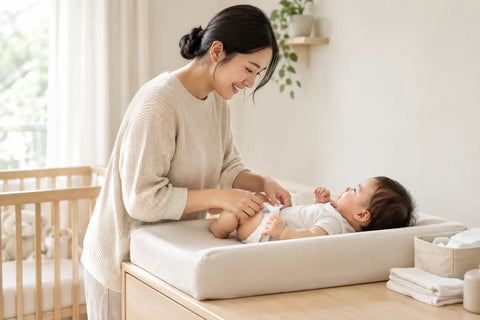
A nappy change can happen before breakfast, just as you are leaving the house, or halfway through the night when everyone would rather be asleep. That is why many parents ask, do babies need changing tables, or can a bed, floor mat or sofa do the job just as well? The honest answer is that a changing table is not essential, but a dedicated changing set-up can make everyday care feel more organised, comfortable and less rushed.
The right choice depends on your home, your available storage and the routine you want to create. A thoughtfully planned changing area matters more than buying a particular piece of furniture.
What a changing table is designed to do
A changing table gives you one consistent place for nappies, wipes, spare clothes and other essentials. Its main benefit is convenience. When everything is within reach, you spend less time looking for a clean bodysuit or opening drawers with one hand.
For many families, the height is another practical advantage. Repeated nappy changes can be tiring, particularly during the early months. A surface that allows you to stand comfortably may feel easier than bending over a low bed or sitting on the floor several times a day.
It can also bring a sense of order to the nursery or bedroom. Open shelves, drawers or baskets below the changing surface can hold supplies neatly, while a wipe-clean changing mat creates a clear place for the routine. In a calm, modern room, this can be both useful and visually simple.
That said, a changing table does not replace attentive care. Keep one hand on your baby during a change, prepare supplies before you begin, and follow the furniture and changing mat manufacturer's instructions for use.
Do babies need changing tables in a small home?
No. Babies need a clean, stable and practical place to be changed, but it does not have to be a standalone changing table. This is especially relevant in Singapore homes, where nursery furniture often needs to work hard without taking over the room.
A changing mat placed on a sturdy chest of drawers can be a sensible option, provided the surface is suitable for the mat and the furniture is stable. It gives you useful storage from day one and can continue to serve as a dresser once the changing stage has passed. Choose a layout that lets you keep essentials close by without cluttering the top.
Some parents prefer a portable changing mat and a well-stocked caddy. This can move between the bedroom, living area and grandparents' home, making it a flexible choice for families who spend their days across different spaces. A floor-level set-up is another option, particularly if you want to avoid lifting your baby onto a raised surface. It may be less comfortable for your back, but it is simple, compact and easy to put away.
The best arrangement is the one you can use consistently, even on a busy morning.
When a dedicated changing table is worth it
A separate changing table can be a very good purchase when it solves a real problem in your household. It may suit you if you have room for a nursery zone, prefer to keep care supplies in one place, or want a standing-height surface for frequent changes.
It is particularly useful when the furniture offers storage that you genuinely need. Nappies, wipes, muslins, cream, spare clothes and laundry can quickly spread across a room. Having designated compartments makes replenishing supplies easier and helps another caregiver find what they need without asking where everything is.
A dedicated piece can also help establish a predictable rhythm. While babies do not need a styled nursery to be cared for well, a familiar changing spot can make the practical parts of the day feel more settled for parents.
Before buying, think beyond the newborn months. Look at whether the furniture will have a useful life afterwards, perhaps as storage in a child's room, play space or family area. Versatile nursery furniture often feels like better value because it can adapt as your needs change.
Choosing the right changing set-up
Rather than starting with a product, start with the space and your routine. Measure the area where you expect to change your baby most often, including the clearance needed to open drawers or cupboards. Consider who will use it, whether it needs to be moved, and where supplies will be stored.
A practical set-up should answer four everyday questions:
- Is the surface stable, easy to clean and appropriate for the changing mat you plan to use?
- Can you reach nappies, wipes and a spare outfit without stepping away?
- Does the furniture fit the room without blocking a walkway or making the space feel crowded?
- Will it still be useful when your child no longer needs nappy changes?
If you choose furniture with drawers or shelving, organise it by frequency of use. Keep daily items closest to hand, with back-up supplies and larger sizes lower down or in separate storage. A small lidded bin nearby can make clean-up more convenient, as long as it does not interfere with access to the changing area.
Practical alternatives to a changing table
There is no single correct layout. A dresser-and-mat combination is often the closest alternative to a dedicated changing table, balancing storage with longer-term use. For a more flexible approach, a portable changing mat with a compact caddy can be stored in a cupboard or carried to the room you are using.
A bed can work for occasional changes, particularly overnight, but it helps to keep a small basket of essentials nearby so you are not searching for supplies mid-change. For some families, a clean floor mat is the easiest daytime option. It needs no furniture, travels well around the home and gives you plenty of space to lay out what you need.
Avoid relying on a sofa or other soft, uneven surface as your regular station. These areas can be awkward to organise and do not offer the same stable, predictable base as a firm changing surface. Whatever arrangement you choose, keeping it consistent and uncluttered makes it easier to use well.
Creating a calmer routine around the changing area
The smallest details often make a bigger difference than the furniture itself. Refill nappies before the last few are gone. Keep a spare change of clothes close by. Put a laundry bag or basket where it is easy to reach. These simple habits reduce the small interruptions that can make a routine feel hectic.
Good lighting helps, especially for evening changes. You do not need a brightly lit nursery, but being able to see clearly without turning on every overhead light can make the moment more comfortable. A soft, easy-clean mat and a tidy selection of supplies are usually enough to create a practical space.
If you are preparing a nursery, it is also worth leaving some room around the changing area. You may want a chair nearby, space for a nappy bin, or access to drawers as your child grows. A room that looks lovely but is difficult to move around in can become frustrating very quickly.
RaaB Family's approach to nursery furniture and family spaces is rooted in this kind of everyday practicality: considered pieces, easy-care choices and room for family life to unfold.
The decision comes down to your routine
A changing table is a convenience, not a requirement. It can be worthwhile for its storage, comfortable working height and ability to create one organised care station. But a well-planned dresser, portable mat or floor-level arrangement can work equally well when space, budget or flexibility is the priority.
Choose the set-up that suits how your family actually lives, rather than how a nursery is meant to look. When the essentials are close by and the space feels easy to use, every nappy change becomes one less thing to think about.