
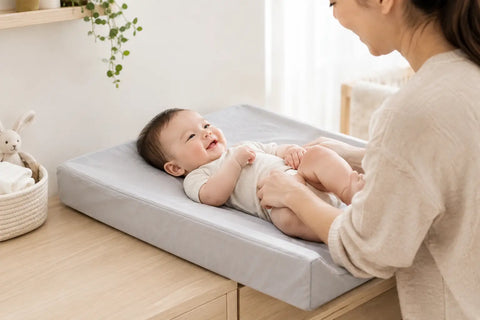
A nappy change can happen before breakfast, halfway through a feed, or just as you are heading out of the door. The best washable changing pads make this everyday task feel more manageable: comfortable for baby, simple to clean and easy to keep ready for the next change. For families creating a calm, practical nursery, a washable pad is often one of the most useful small essentials to choose carefully.
The right option is not always the thickest or softest-looking one. It needs to suit where you change your baby, how often you wash laundry and whether you prefer a fitted changing mat, a portable pad or a layered setup with washable covers. Here is what to consider before bringing one home.
What makes a changing pad genuinely washable?
A washable changing pad should be designed to handle frequent, ordinary mess without becoming difficult to care for. That can mean the entire pad goes in the wash, or that it has a removable, machine-washable cover over a wipe-clean inner pad. Both approaches can work well, but they suit different routines.
A fully washable pad is convenient when you want a softer, fabric-led surface and do not mind keeping a spare available while one is drying. A wipe-clean mat with washable covers may be more practical for rapid clean-ups between washes. In either case, check the manufacturer’s care instructions before buying. Washing temperature, drying guidance and whether the pad should be reshaped after washing can affect how easily it fits into family life.
It also helps to consider drying time. Singapore’s humidity can make thick padding slower to dry indoors, particularly during wet weather. A second cover or backup changing pad can make the routine much less stressful, without filling the nursery with unnecessary extras.
Best washable changing pads: choose the style first
Rather than beginning with colour or pattern, start with the way you expect to use the pad. This narrows the choice quickly and helps you spend on features that will genuinely matter.
For a dedicated changing area
If you have a changing table, dresser top or nursery station, look for a pad with a shape and size that suits the surface exactly. A well-fitting pad helps the area feel tidy and intentional, especially in a smaller room where every item is visible.
Raised sides are a feature some parents prefer for a more defined changing space, while flatter pads can be easier to use as your baby grows and moves more. The important point is that the pad sits securely on its intended surface and is used according to its instructions. Keep the changing area clear, with essentials within reach, and stay with your baby throughout every change.
For this setup, removable covers are particularly useful. They let you refresh the surface while keeping the main pad in place, and a pair of covers means one can be in the wash without interrupting the day.
For changing around the home
Many families do not use one fixed station for every nappy change. A lightweight washable pad can be useful in the living room, bedroom or wherever the day naturally unfolds. Choose one that folds or rolls neatly, without bulky fastenings that make storage awkward.
A portable pad should still feel sufficiently cushioned for short, everyday use, but portability usually involves a trade-off. The most padded option may not be the easiest to fold into a changing bag, while an ultra-slim mat may be better for outings than relaxed changes at home. Some households find that one home pad and one travel-friendly pad is the simplest arrangement.
For a minimal, neutral nursery
Changing pads are often left out in plain sight, so their finish can shape the look of your space. Soft neutrals, gentle prints and simple textures tend to work well with modern nursery furniture and can remain versatile as the room changes over time.
Still, appearance should come after care and fit. A beautiful cover that needs specialist cleaning or shows every small mark may create more work than it saves. Look for materials and colours that suit your home while being realistic about daily use. A calm nursery works best when it supports your routine, not when it asks you to protect every surface from normal family life.
Materials, comfort and ease of care
The material next to your baby’s skin deserves attention, especially when changing happens several times a day. Cotton-rich or soft fabric covers are popular for their familiar feel and can be pleasant in a warm home. Other pads use smooth, wipeable surfaces that are quick to clean after minor spills.
Neither is automatically the better choice. Fabric surfaces may feel cosier and offer more design options, but they usually require laundering after a mess. Wipe-clean surfaces reduce laundry but may feel cooler, so some parents place a washable liner or cloth on top. The most practical answer often combines the two: a supportive changing mat with a washable layer that can be changed quickly.
Consider stitching and construction as well. Covers with neatly finished seams and dependable fastenings are easier to remove and refit. Padding should lie evenly after washing, rather than bunching in the middle. If buying in person, feel the fabric and check how the cover opens. If shopping online, read the product dimensions, care guidance and what is included, rather than assuming a cover comes with every changing pad.
Fit matters more than parents expect
A changing pad that shifts, curls at the corners or overhangs its surface can make a simple task feel fussy. Measure your changing table or dresser before ordering, including the usable flat area rather than the furniture’s overall width. If you are pairing a pad with a fitted cover, confirm that the cover is designed for that pad’s shape and depth.
This is especially relevant when mixing pieces from different ranges. A rectangular cover may technically fit a contoured pad, but loose fabric can make changes less convenient and spoil the neat look you wanted. When possible, choose compatible pieces made for each other.
For families building a coordinated nursery, RaaB Family’s approach to practical, easy-care essentials can be a helpful reference point: select pieces that earn their place through everyday usefulness as well as a considered finish.
A realistic cleaning routine
Washable changing pads work best when cleaning is simple enough to maintain on a tired day. Deal with spills promptly, following the specific care directions for your pad or cover. Keeping a small laundry bag or basket nearby makes it easier to separate used covers and liners without leaving them on the floor or mixed into general washing.
A practical changing station may include a spare cover, a few washable liners and a place for clean nappies and wipes. This is not about creating a perfectly styled display. It is about avoiding the moment when the only clean cover is still drying and the next change cannot wait.
Avoid using cleaning products or washing methods that are not recommended by the manufacturer, as these can affect the fabric, waterproof layer or padding. Regularly check for signs of wear, loose stitching or damage, and replace items that no longer perform as intended.
Questions worth asking before you buy
Before settling on a pad, think through a normal week rather than an ideal one. How many changes do you expect to do at the nursery station? Do you have space to air-dry a thicker pad? Will grandparents or a helper need something straightforward to use? Are you likely to carry it between rooms or take it out regularly?
It is also worth deciding whether you would rather wash the whole pad or only a cover. For some parents, fewer separate pieces mean less to manage. For others, a washable cover system is more economical and more convenient because the main mat stays in place. There is no single right answer, only the setup that keeps your home comfortable and your routine moving.
Choose a washable changing pad that matches the pace of your real family life. When it is easy to clean, fits the space properly and feels pleasant to use, it becomes one less decision to make during a very full day.