At 2 am, the best sterilising method is usually the one that leaves you with clean feeding equipment ready for the next feed - without adding another complicated task to the night. In the UV steriliser versus boiling decision, both methods can support good baby-feeding hygiene when used correctly. The better choice depends on your routine, the items you use and how much convenience matters during busy days.
For bottles, teats, dummies and breast pump parts, sterilising is not a replacement for washing. Every item should first be taken apart, thoroughly cleaned with warm soapy water or in a dishwasher if the manufacturer permits it, then rinsed well. Sterilising reduces germs on already-clean equipment. Milk residue, trapped water and missed surfaces can undermine either method.
UV Steriliser Versus Boiling: The Key Difference
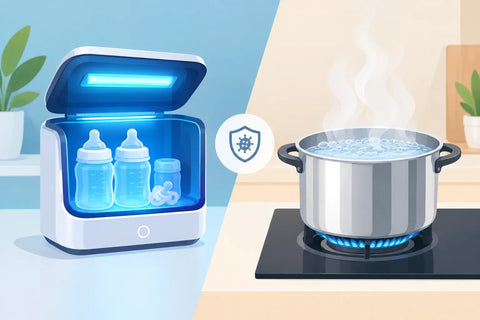
Boiling sterilises through heat. Items are fully immersed in boiling water for the time stated by the product manufacturer or relevant health guidance. It is a familiar, low-tech option and requires no dedicated appliance beyond a suitable pan and hob.
A UV steriliser uses ultraviolet light inside an enclosed chamber. Once washed items are arranged correctly, a cycle exposes their surfaces to UV light. Many UV units also include drying, which can be particularly useful for parents who want to avoid leaving bottle parts on the worktop or waiting for them to air-dry.
Neither option is automatically superior in every household. Boiling is simple and accessible, while UV is designed to make frequent sterilising easier to manage. The practical differences become clearer when you consider your daily routine.
Boiling: Familiar, Affordable and Effective When Done Properly
The main advantage of boiling is its simplicity. There are no electrical settings, bulbs or appliance cycles to understand. If you have a pan, clean water and heat-safe feeding accessories, you have what you need. This can be reassuring when travelling, staying with relatives or dealing with a power interruption.
Boiling also reaches the equipment submerged in the water, including areas that may be more difficult to position in a UV chamber. However, every part must be able to withstand high heat. Some bottle components, valves, silicone parts and plastic accessories may have specific instructions on whether boiling is suitable and for how long.
There are trade-offs. Repeated boiling can contribute to wear over time, particularly on items not designed for prolonged exposure to high temperatures. Water minerals can also leave limescale marks, especially in hard-water areas. You will need to use clean tongs or thoroughly washed hands to remove items safely, then allow them to cool and dry on a clean surface.
Boiling asks for attention at the moment you need it. The pan must be watched, the water must reach and remain at a rolling boil as directed, and you need enough time for cooling afterwards. For a parent preparing several bottles each day, those small steps can soon feel less convenient.
When boiling makes most sense
Boiling can be a sensible choice for families who prefer a minimal set-up, only sterilise a small number of compatible items, or need a dependable back-up method away from home. It is also useful when you want to avoid buying another appliance. The essential point is to check that every item is rated for boiling and to follow its care instructions closely.
UV Sterilisers: Convenience for the Everyday Routine
A UV steriliser is built for parents who want to keep feeding equipment organised and ready to use. Rather than handling hot water, you load clean, dry or freshly washed items into the chamber, place them so the UV light can reach the relevant surfaces, close the door and run the cycle. Depending on the model and selected function, it may also dry the items afterwards.
That drying function is a meaningful advantage in humid homes. Moisture left in teats, bottle collars or pump pieces can make storage awkward. A unit that sterilises and dries can reduce the need for a separate drying rack and keep the kitchen worktop looking calmer, especially in a compact flat.
UV sterilisers are also versatile. Beyond feeding essentials, many parents use a suitable UV unit for compatible dummies, teethers and small everyday items. Always check both the steriliser instructions and the item manufacturer’s care guidance first. Not every material should be exposed to UV light or heat from a drying cycle.
The key limitation is line of sight. UV light needs access to the surfaces being treated. If items are crowded, nested together, heavily shaded or assembled, parts of them may not receive adequate exposure. Bottles should be separated, turned as instructed and positioned with space between them. Narrow components still need careful cleaning beforehand.
A UV steriliser also needs routine care. Keep the interior clean, avoid blocking vents, and follow the manufacturer’s instructions on replacing lamps or maintaining the unit where applicable. As with any electrical baby appliance, a well-made model, correct use and safe placement matter.
When a UV steriliser is the better fit
For households sterilising several times a day, convenience can be more than a luxury. It can make a hygiene routine easier to repeat consistently. Parents who combination feed, express milk or use multiple bottles often value the ability to sterilise a larger batch without standing over a pan.
It is particularly helpful if you want a neater nursery or kitchen routine. A premium-quality UV steriliser can serve as a dedicated place for cleaned bottle parts while they dry, rather than leaving pieces spread across a towel. RaaB Family’s curated nursery essentials are chosen with this kind of practical, design-conscious daily use in mind.
Safety, Compatibility and Running Costs
When comparing UV steriliser versus boiling, do not choose based on speed alone. Safety and compatibility should lead the decision. Read the instructions for every bottle, teat, breast pump component and dummy. Some products are dishwasher-safe but not suitable for boiling; others can be boiled but should not go into a drying cycle.
With boiling, the direct ongoing costs are water and gas or electricity for the hob. With UV, you have the upfront cost of the appliance and electricity for each cycle, plus any maintenance requirements. In return, you may save time and reduce the need for disposable towels or constant worktop drying.
Capacity matters too. A compact UV unit may suit a family using a few bottles, while a larger model is more practical for bottle sets and pump parts. With boiling, capacity is limited by the size of your pan and the need to keep each item fully submerged without overcrowding it.
Avoid assuming that more sterilising is always better. Follow current guidance from your healthcare professional or local health authority, particularly if your baby was born prematurely, has a medical condition or is under the age for which sterilising is recommended. For healthy babies, the right routine is the one that is hygienic, appropriate for their equipment and manageable for you.
How to Use Either Method Well
The most reliable results come from the preparation, not just the appliance or pan. Take bottles and pump parts apart fully. Wash all surfaces soon after use, paying special attention to bottle threads, teat openings and valves. Rinse away detergent before sterilising.
For boiling, use a clean pan dedicated to the task where possible, ensure items remain submerged as directed, and remove them with clean tongs. For UV, avoid stacking items inside each other, keep the chamber clean and run the recommended cycle. In both cases, reassemble equipment only when your hands are clean and the parts have cooled or dried as required.
If you are preparing bottles in advance, follow safe milk-preparation and storage guidance separately. Sterile equipment helps protect the feeding process, but it does not make prepared milk safe to keep indefinitely.
The Choice That Makes Family Life Easier
Boiling remains a capable, straightforward option for compatible baby feeding equipment. A UV steriliser earns its place when repeated cycles, drying and clutter-free organisation would take pressure out of your day. Think about the number of items you wash, the space in your kitchen and whether you need a routine that works when one hand is holding your baby.
Choose the method you will use carefully and consistently. A calm, well-organised feeding routine gives you more time for the part that matters most - settling your little one close after a feed.