
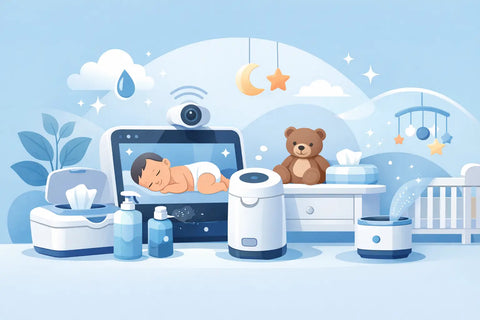
The muslin that falls on the floor, the bottle parts waiting beside the sink, the nappy change that happens just before a video call: a nursery does not stay pristine for long. Baby hygiene technology is most useful when it supports these ordinary moments, helping parents clean, store and care for baby essentials with less uncertainty and less daily friction.
The best choices are not necessarily the most high-tech. For a well-planned nursery, hygiene technology should work alongside safe materials, sensible storage and surfaces that are genuinely easy to wipe down. It should suit your family's routine, fit your available space and give you confidence that the items closest to your baby are properly cared for.
What baby hygiene technology should solve
New parents are often presented with devices that promise to sanitise, purify, dry or monitor every corner of the home. Some are genuinely practical. Others add another appliance to charge, clean and find space for. A useful starting point is to identify the points where hygiene feels hardest to maintain: feeding equipment, frequent nappy changes, floor play and the drying or storing of small baby items.
Technology can make these tasks more manageable, but it does not replace regular washing, good hand hygiene or following a product manufacturer's care instructions. For example, a UV steriliser can be a convenient addition to a feeding routine, yet bottles and teats still need to be washed thoroughly first. UV light is not a substitute for removing milk residue, grease or visible dirt.
The same principle applies to nursery furniture. A changing station with a wipe-clean finish and organised storage may be more valuable day after day than a gadget used once a week. Hygiene is often built into the design of the room before it is added through an appliance.
UV sterilisers: convenience with a clear role
For families using bottles, breast pump parts, dummies or teething accessories, UV sterilisers can reduce the effort involved in keeping small items hygienically ready to use. Depending on the model, they may sterilise and dry items in one enclosed unit, which is particularly helpful when clean counter space is limited.
Their appeal is straightforward: after washing compatible items, parents can place them inside rather than leaving them exposed on a drying rack. This can help keep a feeding area tidier and simplify overnight preparation. It is also useful for items with awkward shapes, where air-drying can take longer.
There are trade-offs. Capacity matters more than clever features. A compact steriliser may be ideal for a small household or occasional bottle use, while a larger model is better suited to exclusive pumping or multiple feeds each day. Check that the interior fits your bottle height and pump components, and that parts can be arranged without blocking the treatment area. Not every material is suitable for UV exposure, so always follow the care guidance for both the steriliser and the baby item.
It is worth considering noise, drying time and where the unit will live. A beautifully designed appliance still becomes inconvenient if it takes over the only food-preparation space. A dedicated, dry nursery or kitchen shelf near your washing area makes the routine easier to keep up.
Make the changing area easier to clean
Nappy changes are frequent, fast and occasionally messy. The most effective hygiene upgrade here is usually a changing setup designed for controlled, quick cleaning. Choose a stable changing surface with a smooth, non-porous finish, then use a fitted changing mat that can be wiped after every change. Avoid deep seams, rough textures and unnecessary fabric details that trap residue.
Storage is part of hygiene, not merely organisation. Keep clean nappies, wipes and fresh clothing in separate compartments from creams, used cloths and the nappy bin. When everything needed for a change is within reach, you are less likely to leave your baby unattended or search through drawers with unwashed hands.
A lidded nappy bin can help contain odours, but it still needs regular emptying and cleaning. No bin technology removes the need for that routine. Consider placing a small, easy-to-clean caddy nearby for barrier cream, a digital thermometer and other changing essentials, rather than crowding the changing surface itself.
Easy-clean play spaces are a hygiene essential
As babies begin rolling, sitting and crawling, the floor becomes one of the nursery's most important surfaces. A high-density foam play mat with a sealed, wipe-clean surface can be far easier to maintain than a thick fabric rug. It also provides a cushioned space for tummy time and early play, while helping separate your baby from dust or dirt on the floor beneath.
Material choices deserve close attention. Look for non-toxic materials and a finish designed to withstand regular wiping without peeling or becoming sticky. Anti-slip construction is equally valuable, especially where the mat is placed on tile, vinyl or polished flooring. A mat that shifts during play is not just inconvenient; it can undermine the safety of the space.
For families using a playpen, a precisely fitted mat creates a cleaner, more comfortable play zone with fewer gaps around the edges. Those gaps can collect crumbs, loose toys and dust, and they are awkward to clean properly. A compatible playpen-and-mat system keeps the area more contained and gives the room a calmer, more finished appearance.
Cleaning frequency should reflect real use. Wipe the mat after spills, food play or outdoor footwear has been nearby, and give it a fuller clean as part of your regular household routine. Harsh products are rarely necessary and may damage the material. A mild cleaner suitable for the manufacturer's surface guidance, followed by proper drying, is usually the more sensible approach.
Air quality tools: useful, but not a substitute for ventilation
Air purifiers and humidity monitors are often included in conversations about baby hygiene technology. They can be worthwhile in particular circumstances, such as homes affected by traffic pollution, haze, pet dander or persistent dampness. A monitor may help you spot conditions that make a room feel overly dry or humid, while an appropriate purifier can support a cleaner indoor environment.
However, these devices require realistic expectations. An air purifier does not clean bottle equipment, remove stains from a changing mat or replace opening windows when outdoor conditions allow. It also needs the right room-size rating, regular filter changes and a sensible position away from your baby's reach. A poorly maintained appliance can create another task without delivering its intended benefit.
For most nurseries, start with the basics: vacuum and dust regularly, wash soft furnishings according to their labels, address damp promptly and avoid heavily fragranced sprays. Technology is most helpful when it complements these habits rather than complicating them.
Build a routine that works on tired days
The right setup should still make sense at 3am. Create small zones that match the rhythm of care: a feeding and sterilising area, a changing station, and a clean play space. Keep only regularly used items in each zone, and choose closed storage for spare supplies to reduce dust and visual clutter.
A simple reset at the end of the day can make the nursery feel far more manageable. Wash and sterilise feeding equipment if needed, wipe the changing surface, return toys to storage and check that the play mat is dry. This takes less time than tackling a build-up later, and it means the next morning begins with a room ready for your baby.
At RaaB Family, thoughtfully designed nursery furniture, wipe-clean play mats and UV sterilising solutions are selected around this practical balance of safety, comfort and everyday care. The aim is not a showroom-perfect nursery at all times. It is a dependable family space that is easier to keep clean, safe and welcoming as your child grows.
Choose technology that earns its place through daily use, then pair it with materials and routines you can maintain with confidence. When a nursery is designed around real life rather than more equipment, it gives parents something especially valuable: a little more ease in the moments that matter.