
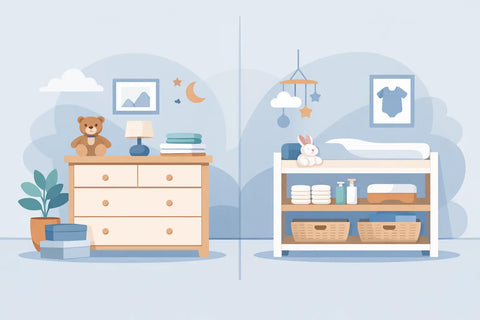
You usually feel the difference between a nursery dresser and a changing table at 2am, not in the showroom. One gives you drawers for sleepsuits, nappies and muslins in one place. The other keeps changing essentials at arm’s reach and can feel lighter in a compact room. When parents ask about nursery dresser vs changing table, they are rarely asking about looks alone. They are trying to work out what will make daily care safer, calmer and easier.
For many families, the right answer depends on three things - how much space you have, how long you want the furniture to serve you, and how you plan to organise the nursery. Both options can work beautifully when chosen well. The best choice is the one that supports safe changing, suits your routine, and still feels right once the newborn stage passes.
Nursery dresser vs changing table: the real difference
A nursery dresser is first and foremost a storage piece. It usually comes with multiple drawers and a broad top surface, which may be used with a changing mat or a dedicated changing tray if the design allows. Its strength is that it keeps clothing, blankets, bibs and other daily essentials contained in one larger unit.
A changing table is designed with nappy changes as its main job. Many models include raised sides, shelves, baskets or a fitted top made specifically for changing. It tends to feel more purpose-built for the baby stage, with a layout that prioritises quick access over long-term storage.
That is why this decision is not simply about furniture category. It is about whether you want a more flexible storage solution or a more dedicated changing station. In a modern nursery, especially where floor space is limited, that distinction matters.
When a nursery dresser makes more sense
A dresser often suits parents who want nursery furniture to last beyond the first year or two. Once nappy changes become less frequent, the dresser still earns its place. It can continue storing clothes, toys, books and bedding without looking like leftover baby equipment.
This makes it especially attractive if you are aiming for a clean, design-led nursery that blends with the rest of the home. A well-made dresser tends to feel more permanent and more versatile. For families furnishing a room from scratch, it can reduce the need to buy separate storage later on.
There is also a practical benefit during the newborn months. If you place a changing mat securely on top and keep the essentials arranged in the top drawers, you create a changing area and storage hub in one footprint. That can work very well in flats or smaller bedrooms where every piece of furniture needs to justify its space.
The trade-off is that not every dresser is automatically suitable for changing. Height matters, surface depth matters, and stability matters most of all. Parents should look for a unit that feels solid, has a top area that safely accommodates a changing setup, and ideally includes anti-tip features or wall anchoring for added reassurance.
When a changing table is the better choice
A changing table can be the better option if you want a purpose-built station from day one. It is often easier to set up for frequent changes because the layout is simple and visible. Open shelves can make nappies, wipes, creams and spare clothes quicker to grab, particularly in those early weeks when speed matters.
Some parents also prefer the defined changing surface and baby-focused design. There is a certain convenience in having a unit made specifically for this task, especially if you like everything arranged in a clear routine. It can feel straightforward and efficient.
This option is often well suited to families who already have enough wardrobe or drawer space elsewhere. If your nursery storage is already covered, a dedicated changing table may solve the immediate need without adding a larger furniture piece.
The compromise is longevity. Many changing tables have a shorter useful life once your child outgrows the changing stage. Some convert into shelving or general storage, but others become harder to repurpose neatly. If you are trying to make every purchase stretch further, that is worth weighing up.
Safety matters more than category
In the nursery dresser vs changing table debate, safety should carry more weight than appearance or trend. A safer dresser is a better choice than a poorly designed changing table, and the reverse is equally true.
Whichever option you choose, stability is essential. The furniture should feel firm, balanced and well-constructed, with no wobble. If it is a taller unit, anchoring it securely can add another layer of protection. The changing surface should allow your baby to lie comfortably on a properly fitted changing mat without overhang or movement.
It is also wise to think about how the furniture works in real life. Can you reach wipes and clean nappies without stepping away? Is there enough room to keep one hand on your baby at all times? Are the materials easy to wipe clean after the less glamorous moments of parenthood? Premium nursery furniture should support hygiene just as much as style.
Non-toxic materials and baby-safe finishes matter too, especially in a room where your child will spend so much time. For many parents, peace of mind comes from choosing furniture built with safety-conscious materials and tested quality, not simply attractive design.
Storage, space and daily routine
A large part of this decision comes down to how you live at home. In a more compact Singapore home, a dresser can be the smarter use of space because it combines storage and changing in one unit. That may help keep the nursery visually calm, which matters when the room also needs to function for feeding, settling and sleep.
On the other hand, a changing table with open shelving can suit parents who want easy access and a lighter visual footprint. Closed drawers look tidier, but open storage can be faster when your hands are full and your baby is wriggling.
Think about your habits rather than your idealised nursery. If you prefer everything hidden away, a dresser may help you maintain order. If you like seeing supplies clearly and restocking quickly, a changing table may feel less fussy. Neither approach is better in every home.
Height is another overlooked point. The right piece should feel comfortable for the adult using it most. Daily changing happens often enough that an awkward height can become genuinely tiring.
Long-term value and design fit
Parents shopping carefully often ask which option gives better value. In many cases, the nursery dresser wins on lifespan. It can transition with your child and remain useful for years, which can make the higher upfront cost feel more worthwhile.
A changing table can still be good value if it solves the newborn stage beautifully and fits your home without compromise. It just tends to be a more stage-specific purchase. If budget, room size and long-term use are all priorities, the dresser usually has the stronger case.
Design fit should not be dismissed either. Nursery furniture sits in your home every day, and modern parents want practical pieces that also look refined. Scandinavian-inspired styles remain popular for good reason - they feel warm, uncluttered and easy to pair with changing mats, storage baskets and soft nursery textiles. The best pieces do not force you to choose between safety and appearance.
How to choose with confidence
If you are still deciding on nursery dresser vs changing table, ask yourself one simple question: do you need this furniture mainly to store, mainly to change, or to do both in one spot?
Choose a nursery dresser if you want longer-term use, more concealed storage and a piece that can grow with your child. It is often the stronger investment for a full nursery setup.
Choose a changing table if you want a dedicated baby-care station, already have enough storage elsewhere, or prefer a layout built specifically around quick changes and visible essentials.
For many families, the best result comes from matching the furniture to the room rather than chasing a one-size-fits-all answer. Look for quality construction, safe materials, easy-clean surfaces and a design that supports your routine from the first week onwards. That is where confident buying starts.
At RaaB Family, we see this choice as part of creating a nursery that feels safe, calm and genuinely workable every day. The right piece should not only look good on day one. It should make life with your baby feel a little more organised, a little more comfortable, and much easier when your hands are full.