
A baby play mat rarely stays spotless for long. One moment it is tummy time, the next it is milk dribbles, biscuit crumbs, nappy-free accidents and the odd muddy footprint from an older sibling. If you are wondering how to clean baby play mats without damaging the surface or leaving behind harsh residue, the good news is that most day-to-day cleaning is simple when you use the right method.
The key is to clean in a way that protects both hygiene and the mat itself. Baby mats sit close to little hands, faces and mouths, so parents are right to be careful. At the same time, over-cleaning with strong chemicals, rough scrubbing or too much water can wear out the print, weaken the foam or affect the finish. A good routine keeps the mat fresh, safe and looking presentable in a modern home.
How to clean baby play mats day to day
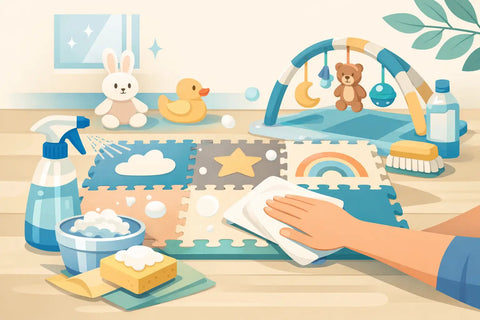
For regular maintenance, gentle cleaning is usually enough. In most homes, a play mat benefits from a quick wipe at the end of the day, especially if it is used for feeding, crawling or messy play. Use a soft cloth or sponge with warm water and a small amount of mild baby-safe soap. Wipe the surface in smooth strokes, then go over it again with a clean damp cloth to remove any soapy film.
This matters more than many parents realise. If soap residue is left behind, the mat can feel sticky and attract dust more quickly. It can also be less pleasant for babies who spend a lot of time on the floor. Once wiped down, dry the mat with a clean towel or leave it to air dry fully before the next use.
If the mat is foldable, pay a little attention to the seams and creases where crumbs or dried spills can collect. A soft cloth wrapped around your finger usually works better than a brush, which may be too harsh on coated surfaces. The goal is not aggressive scrubbing. It is consistent, gentle care.
What to use and what to avoid
Parents often assume stronger cleaning products mean better hygiene, but with baby play mats, that is not always true. Mild soap diluted in warm water is suitable for most routine cleaning. If your mat manufacturer gives specific care instructions, those should always come first, because finishes and material layers can vary.
It is usually best to avoid bleach, abrasive cleaners, disinfectant sprays with heavy fragrance, and scouring pads. These may break down the outer layer of the mat over time or leave behind residue you would rather keep away from your child. Even natural DIY cleaners need caution. Vinegar, for example, is popular in household cleaning, but it may not suit every play mat material and the smell can linger.
The safest approach is simple: use a gentle cleaner, use only as much moisture as needed, and test any new product on a small hidden area first. Premium play mats designed for family use are often made to be easy to wipe clean, which means you should not need aggressive products to keep them hygienic.
How to clean baby play mats after spills and accidents
Some messes need more than a quick once-over. Milk, purees, juice and nappy leaks should be dealt with as soon as possible, because dried residue is harder to remove and can affect both hygiene and odour.
Start by blotting, not rubbing. If there is liquid on the mat, press it gently with kitchen roll or a dry cloth to absorb as much as possible. Then wipe the area with warm water and mild soap. For thicker mess, remove solids first, then clean in stages rather than trying to spread everything around with one cloth.
Once the visible mess is gone, wipe again with clean water and dry thoroughly. If any smell remains, repeat the process rather than reaching immediately for a harsh deodorising spray. With baby products, low-residue cleaning is usually the better choice.
If the accident has reached the edges or fold lines, check carefully that moisture has not settled there. Foam-based mats should not stay damp for long periods. Trapped moisture can lead to unpleasant smells and shorten the life of the product.
Deep cleaning without damaging the mat
Even with daily wipe-downs, every play mat benefits from a deeper clean now and then. In a busy household, once a week or once every two weeks is often sensible, depending on how heavily the mat is used. A mat used for feeding and active play will naturally need more attention than one used only occasionally.
To deep clean, begin by removing loose dust, hair and crumbs. A dry microfibre cloth works well, and in some cases a handheld vacuum on a gentle setting can help, provided it does not drag harshly across the surface. Then wipe the entire mat section by section using a cloth dipped in warm, soapy water and wrung out well.
This is one of the main trade-offs parents should know. More water does not mean more cleanliness. In fact, oversaturating a play mat can do more harm than good, particularly if it has layered foam construction or stitched edges. Your cloth should feel damp, not dripping.
After cleaning, wipe once more with plain water to remove residue. Then dry the mat completely in a well-ventilated room. If possible, stand it upright for a while so both sides can air out. Avoid direct high heat unless the manufacturer clearly says it is safe, as too much heat can warp or damage some materials.
Can you use disinfectant on a baby play mat?
Sometimes, yes, but only with care. During illness in the home, after a particularly unpleasant accident, or if the mat has been used in a shared play area, parents may want extra reassurance. In those cases, a baby-safe disinfecting product may be appropriate if it is compatible with the mat material.
The important part is checking the label and the mat care guidance. Some disinfectants are suitable for hard household surfaces but too strong for coated foam mats. Others require a contact time and then a rinse, which many people miss. If a disinfectant is not fully removed when required, it can leave behind chemicals on a surface your baby touches constantly.
For most families, everyday hygiene comes from frequent wiping, prompt spill cleaning and allowing the mat to dry properly. Disinfectant has its place, but it should not replace sound daily care.
How often should you clean a baby play mat?
It depends on how your family uses it. In homes where the play mat is the centre of playtime, bottle feeds and floor naps, a quick daily clean makes sense. In lighter-use spaces, wiping every few days may be enough, with spot cleaning as needed.
A practical rhythm for many parents looks like this: wipe visible messes immediately, do a light clean at the end of the day, and deep clean weekly. If your baby is teething, crawling everywhere or starting solids, you may find yourself cleaning more often for a while. That is normal.
Rather than aiming for perfection, aim for consistency. A mat that is cleaned little and often is easier to maintain than one left until stains set in.
Keeping your play mat in better condition for longer
Cleaning is only part of the picture. How you use and store the mat also affects how easy it is to keep fresh. Try to keep sharp toys, rough pet claws and outdoor shoes away from the surface where possible. If the mat is foldable, fold it along its intended lines instead of forcing it into a tighter shape.
It also helps to choose a mat made for real family life. Easy-clean surfaces, non-toxic materials, durable foam density and a finish that stands up well to daily wiping all make a noticeable difference. For parents furnishing a nursery or play space, these details are not extras. They are part of what makes a product practical, hygienic and worth bringing into the home.
At RaaB Family, that is exactly why many parents look for premium-quality mats that balance comfort, easy maintenance and trusted safety standards. A good mat should support play beautifully, but it should also clean up without becoming a chore.
A baby play mat will never stay pristine for long, and that is usually a sign it is being well loved. What matters is having a cleaning routine that keeps the space safe, comfortable and ready for tomorrow's play.