
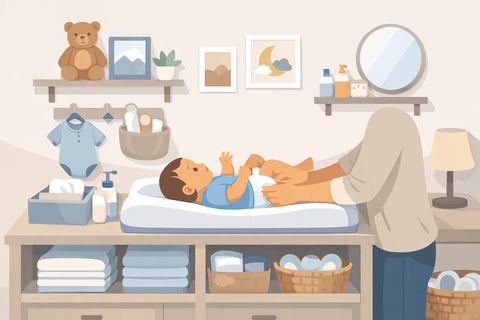
That first middle-of-the-night nappy change tends to reveal every weakness in your nursery setup. The wipes are somehow out of reach, the spare sleepsuit is in the wrong drawer, and you realise very quickly that knowing how to set up changing station properly is less about styling and more about making daily care safer, faster, and calmer.
A well-planned changing area should do three things at once. It should keep your baby secure, keep essentials within easy reach, and fit naturally into the way your home works. For many parents in Singapore, that also means making smart use of space without compromising on hygiene or design. The good news is that a practical changing station does not need a large nursery. It needs the right placement, the right furniture, and a thoughtful routine behind it.
How to set up changing station for safe daily use
Start with location before you think about baskets, nappies, or decorative touches. The safest changing station is one you can use comfortably several times a day without awkward stretching or turning away from your baby. A dedicated nursery corner works well, but many families prefer a setup in the master bedroom during the newborn months. That can be especially helpful for night feeds and quicker changes.
Wherever you place it, choose a flat, stable surface away from windows, curtain cords, and shelves that could hold falling items. Avoid positioning the station directly under wall décor or near plugs with loose cables. If the room is air-conditioned, make sure the airflow is not too strong over the changing area. Babies lose heat quickly, and a cold setup often means a fussier change.
Height matters more than many parents expect. If the surface is too low, your back will feel it within days. If it is too high, lifting and settling your baby can feel less secure. A purpose-built changing table or changing station is often the best choice because it is designed around safe working height, stable construction, and storage that supports daily use. If you are using a dresser with a changing top, check that everything sits firmly and does not shift.
The changing mat should be easy to wipe clean and fit the surface properly. Gaps, overhang, or an unstable mat can turn a simple task into an unnecessary risk. A contoured or gently raised-edge mat can offer a little extra reassurance, but it does not replace active supervision. Even for a few seconds, never step away from your baby while they are on the changing surface.
The essentials to keep at your changing station
A changing station works best when it is stocked for real life, not just for the first photo. Think about what you reach for most often during a change and keep those items closest to hand. Nappies, cotton wool or wipes, nappy cream, and a spare outfit are the obvious basics. A small bag or bin for soiled nappies also makes a big difference, especially if your changing area is not next to a bathroom.
It helps to group items by frequency of use. Daily essentials should be on the top shelf or in the top drawer. Backup stock can sit lower down. This keeps the working area tidy and reduces the time spent searching while one hand stays on your baby. Open baskets can look neat, but drawers often give a cleaner finish and protect contents from dust. It depends on your room, your routine, and whether you prefer everything visible or tucked away.
You do not need to overfill the station. In fact, too much storage on the surface can make the area feel cluttered and less safe. Keep only what supports a smooth change. Extra towels, larger packs of nappies, and bath items can live elsewhere.
A sensible setup usually includes a few less obvious but very useful additions. Hand sanitiser for adults, a muslin cloth, and a change of top for you can save time on difficult days. If your baby has sensitive skin, keeping a dedicated set of gentle care products at the station helps maintain consistency.
What should stay within arm's reach
The key test is simple. If you use it during most changes, you should be able to reach it without moving your feet. That usually means nappies, wipes or cotton wool, barrier cream, and one spare vest or babygrow. If you need to twist, bend, or turn your back, the layout needs adjusting.
Hygiene and easy-clean design matter more than you think
Changing stations see constant use, and they need to be easy to clean without fuss. This is one area where premium materials and well-finished surfaces really pay off. Smooth, wipeable finishes are easier to maintain than textured surfaces that trap moisture or residue. The same goes for storage boxes and liners.
Choose washable or wipe-clean organisers, and keep a simple cleaning routine. A quick daily wipe of the mat and frequently touched surfaces is usually enough, with a deeper clean every few days. If creams, spills, or leaks build up around the edges of the mat, clean them promptly. Hygiene is not just about appearance. It helps protect delicate skin and keeps the whole space more pleasant to use.
Fabric accessories can soften the look of the nursery, but use them carefully around the changing area. Too many fabric liners, decorative runners, or plush items can make cleaning slower. In a station used several times a day, practical finishes usually outperform purely decorative choices.
How to set up changing station storage in a small space
Not every family has room for a full nursery, and that is perfectly workable. In smaller homes, the best changing station is often one that combines storage vertically and uses a compact footprint well. A slim changing unit with shelves or built-in drawers can give you enough capacity without making the room feel crowded.
If space is tight, focus on zones. Keep nappy-changing items in one section, clothing in another, and health or grooming items separately. That way, even a smaller setup feels organised rather than overloaded. Drawer dividers can help, but so can simply assigning one container to each category and resisting the urge to mix items.
Multi-use furniture can also make sense, especially if you are planning for the station to evolve as your child grows. A sturdy piece that works now as a changing unit and later as storage gives better long-term value than a flimsy temporary option. This is where quality is worth considering carefully. Furniture used several times a day should feel solid, easy to clean, and dependable.
For parents who want the nursery to look polished as well as practical, a Scandinavian-inspired approach often works beautifully. Clean lines, soft neutral tones, and uncluttered surfaces create a calm setting without sacrificing function. The goal is not a showroom-perfect corner. It is a setup that supports real routines while still feeling considered.
Common setup mistakes parents can avoid
One of the most common mistakes is putting too much faith in convenience and too little in stability. Portable caddies and temporary changing pads can be useful, but they should not replace a secure, reliable base for regular use. If the setup wobbles or shifts, it is not the right setup.
Another issue is storing items above the changing surface. Shelves can look efficient, but if products are stacked high or placed loosely, they can become hazards. It is usually safer to keep heavier or less-used items lower down.
Parents also sometimes underestimate how quickly routines change. In the newborn stage, you may need more frequent access to muslins and cream. A few months later, wriggling becomes the bigger challenge, so faster access and cleaner surfaces matter even more. Build a changing station you can adapt without having to start again.
Lighting is often overlooked too. Soft overhead lighting can be fine during the day, but for night changes, a warm, gentle lamp nearby is usually more comfortable for both baby and parent. Bright light can make settling back to sleep harder.
Choosing a changing station that supports your routine
If you are deciding what to buy, think beyond the first few weeks. The right changing station should feel stable, safe, and easy to use every single day. Look closely at construction quality, wipe-clean surfaces, practical storage, and whether the dimensions suit your room. Safety-conscious parents often prefer baby furniture made with non-toxic materials and reliable finishes, especially in products used up close and often.
This is also one of those purchases where showroom access can be genuinely helpful. Seeing the height, storage layout, and finish in person gives extra confidence, particularly for first-time parents. RaaB Family focuses on this balance of safety, modern design, and daily practicality because baby furniture should support your routine, not complicate it.
A changing station does not need to be elaborate to be effective. It just needs to feel secure when you place your baby down, easy when one hand is busy, and calm when the rest of the day feels anything but. Set it up with care now, and it becomes one of the hardest-working spaces in your home.