
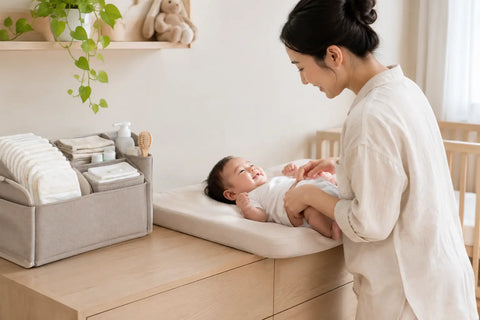
A nappy change rarely happens at the exact moment you have a free hand and a clear surface. More often, it is between feeds, before heading out, or while your little one is wriggling with impressive determination. Well-chosen nappy organisers keep everyday essentials together, so the practical parts of family life feel a little more settled.
The right organiser does not need to hold every baby item you own. It simply needs to make the things you reach for most easy to find, easy to carry and easy to put back. Whether you are planning a calm nursery, setting up a changing area in the living room or preparing for visits to grandparents, a thoughtful system can make a real difference.
What to Look for in Nappy Organisers
Start with your routine rather than the look of the organiser. A compact caddy may be ideal if you move between rooms, while a drawer organiser can suit a dedicated changing table. The most useful choice is one that fits naturally into the way your family already lives.
Choose a size that suits the space
Think about where the organiser will sit when it is not in use. On a nursery shelf, a shallow basket or divided tray may keep the surface looking tidy. In a living area, a structured caddy with a handle can be tucked beside the sofa or stored in a cabinet after use. If space is limited, avoid choosing a large organiser simply because it offers more compartments. A smaller option that is easy to lift and reset is often more practical.
Consider the size of the supplies you use regularly, too. Nappy packs, wipes, creams and spare clothing can take up more room than expected. Measure the drawer, shelf or changing surface before buying, especially if you are styling a compact nursery.
Look for useful compartments, not just more of them
Separate sections can save time, but too many small pockets can make an organiser harder to use. Look for a balanced layout: a larger space for nappies, an easy-to-reach area for wipes, and a few smaller sections for items such as creams, a muslin cloth or spare changing mat covers.
Open compartments work well for supplies you use throughout the day. Lidded boxes can be useful for items you prefer to keep out of sight. The best arrangement is one you can use without searching through layers of products while keeping your attention on your child.
Prioritise easy-care materials
Parenting essentials are used often, moved often and occasionally splashed. Choose materials that suit the room and the amount of care you are realistically happy to give them. Wipe-clean finishes can be helpful for busy changing stations, while fabric baskets may add softness to a nursery shelf but can require more regular laundering.
A neutral, modern design can also help the organiser sit comfortably in shared spaces. This matters if your changing supplies live in the lounge rather than a separate nursery. Practical storage can still feel considered and at home with the rest of your interior.
Match the Organiser to Each Room
A single organiser can work well for some households, but many parents find that a few simple zones make daily routines easier. The aim is not to duplicate everything. It is to avoid carrying loose items from room to room when you need them quickly.
The nursery changing area
For a dedicated changing space, drawers and shelf organisers create a clean, lasting setup. Keep the most frequently used items within easy reach of the changing surface, and reserve lower drawers or higher shelves for backups. It helps to separate everyday supplies from bulk packs, seasonal clothing and items you use less often.
If you use a changing table or nursery furniture with storage, think in layers. The top drawer can hold nappies, wipes and a change of clothes. Lower storage can hold refills, extra linens and larger packs. This makes restocking straightforward without crowding the changing area.
The living room caddy
Many families spend a large part of the day in the living room, particularly in the early months. A portable caddy is a practical choice here because it can hold a modest supply of essentials without making the room feel like a permanent changing station.
Choose one with a sturdy base and comfortable handle, then give every item a regular place. Keep only what you are likely to use before the next restock: nappies, wipes, nappy bags, a spare bodysuit, a muslin and any care items that form part of your usual routine. At the end of the day, return the caddy to its home or top it up for the morning.
A compact option for outings
A full organiser is not necessary for every trip. For short outings, a small zip pouch or slim insert can hold the essentials and move easily between your changing bag, pram basket and car. This is particularly useful when you want a familiar mini-kit without repacking from scratch each time.
For longer days out, a larger changing bag with clearly divided sections may be more suitable. The trade-off is simple: a compact kit is lighter and quicker to manage, while a bigger bag gives you more flexibility for spare clothes, feeds and unexpected delays.
How to Set Up a Simple Changing Kit
The easiest systems are often the ones with the fewest decisions. Begin with the items you use at almost every change, then add only what supports your family's routine. For most homes, that means nappies, wipes, nappy bags, a changing mat, spare clothing and a soft cloth or muslin.
Next, decide what should stay in the organiser and what should be stored nearby. Large refill packs, extra clothing and unopened products can sit in a drawer, cupboard or storage basket. Keeping the main organiser lighter makes it easier to carry and prevents it from becoming a place where unused items disappear.
It is also worth creating a small space for the details that are easy to misplace, such as a spare dummy, travel-sized hand sanitiser or a clean pair of socks. A zipped pocket or small inner basket can stop these items from drifting to the bottom of the caddy.
When arranging any changing area, keep supplies stable and positioned so they can be reached comfortably. Follow the instructions provided with your furniture and changing equipment, and never rely on storage alone to replace close supervision during a nappy change.
Keep the System Easy to Maintain
An organiser only works if it remains simple to reset. A quick check once a day is usually enough: replace used nappies, add wipes if the pack is running low and remove clothing that needs washing. This small habit is easier than discovering an empty caddy when you are already in the middle of a change.
Cleaning should be equally uncomplicated. Wipe smooth surfaces regularly and wash fabric pieces according to their care instructions. If you use baskets, trays or drawer dividers, take a moment each week to remove stray receipts, empty packaging and items that belong elsewhere.
As your child grows, your organiser will likely change too. Newborn supplies may give way to larger nappies, pull-ups, spare underwear or toddler snacks for outings. A flexible setup is more valuable than a perfectly styled one that only works for a short stage.
When a Smaller Setup Works Better
There is no need to build a large changing station if your home or routine does not call for one. Families in smaller flats may prefer one portable caddy and a well-organised drawer. Others may want a nursery setup alongside a small downstairs kit. Both approaches can be calm, attractive and highly practical.
The key is to make restocking feel manageable. If you find yourself moving supplies constantly, add a second small organiser. If an organiser is always half-empty, simplify it. Your storage should support your day, not create another task to manage.
A thoughtfully arranged changing kit brings a quiet sense of order to a busy season. Choose nappy organisers that fit your home, keep the essentials close and leave room for family life to unfold comfortably.