
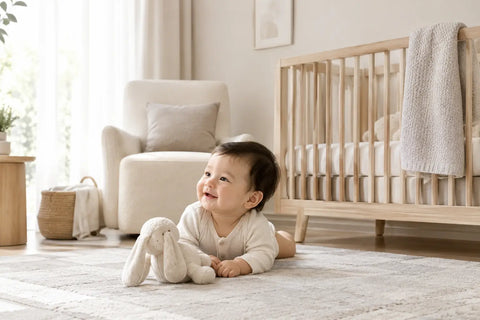
A nursery rarely stays picture-perfect for long. Nappies need a home, laundry appears quickly, and the room may need to work for feeding, cuddles, play and rest in the same day. The most useful baby nursery design trends recognise this reality. They bring together a calm visual style with furniture, storage and surfaces that make everyday family life feel more manageable.
For parents in Singapore, where bedrooms can be compact and homes often need to adapt over time, the strongest trend is not a particular colour or theme. It is thoughtful flexibility: choosing pieces that feel welcoming now and remain useful as routines change.
Baby nursery design trends with staying power
The move away from highly themed rooms continues. Rather than building a nursery around a single character, colour or motif, many parents are creating a softer foundation and adding personality through smaller details. This approach gives the room a more settled feel and makes future updates simpler.
Warm white, oatmeal, stone, misty grey, soft sage and muted clay shades are popular because they sit comfortably alongside most existing home interiors. They also make it easier to introduce colour in measured ways, whether through a print, a mobile, a fitted sheet or a favourite book display. A neutral room does not need to feel plain. The interest comes from tone, texture and considered contrast.
Natural-looking timber finishes remain a favourite, particularly when paired with gentle curves and clean lines. The effect is modern without feeling stark. If your home already has dark wood, black accents or cooler flooring, there is no need to replace everything. Repeating one or two existing finishes can help the nursery feel connected to the rest of the home.
Choose a palette that works in real light
A paint swatch can look very different between a bright morning and an evening under warm lighting. Before committing to a wall colour, place samples near the cot area, changing area and window. Observe them at different times of day.
In smaller rooms, using one main shade across walls, curtains and larger furniture can create a quieter visual backdrop. You can then add depth with a contrasting basket, framed artwork or a textured rug. Strong patterns have their place, but using them in removable layers is often the more practical choice when your taste changes or the room later becomes a toddler space.
A nursery planned around daily routines
Beautiful rooms are easier to enjoy when the layout supports the tasks you repeat every day. Start by mapping the room into simple zones: rest, changing, storage and, where space allows, a small area for floor time. The zones do not need to be formal. Their purpose is to reduce unnecessary searching and carrying.
Keep changing essentials together so that fresh nappies, wipes, spare clothing and a laundry basket are within easy reach. A low, stable storage solution can be especially helpful later, when children begin choosing books or toys with support. Closed storage keeps visual clutter down, while one or two open baskets make the room feel lived-in and convenient.
For the sleep area, keep the set-up simple and follow the instructions provided with your chosen cot or sleep product, along with relevant safe sleep guidance. A calm design does not require lots of decoration around the cot. Often, leaving clear space nearby is both visually restful and easier to clean.
Give every small item a repeatable place
The everyday items are the ones that make a nursery feel untidy fastest: muslins, creams, spare sheets, tiny socks and soft toys. Drawer organisers, labelled containers and lidded baskets can make a noticeable difference without adding more furniture.
Try organising by routine rather than by category alone. For example, keep bath items together, place overnight changes in one drawer, and store spare bedding where it can be reached without emptying a whole cupboard. This is a small design decision, but it supports smoother evenings when your hands are already full.
Flexible furniture is the modern luxury
Parents are becoming more selective about nursery furniture, favouring pieces with a clear purpose and a longer useful life. A compact changing unit with generous storage may suit one family, while another may prefer a changing surface that can be removed later from a chest of drawers. The right choice depends on room size, household routines and how much built-in storage your home already has.
Look beyond the first few months. Could a chair become a reading spot? Could a shelf hold newborn essentials now and books later? Could a play mat move from the nursery to the living area when family life shifts downstairs? These are the questions that help a purchase earn its place.
This does not mean every item must serve several functions. A dedicated piece can be worthwhile if it genuinely makes daily care more comfortable. The point is to avoid filling the room with furniture simply because it appears in a styled nursery image.
For compact homes, consider vertical storage and furniture with a lighter visual profile. Wall-mounted shelves must be installed appropriately for the wall type and used according to the manufacturer’s guidance. If you rent, freestanding storage and movable baskets may offer more flexibility without permanent changes.
Soft texture, easy-care surfaces
The nursery is becoming less about matching sets and more about tactile comfort. Quilted fabrics, woven baskets, cotton curtains, smooth timber and softly padded floor surfaces create warmth without relying on busy decoration. A few textures are usually enough. Too many can make a small room feel crowded and add to the cleaning routine.
Easy care should sit alongside style. Choose washable textiles where possible, and think about how easily a surface can be wiped after everyday spills. A practical play mat can help define a floor area while providing a comfortable spot for supervised play, reading or quiet time. Check product instructions for cleaning and intended use before setting up any item.
Layering works best when it remains simple. One curtain, one floor covering, a couple of baskets and bedding in complementary tones can create a finished look. This is easier to maintain than a room filled with cushions, ornaments and delicate display pieces.
Bring in personality through changeable details
Artwork, book covers, wall decals and a small selection of soft furnishings are useful places to show personality. They can reflect family stories, favourite animals, local places or colours you love without locking the whole room into a theme.
A gallery ledge or picture rail can make rotating prints easier, but it is equally effective to use one well-placed framed piece. Keep displays securely positioned and avoid overfilling the room. The goal is a space that feels personal, not a catalogue set.
The return of the family-friendly nursery
Another meaningful shift is the nursery that does not feel separate from the rest of the household. Rather than designing for photographs alone, parents are choosing colours, furniture and materials that continue the calm, modern character of their living spaces. This creates a more cohesive home and can make hand-me-down furniture or existing storage easier to incorporate.
It also makes room for the realities of shared care. A clear drawer system, a comfortable place to sit and a layout that makes sense to everyone in the household can be more valuable than a perfectly coordinated display. If grandparents or a helper spend time with your child, simple organisation helps them find what they need with less guesswork.
At RaaB Family, the focus on practical design reflects this way of living: considered nursery and play essentials should support a calm home, not create another complicated system to manage.
How to make trends work for your home
Treat trends as ideas, not rules. Start with what the room needs most - perhaps better storage, a more comfortable floor space or a palette that feels less busy. Then choose one or two design directions that genuinely suit your home.
If you are preparing early, leave room for adjustment. You may discover that a feeding chair is best in another corner, that certain items are used more often than expected, or that storage needs change quickly. A nursery with clear surfaces, adaptable pieces and a gentle colour foundation gives you permission to evolve the space without starting again.
The loveliest nursery is not the one that follows every trend. It is the one that feels calm at 2 am, works on a busy morning and leaves enough space for the moments your family will make there.