
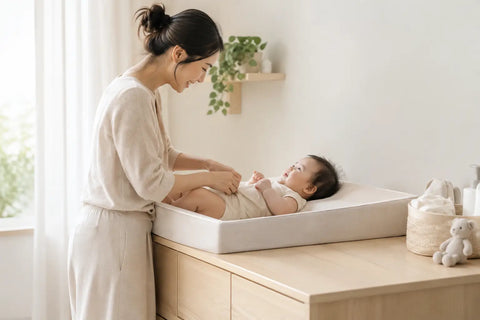
A nappy change may take only a few minutes, yet it happens many times across the day. That makes changing table ergonomics less about creating a picture-perfect nursery and more about making a repeated family task feel comfortable, organised and calm. A well-planned station can reduce unnecessary bending, twisting and searching for essentials when you have one hand supporting your baby.
The right arrangement will look different in every home. Your height, the room layout, whether you share care with a partner or helper, and how long you expect to use the changing area all shape the best choice. Start with comfort, then build in practical storage and a routine that is easy to maintain.
Why changing table ergonomics matter
Ergonomics simply means arranging a space to work well with the person using it. At a changing table, that means a surface height that allows you to stand naturally, supplies placed where they are easy to reach, and enough clear space to move without feeling cramped.
Without a considered setup, parents can end up leaning forwards over a low surface, reaching into deep drawers or turning repeatedly towards a nearby shelf. One awkward movement is rarely a concern, but nappy changes are frequent. Small improvements can make the everyday routine feel noticeably easier, particularly during busy mornings, late-night changes or the early weeks when rest can be limited.
Comfort is not only about the adult. A calm, uncluttered changing area can also help you focus on your baby and move through each step without rushing. Keep the setup simple enough that other caregivers can use it confidently too.
Choose a height that suits the main caregiver
There is no single changing-table height that works for every household. A useful starting point is a surface that sits around the height of your upper thighs to waist, depending on your proportions. When standing close to the table, you should be able to keep your shoulders relaxed and bend your elbows comfortably while tending to your baby.
Try the position before committing. Stand where you would normally change your baby and place your hands on the surface as if you were fastening a nappy. If you need to hunch your shoulders, round your back or reach forward excessively, the table may be too low or too deep for you. If your arms are lifted uncomfortably, it may be too high.
For households with caregivers of noticeably different heights, a middle-ground height is often the most practical solution. The person who handles most changes should be comfortable, but a stable step stool may help a shorter adult where appropriate. Keep walkways clear and choose only a sturdy option that can be stored safely away when not in use.
A changing mat placed on an existing chest of drawers can be a space-saving choice, especially in a smaller Singapore home. In this case, check that the top is stable, sufficiently spacious for the mat and your essentials, and used according to the furniture and changing-mat instructions. The height may be excellent for one adult but not another, so a quick in-store or at-home test is worthwhile.
Consider the depth as well as the height
A good working height can still feel awkward if the changing surface is very deep. You should be able to stay close to your baby without leaning across the full depth of the unit. Place the mat so you have room to work while keeping daily-use items accessible at the side rather than beyond your reach.
Avoid turning a changing top into a general storage surface. Decorative baskets, spare bedding and large piles of clothing may look tidy at first, but they can reduce the clear area you need during a change. A few carefully chosen supplies are more useful than a crowded tabletop.
Set up a reach zone for everyday essentials
The most useful items belong within easy reach of your usual standing position. Think of this as your immediate reach zone: the items you can pick up without stepping away, stretching or taking your attention from your baby.
Keep nappies, wipes, cream if used, a change of clothes and a small bag or bin for disposal close by. A shallow drawer, open shelf or organiser beside the mat can work well, provided it does not interfere with the changing surface. You do not need every backup item in this zone. Refill supplies from a larger cupboard or drawer when needed, rather than overloading the area.
It helps to organise items in the order you use them. For example, nappies and wipes may sit closest to hand, while spare clothing and muslins are one level below. This small detail can make changes feel more fluid, especially when a baby is wriggly or when you are managing the routine with limited time.
If the table has drawers, use the top drawer for daily essentials and reserve lower drawers for bulk packs, larger clothing sizes or spare linens. Opening a low drawer repeatedly may be less comfortable than using waist-level storage, but lower storage is still valuable for supplies you do not need at every change.
Create enough room to move safely and comfortably
The space around the changing table matters just as much as the furniture itself. Leave enough room for you to stand squarely in front of the surface rather than at an angle. If a cot, wardrobe or door forces you to twist sideways, consider repositioning the table if the room allows.
Good lighting makes a practical difference too. You need to see clearly, but a bright overhead light can feel harsh during evening changes. A soft, well-positioned room light can create a calmer atmosphere while still allowing you to manage the task properly. Make sure cords, lamps and loose items are kept away from the changing area.
A washable mat beneath the table may help protect flooring from the occasional spill, but it should lie flat and not create a trip hazard. Likewise, avoid placing laundry baskets or delivery boxes in the route between the changing station and the door. A clear path is one less thing to think about when carrying your baby.
Keep supplies close, but keep supervision closer
Ergonomic planning should never mean relying on storage that is just out of reach. Before each change, bring the items you expect to use to hand. Stay with your baby throughout, keep a hand on them when needed, and follow the care and use guidance provided with your changing furniture and mat.
If you need something that is not already within reach, the simplest response is to take your baby with you or finish the change first. Planning the station well makes these interruptions less likely, but babies are unpredictable and flexibility is part of family life.
Make the station work at different times of day
A changing area used only in the nursery may suit some families. Others may prefer a second, simple setup in the living area for daytime changes. The best arrangement depends on where you spend your time, how many floors your home has and whether you want to carry supplies between rooms.
For an evening setup, keep the essentials deliberately pared back. A small supply of nappies, wipes, clean sleepsuits and a covered bin or disposal solution can be enough. This reduces rummaging through drawers when the house is quiet. For daytime, you may want extra muslins, bibs and playwear close by.
Think about cleaning as part of the design. Choose storage that is easy to wipe down, use containers that do not collect clutter, and keep a simple restocking habit. A calm nursery is easier to maintain when every item has a clear place.
Plan for changing needs as your child grows
A dedicated changing table can be wonderfully convenient, but it is worth considering its role beyond the earliest months. Some families prefer a changing unit that can later hold clothes, books or nursery essentials. Others choose a changing mat on top of a dresser so the furniture can continue serving the room after the changing stage.
This is where practical design and your home layout meet. A compact room may benefit from furniture with useful storage below, while a larger nursery may allow for a separate changing unit and additional drawers. Focus on what will simplify your own routine rather than adding furniture simply because it is expected.
When selecting nursery furniture, look closely at the dimensions, storage layout, care requirements and instructions for use. Consider how the piece will fit through doorways, where it will sit in the room and whether you can comfortably access drawers once it is in place. Thoughtful choices at this stage help create a space that feels considered from the first nappy change onwards.
A changing station does not need to be elaborate to be effective. A comfortable height, clear surface and a small collection of well-organised essentials can turn a repetitive task into a quieter moment of care, leaving more room for the little conversations, songs and smiles that often happen in between.