
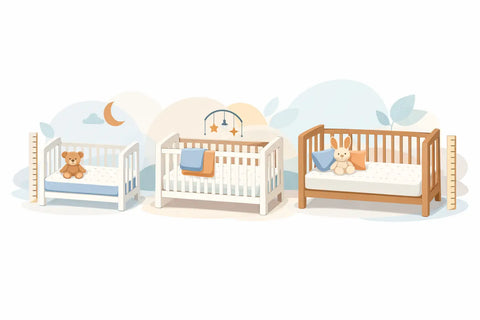
A cot can look perfect in the nursery and still be the wrong setup if the mattress does not fit properly. If you are wondering what cot mattress size you need, the safest answer is always this: choose the exact size that matches your cot’s internal measurements, not what looks close enough. Even a small gap around the edges can affect comfort and, more importantly, sleep safety.
For new and expecting parents, this is one of those details that seems minor until you start shopping. Cot dimensions vary, brands use different specifications, and product labels can be broader than they first appear. A little clarity at the start makes it much easier to buy with confidence.
What cot mattress size means in practice
When parents ask what cot mattress size to buy, they are usually trying to solve two things at once. First, they want a mattress that fits snugly and safely. Second, they want to know whether common “standard” sizes will work, or if they need something more specific.
The most important measurement is not the outside size of the cot. It is the internal sleeping area - the length and width of the base where the mattress sits. That is the space the mattress needs to match.
A mattress that is too small can leave gaps at the sides or ends. A mattress that is too large may bow up at the edges or sit under pressure, which also creates an unsafe sleeping surface. The right fit should feel neat, flat and secure, with no awkward movement once placed inside the cot.
Standard cot mattress sizes in the UK and beyond
There is no single universal cot mattress size across every market, which is where confusion often starts. In the UK, a common cot mattress size is around 120 x 60 cm. Cot bed mattresses are often larger, commonly around 140 x 70 cm.
That said, not every cot follows these exact dimensions. Some compact nursery cots are smaller. Some European or designer models have their own measurements. Travel cots often use different sizing again, and not every mattress marketed for a travel cot should be used for everyday overnight sleep.
In Singapore and across international baby retailers, you may also see dimensions influenced by UK, European or brand-specific manufacturing standards. That means “standard” can be a useful starting point, but it should never replace measuring your cot or checking the manufacturer’s sizing information.
Cot vs cot bed vs playpen mattress
These products are often grouped together when parents shop, but they are not interchangeable.
A cot mattress is usually for a smaller baby cot used from newborn stage into early toddlerhood. A cot bed mattress is larger and designed for a cot bed that converts as your child grows. A playpen mattress or folding mattress may be made for daytime use, supervised play, or occasional travel, depending on the product.
This matters because the right dimensions are only one part of the decision. The product also needs to match the intended sleep environment and safety guidance for that type of furniture.
How to measure your cot properly
If you want the clearest answer to what cot mattress size is right, measure the cot yourself. This only takes a few minutes and helps avoid the most common buying mistake - relying on assumptions.
Measure the internal length and width from the inside edges where the mattress actually sits. Do not measure the outside frame. If the base has curved corners or a shaped frame, measure the widest usable points and then check the brand’s official specifications as well.
It is worth measuring twice. Nursery furniture can be assembled slightly differently, and a few millimetres matter more than many parents expect.
How snug should the fit be?
The mattress should sit firmly in place with minimal gap around the edges. A widely accepted guide is that gaps should not exceed roughly 3 cm, though in practice the closer and neater the fit, the better. You should not be able to easily fit more than a couple of fingers between the mattress and cot side.
If there is visible movement, corner lifting, or empty space around the perimeter, it is not the right size.
Why exact sizing matters for safety
For baby sleep, snug fit is not just about appearance. It supports a flatter, more stable sleep surface and reduces the chance of baby getting trapped in gaps between the mattress and cot frame.
This is also why hand-me-down mattresses can be difficult to use safely. Even if the label says it is the right size, foam and edges can soften over time. The mattress may no longer hold its original shape, especially after storage or long use.
A fresh, well-fitted mattress also gives you a cleaner start from a hygiene point of view. For many families, that added reassurance matters just as much as the measurements.
Mattress thickness matters too
When people focus on what cot mattress size to buy, they often look only at length and width. Thickness matters as well.
A thicker mattress can feel more premium, but it still needs to work safely with your cot’s side height and mattress base settings. If the mattress is too deep for the cot design, it can reduce the effective height of the side rails, especially once your baby begins sitting or standing.
Most baby cot mattresses are designed within a safe thickness range, but it is wise to check both the mattress depth and the cot manufacturer’s recommendations. Comfort should never come at the expense of safe cot rail height.
Material, support and fit go together
Once you know the correct dimensions, the next decision is what the mattress is made from. This is where safety, comfort and practicality meet.
A good cot mattress should feel firm and supportive rather than soft and sink-in. Babies need a stable sleep surface. Parents often assume softer means more comfortable, but for infant sleep, firmer support is the better choice.
You may also want to look for features such as a removable washable cover, breathable construction, and non-toxic materials. In warm, humid climates, easy-care fabrics and hygienic finishes can make everyday nursery life much simpler. If a mattress is difficult to clean, even the right size may become frustrating to live with.
When a “close enough” fit is not acceptable
It can be tempting to buy a mattress that is nearly the right size, especially if stock is limited or you are trying to use an existing one. This is one of those nursery purchases where compromise does not pay off.
If the mattress is even slightly short or narrow, the fit may look manageable at first. But once sheets are on, or once the mattress shifts with regular use, the gaps can become more obvious. On the other hand, a mattress that is too tight may compress, bend or sit unevenly.
The safest and most practical option is always the one designed for that cot size.
Common buying mistakes parents make
One common mistake is buying based only on product names. Terms like cot, cot bed and toddler bed are not always used consistently across retailers. Another is forgetting that fitted sheets must match the mattress dimensions too. If the mattress size is unusual, bedding can become awkward unless you plan ahead.
Parents also sometimes focus on nursery style first and measurements second. A beautifully designed cot absolutely has its place in a modern home, but fit, certification and mattress compatibility should come before aesthetics.
That is why specialist baby retailers tend to be a safer place to shop. The product details are usually clearer, and compatibility across nursery essentials is easier to assess. At RaaB Family, for example, the focus is on practical baby products that combine design, safety and everyday usability, which is exactly what most young families need.
So, what cot mattress size should you buy?
Buy the mattress that matches your cot’s exact internal dimensions, supports a snug fit, and is suitable for infant sleep. For many cots, that may be 120 x 60 cm. For cot beds, it is often 140 x 70 cm. But “often” is not the same as “always”, and that distinction matters.
If you already have the cot, measure it carefully and compare the figures with the mattress specifications before you order. If you are buying both together, choose a retailer or brand that gives clear compatibility information and puts safety first.
A cot mattress is one of the few nursery purchases your baby will use every single day from the start. Getting the size right is not about overthinking the details. It is about creating a sleep space that feels secure, supportive and ready for real family life.
When in doubt, trust the tape measure over the label, and choose the fit that leaves no room for guesswork.