
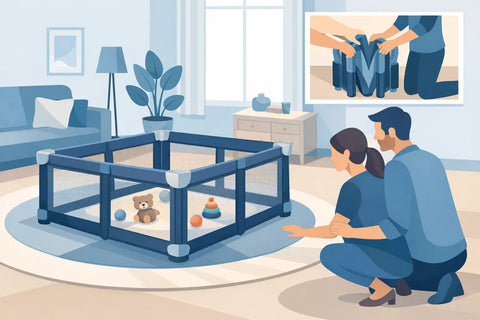
A playpen often looks simple on the surface, until you are the one stepping around it at 6am, folding laundry with one hand and keeping a crawling baby safely contained with the other. That is where a proper foldable playpen review becomes useful. For many families, especially in space-conscious homes, the difference between a good playpen and a frustrating one comes down to the details you only notice after daily use.
The appeal is easy to understand. A foldable playpen promises a secure play space that can be packed away when needed, moved between rooms, or stored without taking over the home. But not every design delivers on that promise. Some fold neatly but feel flimsy. Others are sturdy but awkward to shift. The best options balance safety, practicality and a look that still feels at home in a modern living space.
Foldable playpen review: what matters most
The first question is not whether a playpen folds. It is whether it remains dependable once it does. Folding mechanisms are helpful, but they should never compromise stability. A playpen should feel secure when fully assembled, with panels or frame sections that lock firmly into place and do not wobble under normal use.
For parents shopping in Singapore, where space can be limited and rooms often serve more than one purpose, foldability has real value. It allows the same play area to work in the living room during the day and be moved or packed down when guests arrive or when the space needs to be reset. Still, convenience should sit behind safety in the decision order, not ahead of it.
Material choice also deserves close attention. Smooth, non-toxic surfaces are easier to keep clean and more reassuring for babies who mouth everything within reach. If a foldable playpen includes fabric sides, those should feel durable, breathable and simple to wipe down. If it uses plastic panels, they should feel sturdy and well-finished rather than thin or brittle.
Aesthetics matter more than some people admit. Baby gear lives in your home, not in a catalogue. If a playpen is too bulky, too bright or too visually busy, it can quickly feel intrusive. Parents increasingly want nursery and play products that support safety without clashing with the rest of the home. A cleaner, more design-conscious look tends to age better and sit more naturally in open-plan spaces.
Safety should be non-negotiable
Any foldable playpen review worth reading has to start here. The safest playpen is not necessarily the one with the most features. It is the one built around stable construction, baby-safe materials and secure spacing.
Panel gaps should be narrow enough to prevent little arms, legs or heads from getting trapped. The base should sit evenly on the floor without shifting too easily. If the model includes suction pads or anti-slip support, that can be a useful extra on smooth flooring, although performance can depend on the surface beneath.
The height of the playpen matters too. Once babies begin pulling themselves up, lower walls become less reassuring. A sensible wall height gives parents more peace of mind without making the space feel enclosed. Rounded edges and smooth finishes are equally important. These are small details until a child falls sideways into them.
It also helps to think about what sits under the playpen. A foldable design paired with a well-fitted, high-density play mat creates a more complete safety setup than the frame alone. Gap-free compatibility between the mat and the pen can reduce shifting, improve comfort and make the whole area feel more intentional.
Ease of use is where quality shows
A foldable playpen may look excellent in product photos, but daily handling tells the real story. If it takes too much effort to fold and reopen, most parents will simply leave it where it is. That defeats the point.
The better designs have a folding system that feels intuitive rather than mechanical. Locks should be secure, but not so stiff that setup becomes a chore. Weight also matters. A playpen can be solid without becoming difficult to reposition. For families who like to move the play area between the lounge, bedroom and grandparents' home, manageable weight makes a genuine difference.
Cleaning is another make-or-break factor. Babies spill milk, chew rails, drop snacks and bring every bit of daily mess into their play zone. Hard surfaces that wipe clean quickly tend to work best. Too many textured corners or inaccessible joints can make maintenance harder than it needs to be.
This is where premium construction often proves its value. Better-finished products are usually easier to clean, smoother to handle and less likely to show wear after a few months of use. For parents buying a playpen to last through several stages, or even for more than one child, durability is not a luxury. It is part of the cost equation.
Size, layout and fit for real homes
One of the biggest mistakes parents make is choosing based on product dimensions alone. A playpen may technically fit in the room but still interrupt movement, block storage access or make the whole area feel cramped.
In a smaller flat, rectangular or modular foldable playpens are often easier to place than oversized fixed designs. They can sit neatly beside a sofa, in a nursery corner or within an open-plan family area without dominating the layout. At the same time, babies need enough room to roll, crawl, stand and play without constant restriction.
That is why the right size depends on how you plan to use it. If the playpen is meant for short periods while you cook, shower or manage household tasks, a compact footprint may be fine. If it will serve as a regular daytime play zone, extra floor space becomes more valuable.
Some parents also use a foldable playpen as part of a larger home safety strategy rather than as a complete solution. In that case, pairing it with a thick play mat and nearby toy storage can create a contained, comfortable area that supports independent play while keeping the room looking organised.
Trade-offs to consider before buying
No honest foldable playpen review should pretend every foldable model is perfect for every family. There are trade-offs, and they depend on your priorities.
A lighter playpen is easier to move, but very lightweight builds can feel less substantial. A larger one gives babies more room, but takes more floor space and may be less convenient to store. Mesh-sided options can feel airy and soft, while panel-style designs often look neater and wipe clean more easily.
Price is another area where context matters. A lower-cost foldable playpen may suit occasional use, guest visits or temporary setups. For everyday use, especially in homes where the playpen is a permanent feature during the early years, investing in better materials and stronger construction usually pays off in comfort and confidence.
Parents should also think beyond the first few months. A newborn does not need much room to move, but a nine-month-old and a toddler will use the space very differently. Choosing a playpen that supports more than one stage often feels more sensible than replacing it too soon.
What to look for in the best foldable playpen review choices
The strongest options tend to share a few qualities. They feel stable when assembled, fold without fuss, use non-toxic materials and suit modern interiors rather than fighting against them. They also work well with the rest of a child-safe setup, especially a properly fitted mat.
That system approach is often overlooked. A playpen should not be treated as an isolated purchase. The experience improves when the frame, floor mat and room layout work together. Families who want a cleaner, safer and more polished play area usually benefit from choosing products designed with compatibility in mind.
This is where specialist baby brands often stand apart from general marketplace options. A more curated range usually reflects better material standards, clearer safety considerations and stronger design consistency. For parents who want to shop with confidence, that reassurance matters.
RaaB Family, for example, has built its reputation around safety-focused, design-conscious nursery products that fit real family routines. That kind of specialist thinking is particularly valuable in categories like playpens, where daily practicality matters just as much as first impressions.
A foldable playpen should make home life easier, not add one more awkward item to manage. When it offers secure construction, easy maintenance, a sensible footprint and a finish that suits your home, it becomes more than a baby product. It becomes part of how you create a calm, safe space for everyday family life.