
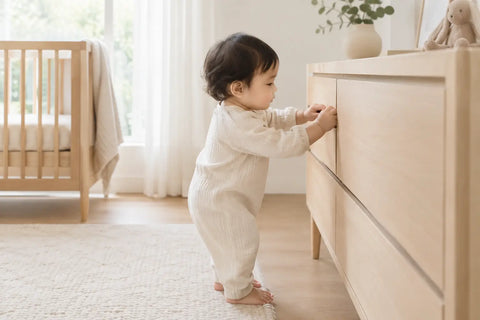
A living room can change quickly once a toddler becomes mobile. The coffee table that suited quiet evenings may now be at eye level, open shelving becomes an irresistible invitation, and a once-neat nursery needs to work harder every day. This toddler proof furniture guide is not about making a home look clinical or removing every beautiful piece. It is about choosing and arranging furniture with everyday family life in mind.
The aim is a space that feels calm, is easier to keep tidy, and gives parents fewer things to manage during busy mornings, meals and playtime. Small decisions, such as selecting rounded edges or keeping heavy storage low, can make a noticeable difference.
Start with how your family really uses each room
Before buying anything new, walk through each room at your toddler’s height. Kneel down if it helps. Notice protruding corners, loose baskets, open drawers and furniture that may be pulled on. Also consider the routes your child takes most often: from the bedroom to the living area, around the dining table, or towards a favourite window.
A toddler-ready home does not need identical rules in every room. The nursery may need generous closed storage for clothing and care essentials, while the living room may benefit from a clear play zone and fewer breakable objects within reach. In compact Singapore homes, each item often has to do more than one job. A bench with storage, for example, may reduce visual clutter while keeping everyday toys close by.
Think about your own routines too. If you prefer to reset the room quickly after play, choose furniture with simple surfaces and storage that is easy to access. If your child regularly plays beside you while you prepare dinner, a contained play area nearby may be more practical than trying to make the entire home a playroom.
Choose stable furniture before focusing on style
A beautiful silhouette matters, but stability should come first when furniture will be used around young children. Look for a broad, balanced base and consider how the piece behaves when drawers, doors or shelves are in use. Tall or narrow furniture deserves particular attention, especially when it may be tempting for a toddler to climb or pull.
Follow the manufacturer’s installation and care instructions. Where anchoring is recommended, secure suitable furniture to the wall using the appropriate fittings for your wall type, or seek help from a qualified installer if needed. Avoid placing tempting items, such as toys or remote controls, on top of tall cabinets, as this can encourage climbing.
Low furniture is often a useful choice for family areas. A low bookcase can make books easier to rotate, and a low cabinet can keep selected toys within reach without dominating the room. That said, low furniture still needs to be sturdy. A lightweight unit may be easy to move when cleaning, but it can be less suitable if it shifts easily during enthusiastic play.
Check drawers, doors and open shelves
Drawers can quickly become both a point of interest and a source of mess. Consider furniture with drawers that run smoothly and do not open too freely. Keep heavier items in lower compartments, rather than in high drawers that can make a unit feel unbalanced.
For cabinets, simple child-resistant latches may be useful where contents are not for children, such as cleaning supplies or fragile tableware. Store these items out of reach as well. Open shelving can still work beautifully in a family home, but it benefits from editing. Reserve lower shelves for sturdy books, soft baskets and toys, and move decorative objects higher up or into closed storage.
A toddler proof furniture guide to materials and finishes
Furniture for family life should be chosen for how it will look after repeated wiping, snack spills, crayon marks and damp hands. This does not mean every surface needs to be hard or plain. It means selecting finishes that suit the level of care you can realistically give them.
Smooth, easy-wipe surfaces are often practical for tables and storage fronts. Upholstered pieces can bring softness to a room, particularly in neutral interiors, but removable or washable covers can make maintenance less stressful. If you love natural timber, check the care guidance before purchase and be prepared to use coasters, wipe spills promptly and accept that a little character may develop over time.
When reviewing a product, read its material information, care instructions and assembly guidance rather than relying on appearance alone. Product details should make it clear how the furniture is intended to be used and maintained. This is especially helpful when choosing nursery furniture that you expect to use through changing routines.
Avoid loose decorative trims, unstable handles or hardware that feels poorly secured. Run your hand along edges and joins where possible. You are looking for a finish that feels considered, with no sharp splinters, rough patches or loose components.
Soften the busy edges of everyday rooms
Toddlers move quickly and unpredictably, particularly when they are excited or tired. In rooms with hard flooring, a well-sized play mat or rug can help create a more comfortable area for floor play while visually defining the space. Choose a design that is simple to clean and large enough for the activities you expect to happen there.
For existing furniture, corner guards may be worth considering on sharp, prominent edges, such as a coffee table positioned in the middle of a main walkway. They are not necessary on every item, and using them selectively can keep the room looking more like home. If a table has particularly angular corners and sits in the centre of active play, replacing it with a rounded design may be the tidier long-term solution.
Also look beneath the furniture. Loose rugs should be secured so they are less likely to move underfoot. Keep cables organised and out of reach where possible, particularly around media consoles and work areas. Furniture placement can do much of the work here: placing a cabinet in front of an outlet area or choosing a console with cable management can make a room feel less cluttered.
Create storage that toddlers can use, not empty
The most practical storage is not always the storage with the largest capacity. It is the storage that supports a simple routine. A toddler is more likely to help put toys away when there is a clear home for them, such as a few open baskets for blocks, books and soft toys.
Keep the choice manageable. Too many toys available at once can make a room feel crowded and makes tidying more difficult for everyone. Rotate a small selection, and use closed cupboards for the rest. This approach can also help a modern, neutral space stay calm without requiring constant styling.
Choose baskets and containers with care. Flexible fabric baskets are often gentle on little hands, while sturdy boxes may suit heavier toys. Avoid overfilling either. A container that is difficult to lift or that spills every time it is opened tends to create more work, not less.
In the nursery, separate daily essentials from occasional items. Place frequently used clothing, nappies and changing supplies where they are convenient for the adult caring for the child. Keep furniture surfaces as clear as practical, particularly around care routines, so there is room to focus on the task at hand.
Make the dining area work harder
Dining furniture gets tested in family life. Look for chairs and tables with finishes that can be wiped down easily, and consider how much space remains when a high chair is in place. A dining table with a less elaborate base may be easier to clean around, while rounded corners can be a sensible choice in a narrower room.
It is also worth considering weight and movement. Chairs that are very light may be convenient to carry, but may not stay where you expect them to during a busy meal. Heavier chairs can feel more settled, though they may be harder to move for cleaning. There is no single right answer: the best choice depends on your layout, your flooring and how the room is used.
Review your space as your child changes
Toddler-proofing is not a one-time project. A child who has just started walking will use a room differently from one who can reach door handles, open drawers or drag a chair across the floor. Revisit furniture placement regularly, especially after rearranging a room, bringing home a new item or changing your child’s sleeping and play routines.
Check that fittings remain secure, storage has not become overloaded, and everyday pathways are still clear. It is also a good moment to remove items that no longer serve the room. A calmer home rarely comes from adding more. Often, it comes from making each piece earn its place.
Thoughtful furniture choices give family spaces room to evolve. Choose pieces that suit your home now, care for them well, and adjust the layout as your little one grows into new ways of exploring.