
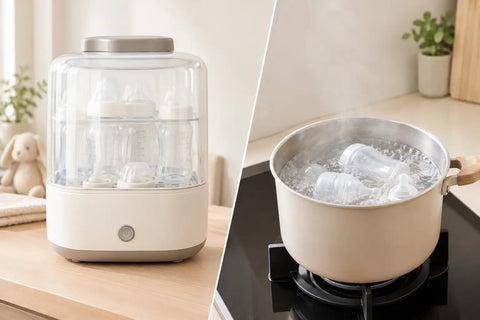
The question of steriliser versus boiling bottles often comes up when you are preparing for feeds between naps, laundry and everything else a new baby brings. Both methods can be used to sterilise properly cleaned feeding equipment. The more useful question is which one makes your routine feel manageable, especially during those busy first months.
A steriliser can bring speed and consistency to a high-volume feeding routine. Boiling is straightforward, needs little equipment and can be a useful back-up. Your choice may come down to how often you feed, the space available in your kitchen, and how you prefer to keep bottles ready for the next feed.
Start with cleaning, not sterilising
Sterilising is not a substitute for washing. Before using either method, wash bottles, teats, collars, lids and any feeding parts according to the manufacturer's care instructions. Take each item apart so that milk residue is not trapped in threads, valves or small openings.
Use clean hands, a dedicated bottle brush and warm soapy water, then rinse thoroughly. Some feeding items are suitable for a dishwasher, but check their instructions first. A steriliser or boiling pan works best when every part has already been cleaned well.
Once sterilised, avoid touching the inside of bottles or teats. Assemble items with clean hands when needed, or keep them protected in a clean container with the lid on. It is a small part of the routine, but it helps keep freshly prepared equipment ready for use.
Steriliser versus boiling bottles: the practical difference
The fundamental outcome is similar, but the experience is quite different. A steriliser is designed for feeding equipment. Depending on the type, it uses steam in an electric unit or in a microwave, and it can often hold several bottles and parts at once. It usually has a defined cycle and clear loading guidance.
Boiling means fully submerging suitable bottle parts in a clean pan of water. It is a familiar method and does not require a separate appliance. However, it needs your attention while the water heats and cools, as well as a safe, clear space beside the hob.
For parents who use several bottles each day, the convenience of a steriliser can quickly become meaningful. For occasional bottle use, travelling within the family, or a home with limited counter space, a pan may feel perfectly practical.
Time and hands-on effort
A steam steriliser usually reduces hands-on work. You load the clean parts, start the cycle and allow them to cool before handling. Some models keep contents sterile for a stated period when the lid remains closed, but this varies, so always follow the instructions for your chosen unit.
Boiling is simple but not entirely set-and-forget. You need enough water to cover the items, a rolling boil, and a safe way to remove or cool the equipment afterwards. It can be quick once the water is hot, but the full process includes waiting for the pan to heat, staying nearby and letting items cool safely.
If you are expressing milk or preparing many feeds, a steriliser may help create a calmer rhythm. You can wash bottles after a feed, run a batch when it suits your household, then put clean equipment away together. If you only need one bottle from time to time, boiling may involve less storage and less to maintain.
Capacity and kitchen space
Capacity matters more than it first appears. A compact microwave steriliser may suit a smaller kitchen but requires microwave space and compatible items. An electric steam steriliser can sit ready on the worktop, which is convenient for regular use but takes up room in a kitchen already busy with a kettle, drying rack and meal preparation.
A pan takes little dedicated storage, but it should ideally be reserved for sterilising feeding items rather than used interchangeably for cooking. You will also need a clean place to set the equipment down after boiling. A covered, clean container can be more practical than leaving parts exposed on the worktop.
For many Singapore homes, where kitchen storage can be carefully planned, it is worth measuring a possible steriliser before buying. Consider its height under wall cabinets, its footprint beside the sink and whether its capacity matches the number of bottles you realistically use in a day.
Ongoing care and cost
Boiling has a lower upfront cost because a suitable pan may already be in your kitchen. The trade-off is repeated use of the hob and the time involved in supervising the process.
A steriliser costs more initially, but may save effort across a frequent feeding routine. It also needs regular care. Steam appliances can develop mineral deposits, particularly where water leaves a residue. Follow the unit's cleaning and descaling instructions, and never use a cleaning method that its manufacturer does not recommend.
Neither option is maintenance-free. A pan needs to be kept clean and in good condition. A steriliser needs its reservoir, lid and interior cleaned as directed. Choose the method you are genuinely likely to maintain well, rather than the one that sounds most impressive on paper.
How to decide which is right for your family
Think about the rhythm of your days rather than trying to find one universal answer. A steriliser may be the more convenient choice if you bottle-feed regularly, express milk, have twins, or want to prepare several bottles and parts in one cycle. The predictable process can be especially welcome when different family members share feeding duties.
Boiling may suit you if you have a smaller collection of bottles, prefer to avoid another appliance, or want a dependable option while away from your usual set-up. It is also useful as a back-up if an appliance is being cleaned, descaled or stored.
You do not necessarily need to commit to one method forever. Some families use a steriliser for everyday feeding equipment and keep boiling as a practical alternative. What matters is having a routine that is easy to repeat, even on a tired evening.
Use each method carefully
With a steriliser, avoid overfilling or blocking steam vents. Place parts as instructed so steam can reach all surfaces, and check that every item is suitable for the steriliser type you own. Microwave units in particular need the correct water level and timing for their specific design.
When boiling bottles, use a large, clean pan and make sure each suitable item remains fully submerged. Keep plastic parts away from the pan's sides where they could be affected by direct heat. Use clean tongs to remove items, and allow them to cool before assembling or using them.
In either case, inspect bottles and teats regularly. Replace parts that are worn, cracked, sticky, discoloured or no longer fit securely. Care instructions differ by material and brand, so the guidance supplied with your feeding equipment should always lead the way.
A routine that feels easier to keep
The most helpful set-up is often a simple one: a clear washing area, a dedicated brush, somewhere clean to air-dry or store parts, and a sterilising method that fits naturally into the room. A tidy feeding station does not need to look clinical. A few well-chosen essentials and a consistent place for each one can make daily care feel less scattered.
If you are buying before your baby arrives, avoid assuming you need the largest appliance or every accessory at once. Start with the feeding approach you expect to use, leave room for change, and keep the process easy for anyone who may help with feeds.
Choose the option that gives you confidence on an ordinary day, not just the most organised version of one. Whether that is a steam cycle ready at the touch of a button or a clean pan on the hob, a routine you can comfortably maintain is the one that will support your family best.