
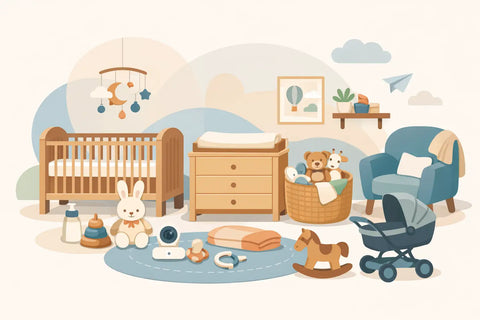
The best baby room essentials are rarely the ones that look impressive in a showroom and then create more work at home. What matters is how each piece supports feeding at 2am, quick nappy changes, safer sleep, easier cleaning, and a room that still feels calm rather than cluttered. For most parents, the right nursery starts with fewer, better-chosen items.
A well-planned baby room should do three jobs at once. It needs to be safe enough for a newborn, practical enough for daily routines, and considered enough to suit the rest of your home. That balance matters even more in Singapore, where nursery space is often limited and every item needs to earn its place.
What makes the best baby room essentials worth buying?
Not every nursery product belongs on your must-buy list. Some are genuinely useful from day one, while others depend on your layout, your baby’s age, and how you plan to use the room. The best purchases tend to share the same qualities - certified safety, durable construction, easy-clean materials, and design that works beyond the newborn stage.
This is also where many parents benefit from shopping with a specialist rather than a general retailer. When products are curated to work together, it is easier to avoid common issues such as awkward furniture sizing, hard-to-clean surfaces, or playpen and mat combinations that leave unsafe gaps.
The best baby room essentials for a nursery that works
1. A safe, well-built baby cot
If there is one item to prioritise, it is the cot. A baby cot is the anchor of the room, and it needs to deliver on safety before style. Look for sturdy construction, secure slat spacing, smooth finishes, and non-toxic materials. A design that complements a modern nursery is a bonus, but structural reliability should always come first.
Some parents prefer a compact cot for smaller rooms, while others choose a larger model that lasts longer. It depends on your floor plan and whether the nursery needs to accommodate storage or a changing area too. The smarter choice is usually the cot that fits your room properly and leaves enough space to move around comfortably.
2. A supportive baby mattress
A good cot deserves a good mattress. This is not the place to cut corners. The right mattress should fit snugly, support baby safely, and be made from materials that are breathable, hygienic, and easy to maintain.
Many parents focus on softness, but support and fit matter more. A mattress that is too soft or leaves gaps at the edges creates problems you do not want in a sleep space. If the cover is removable or wipeable, that is a practical advantage you will appreciate very quickly.
3. A changing station that keeps essentials within reach
Nappy changes happen constantly, so your changing setup should reduce stress rather than add to it. A proper changing station gives you a stable surface and keeps wipes, creams, nappies, and spare clothes close by. That convenience matters when you have one hand on the baby and no time to search through drawers.
In a smaller nursery, a compact changing table with built-in shelves can be more useful than a bulkier dresser. In a larger room, you may have space for a more substantial piece that doubles as long-term storage. The key is to keep the area organised and easy to clean.
4. Practical nursery storage
Storage is one of the most underestimated baby room essentials. Babies may be small, but their things multiply quickly. Muslins, swaddles, bibs, towels, toys, extra bedding, nappies, skincare - without dedicated storage, the room can start to feel chaotic within days.
Closed storage helps maintain a calm visual look, while open shelves or baskets are useful for high-frequency items. The best approach is often a mix of both. If your nursery furniture is design-conscious and neutral, it is also more likely to stay relevant as your child grows.
5. An antibacterial anti-slip play mat
A nursery is not only for sleep. As your baby becomes more alert, the room also becomes a play and development space. A high-quality play mat creates a softer, more hygienic area for tummy time, rolling, sitting, and supervised play.
This is one category where thickness and surface quality make a real difference. High-density foam offers better cushioning, while an anti-slip finish adds reassurance on smooth flooring. Antibacterial surfaces and wipe-clean materials are especially helpful for busy households that want a cleaner, lower-maintenance setup.
6. A playpen for a safer contained area
Not every family needs a playpen immediately, but for many homes it becomes one of the most useful additions. It gives baby a clearly defined area to play while helping parents manage moments when they need a safer contained space nearby.
Compatibility matters here. A playpen that works neatly with a fitted mat is a better option than one that leaves awkward gaps or unstable edges. Those small details affect both safety and comfort, and they are often overlooked during the first round of shopping.
How to choose the best baby room essentials without overbuying
One of the easiest mistakes is treating every nursery purchase as equally urgent. In reality, a newborn needs a sleep space, changing support, practical storage, and a clean area for early play far sooner than they need decorative extras.
A helpful way to think about nursery planning is by routine. What do you need for sleep? What do you need for changing? What do you need for feeding support nearby? What do you need for safe floor time? Once those zones are covered, the room usually feels much more complete.
7. A comfortable chair for feeding and settling
If space allows, a nursery chair is worth considering. Feeding, soothing, and settling can take up many hours, and a supportive seat makes that routine more comfortable. It can also become the quiet corner of the room for bedtime stories later on.
This is one of those purchases that depends on room size. In a compact nursery, a chair may make the layout feel cramped. In that case, it may be better to keep the room open and use seating elsewhere in the home.
8. Soft, washable bedding basics
Keep bedding simple and practical. Fitted sheets, mattress protectors, and a few spare sets are usually enough. The real priority is having clean replacements ready for small accidents and frequent changes.
Choose fabrics that feel gentle on delicate skin and wash well without losing shape. You do not need an excessive linen collection. You need bedding that is dependable, easy to rotate, and suited to regular use.
9. Gentle lighting for night-time routines
A nursery with only one bright overhead light can feel harsh during late-night feeds or changes. Softer lighting creates a calmer atmosphere and makes the room more comfortable to use without fully waking the baby.
You do not need anything complicated. A warm, gentle light source is usually enough. The aim is comfort and visibility, not decoration for its own sake.
10. A UV steriliser for daily hygiene support
For parents who want to keep high-use baby items cleaner, a UV steriliser can be a very practical addition. It helps support hygiene for feeding accessories and other small baby essentials that need frequent sanitising.
This is especially useful for busy households that want convenience without compromising on cleanliness. It may not sit at the top of every nursery checklist, but for many families it becomes part of the daily routine surprisingly quickly.
11. Easy-clean surfaces and finishes
Strictly speaking, this is not a single product, but it is one of the smartest nursery decisions you can make. Furniture finishes, mat surfaces, and changing areas that wipe clean easily save time and help the room stay fresh with less effort.
Parents often notice this only after the baby arrives. Beautiful textures and delicate materials can look appealing, but if they stain easily or trap dust, they become harder to live with. The best baby room essentials should be realistic for everyday family life.
12. A coordinated nursery system
If you want a cleaner, less stressful buying process, coordinated nursery systems are worth serious consideration. Choosing a cot, storage, playpen, and mat from a specialist collection can make the room feel more cohesive while reducing the guesswork around sizing, materials, and style.
For many parents, this is where specialist baby retailers stand apart. A curated system saves time, helps you shop with confidence, and gives reassurance that safety and compatibility have not been treated as an afterthought. Brands such as RaaB Family have built trust around exactly that kind of nursery planning - combining modern design, certified safety, and practical solutions that work in real homes.
Style matters, but safety always leads
A beautiful nursery is a lovely goal, but not if it comes at the expense of comfort or safety. Sharp corners, unstable furniture, thin floor mats, or products made from questionable materials do not become better choices simply because they look good online.
The strongest nursery design choices are the ones that do both. They support a calmer visual style while also giving parents what they actually need - safe sleep, hygienic surfaces, durable materials, and room layouts that make everyday care easier.
When you are deciding what to buy first, start with the pieces that shape daily life. A secure cot, a well-fitted mattress, a reliable changing station, thoughtful storage, and a quality play area will carry far more value than a room full of extras. Once those foundations are in place, the nursery begins to feel less like a project and more like a space ready to welcome your baby.