
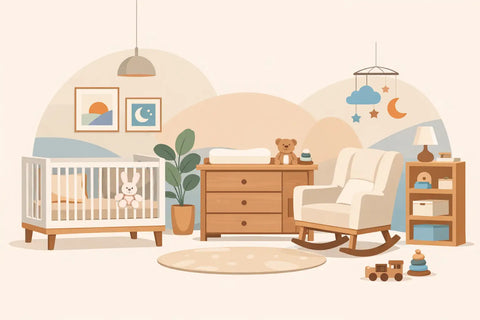
The moment you start planning a nursery, every choice seems to matter at once. The cot, the changing area, the storage, the chair, the finish, the fit in your room - all of it needs to feel safe, practical and calm. If you are wondering how to choose nursery furniture without second-guessing every decision, the best place to start is not with style, but with how you will actually use the space every day.
A beautiful nursery should still work at 2am. That means furniture needs to support feeding, nappy changes, sleep routines and storage without making the room feel crowded. For most families, the right setup is the one that balances certified safety, easy maintenance, smart proportions and a look that still feels at home with the rest of the house.
How to choose nursery furniture for real family life
Before comparing finishes or matching sets, think about your routine. Some parents want a nursery that is fully set up from day one. Others are working with one bedroom corner in a compact flat and need every piece to earn its place. Both approaches can work well, but they lead to different furniture choices.
Start by asking three simple questions. How much floor space do you truly have? Which tasks will happen in this room every day? And how long do you want each item to last? A nursery that looks complete in a showroom may not feel practical in a smaller home if drawers cannot open fully or if there is no clear walkway during night-time feeds.
It also helps to separate essentials from nice-to-haves. A safe sleeping space and sensible storage usually matter more than decorative extras. Once those foundations are covered, you can build a room that feels polished rather than cluttered.
Put safety first, always
When parents shop for nursery furniture, safety should never be treated as a bonus feature. It is the baseline. Look for products that meet recognised safety standards and are made from non-toxic materials. That includes finishes, paints and fabrics, not just the main frame.
A baby cot is the clearest example. The spacing of slats, the stability of the frame and the fit of the mattress all matter. A mattress that leaves gaps around the edge is not a small detail - it is a safety concern. The same thinking applies to changing stations, drawers and storage units. Furniture should feel steady, secure and designed for daily use, not simply for display.
If you are choosing larger pieces such as dressers or shelving, anti-tip features are worth prioritising. As babies grow into curious toddlers, the furniture that looked harmless in month one can become something they pull, climb or lean against. Buying with that next stage in mind is often far more cost-effective than replacing pieces later.
Choose the cot before anything else
The cot is usually the anchor of the room, both visually and practically. Once that is chosen, the rest of the nursery becomes easier to plan around. A good cot should offer strong build quality, a supportive mattress fit and dimensions that suit your room without dominating it.
Adjustable mattress heights can make a real difference in the first year. They help parents lift baby in and out more comfortably while keeping the sleeping space secure as mobility changes. If you are thinking long term, consider whether a cot is designed to grow with your child or whether you prefer a straightforward infant cot and a later transition.
Design matters too, but not only for appearance. Clean lines, smooth edges and easy-to-clean surfaces are practical features as much as aesthetic ones. Scandinavian-inspired nursery furniture remains popular for a reason - it tends to combine a calm look with functional simplicity, which suits modern family homes well.
A note on mattresses and fit
Parents often focus on the cot frame first and leave the mattress as an afterthought. It should be the opposite. A supportive, well-fitted mattress is central to both comfort and safety. Look for breathable, durable materials that hold their shape well and are easy to maintain. If the cover can be cleaned without fuss, even better.
Think beyond the newborn stage
One of the smartest ways to approach how to choose nursery furniture is to buy for the next two to three years, not just the next six months. Newborn needs are fairly simple. Toddler needs are not. The nursery furniture you choose now should still make sense when your child is moving, reaching and creating much more mess.
Storage is where this really shows. Open baskets may look lovely for tiny clothes and swaddles, but closed drawers are often more useful once toys, books and everyday essentials start multiplying. A changing unit with integrated storage can also continue to be useful long after nappies are gone, especially if the top section can be repurposed.
The same principle applies to play areas. If you plan to create a safe floor space, choose products that are comfortable, hygienic and designed to work together properly. A gap-free playpen and mat combination, for example, offers a neater and safer setup than trying to mix separate pieces that do not align.
Materials, hygiene and maintenance matter more than you think
Nursery furniture gets touched constantly. Hands, milk, creams, wipes and little accidents all add up quickly. That is why finish and material quality deserve close attention.
Wooden furniture remains a top choice because it feels sturdy and timeless, but not all wood products are equal. Parents should look for smooth, child-safe finishes and reliable construction rather than assuming every premium-looking item is built the same way. Eco-friendly and low-toxicity materials are particularly worth considering for enclosed sleep and play spaces.
Soft furnishings and padded items need similar scrutiny. If you are adding a play mat, thickness, density and anti-slip performance matter. A mat that looks plush but compresses too easily may not give the level of support families expect for tummy time, crawling or play. Easy-clean surfaces are also a genuine everyday benefit, especially in busy homes where hygiene is non-negotiable.
Make the layout work for you
A nursery does not need to be large to feel well planned. It needs clear zones. The sleeping area, changing area and storage area should all be easy to access without awkward reaching or constant rearranging.
Try to leave enough circulation space around the cot and any changing unit. Drawers should open comfortably, and you should be able to move through the room with a baby in your arms without navigating sharp corners or overcrowded furniture. If space is tight, fewer well-chosen pieces usually work better than trying to fit a full matching suite.
For many Singapore homes, proportion is everything. Compact furniture with efficient storage can outperform larger statement pieces simply because it keeps the room functional. This is one reason specialist nursery brands are often a better choice than general furniture retailers - they tend to design around the realities of family use rather than just appearance.
Should everything match?
Not necessarily. A coordinated nursery can look elegant, but a fully matched set is not always the best value or the best fit for your room. Sometimes the strongest nursery combines one standout cot, a practical storage piece and a well-chosen changing station in complementary finishes.
What matters more is visual consistency. Keep to a calm palette, similar wood tones or a shared design language, and the room will still feel intentional. Soft neutrals remain a favourite because they age well and adapt easily as your child grows.
This is also where showroom access can help. Seeing scale, finish and compatibility in person often answers questions that product photos cannot. For parents who prefer online convenience but still want reassurance, that combination can make the buying process much more confident.
Buy from a specialist you trust
Nursery furniture is not the category to buy on guesswork. Product descriptions should be clear, safety claims should be backed by certifications where relevant and dimensions should be easy to understand. Reviews, showroom presence and a focused product range all help build confidence.
A specialist baby brand is often better placed to guide parents towards compatible nursery systems, safe materials and furniture that suits real routines. That matters when you are comparing not just style, but safety, durability and long-term value. RaaB Family, for example, centres its range around precisely those priorities, which makes decision-making simpler for parents who want both reassurance and refined design.
The best nursery furniture does not just photograph well. It supports sleepy mornings, busy evenings and the many small moments in between. Choose pieces that feel safe, useful and easy to live with, and the room will do what it is meant to do - help your family settle in with confidence.