
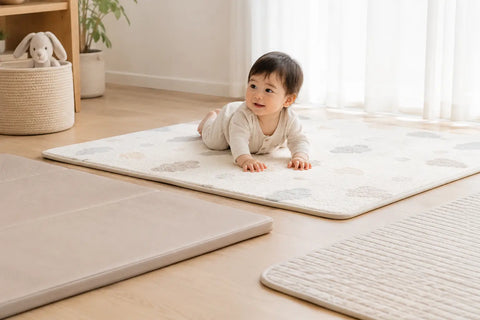
A tiled living room, a curious baby and a cup that has just tipped over can quickly show what a family play mat needs to do. This play mat comparison looks beyond colour and first impressions, focusing on the details that make a difference through everyday floor play, tummy time, reading, building and quiet moments at home.
The right choice is rarely about finding one mat that suits every family. It is about matching the mat to your space, your child’s stage and the way your household actually lives. A compact flat may need a mat that stores away easily, while a dedicated play area may benefit from a larger, more permanent surface.
Play mat comparison: start with your daily routine
Before comparing materials or patterns, consider where the mat will be used most often. A mat in the living area becomes part of the room, so its colour, texture and size may matter as much as its practical features. A mat used in a nursery or playroom may have different priorities, such as cushioning, coverage or the ability to define a clear play zone.
Think about how often it will be moved. Some families prefer a foldable mat that can be put away before guests arrive or taken to a grandparent’s home. Others want a large single-piece mat that stays in place beneath a playpen or low activity table. Neither approach is automatically better. The useful option is the one that feels manageable on an ordinary weekday.
It also helps to measure before buying. Leave enough room for doors, walkways and furniture, rather than choosing a size based on photographs alone. In Singapore homes, a few centimetres can make the difference between a play area that feels calm and one that interrupts the flow of the room.
Compare play mat materials and finishes
Play mats come in a range of constructions, and the surface will affect both the feel underfoot and the care routine. When reviewing any product, use the manufacturer’s verified material information and care instructions rather than relying on general assumptions about a material category.
Foam play mats
Foam mats are commonly chosen for their cushioned feel and lightweight design. They can make a hard floor more comfortable for sitting, crawling and family play. Thickness varies between products, so it is worth checking the stated measurement rather than judging from images.
The trade-off is that softer surfaces may show indentation from heavy furniture or toys. If a foam mat will sit under a playpen, check that the product is designed to be used flat and follow the setup guidance provided. For a busy living room, a smooth, wipeable finish can make everyday tidying much simpler.
Foldable mats
Foldable mats are a practical choice when storage matters. They can be opened for play, then folded away to free up floor space. Their panels may also make them easier to carry from room to room.
The folds are worth considering carefully. They are useful for storage, but parents may prefer to keep the surface clear of small toys and check that the mat lies evenly before use. A foldable design suits families who value flexibility, especially if the same room has several purposes throughout the day.
Puzzle-style mats
Interlocking mats can be useful when you want to tailor coverage around a particular area. You can often build the shape around furniture or extend it as your child’s play space changes. They are also easier to replace in sections where the product design allows.
However, seams create more places for crumbs and dust to collect. They may require more frequent lifting and cleaning than a one-piece mat. If low-effort upkeep is high on your list, a smooth single-surface mat may be the more convenient choice.
Fabric and padded rugs
A padded fabric mat or rug can bring softness and warmth to a nursery or bedroom. It may suit families who want the play area to blend naturally with their interior. The main consideration is cleaning. Check whether the mat is machine washable, spot-clean only or requires a particular cleaning method before making it part of a high-use zone.
For homes where spills are frequent, it is sensible to be realistic about care. A beautiful textile finish can work well, but it may ask more of your laundry routine than a wipe-clean surface.
Thickness is only one part of comfort
A thicker mat may feel more cushioned, but it is not the only factor to compare. Surface density, construction and the floor beneath it all influence how a mat feels. A mat on tile may feel different from the same mat on a rug or timber flooring.
Look at the product’s stated thickness alongside its intended use. For example, families setting up a reading corner may prioritise a softer feel for sitting, while a mat beneath a playpen may need to fit neatly within the available footprint. Avoid assuming that a thicker option will always be more practical. It may be heavier to move, bulkier to store and harder to position under low furniture.
Edges also deserve attention. A mat that sits flat and is sized appropriately for its space is easier to live with. Follow the product instructions for placement, and keep the play area tidy and suitable for your child’s level of supervision.
Choose a size that works beyond the baby stage
Small mats are easy to position and store, but children often use more floor space as their play changes. A little one may begin with a small area for supervised play, then later spread out books, blocks and imaginative play pieces across the floor.
A larger mat can give a room a more defined family zone, particularly in an open-plan living and dining space. It can also reduce the need to keep shifting toys onto and off a small surface. On the other hand, an oversized mat can overwhelm a compact room or make cleaning around furniture less convenient.
A helpful approach is to mark out the dimensions with masking tape or newspaper before you buy. Live with the outline for a day or two. You will quickly see whether it blocks a drawer, narrows a walkway or creates exactly the calm corner you had in mind.
Practical care matters more than a perfect first look
For most parents, a play mat will meet milk drips, snack crumbs, markers and the general unpredictability of family life. Care requirements should therefore be near the top of any play mat comparison.
Wipe-clean surfaces are convenient for quick daily maintenance. Use only the cleaning method recommended by the manufacturer, as harsh products or excessive moisture may affect some finishes. Fabric options may need washing or more careful spot treatment, so consider whether you have the time and drying space for that routine.
Colour and pattern also play a role in how a mat looks between cleans. Soft neutral tones can sit quietly within a modern home, while subtle patterns may be more forgiving of small everyday marks. There is no need to choose between a practical mat and an attractive room. The most successful family spaces usually allow for both.
Check product information with care
Product details should be clear, specific and easy to verify. Look for stated dimensions, thickness, material descriptions, care guidance and any applicable safety or testing information supplied for that particular mat. If certifications are relevant to your decision, check exactly what the certification covers rather than treating it as a broad promise.
It is also worth considering support after purchase. Clear setup information, accessible local guidance and straightforward delivery arrangements can make a meaningful difference when you are preparing a nursery or reorganising a family room. At RaaB Family, the focus is on thoughtfully designed pieces that bring comfort and practical ease to everyday family spaces.
How to make a confident choice
Choose a mat that answers the needs you have now, while leaving some room for how your home may be used over the next few years. If easy cleaning is essential, prioritise a finish and care routine you can maintain. If your floor space is limited, focus on dimensions and storage. If the mat will remain visible each day, choose a design that feels at home with your furniture and colours.
A play mat does not need to transform the whole room to earn its place. It simply needs to create a comfortable, easy-care patch of floor where family life can unfold, one ordinary and very full day at a time.