
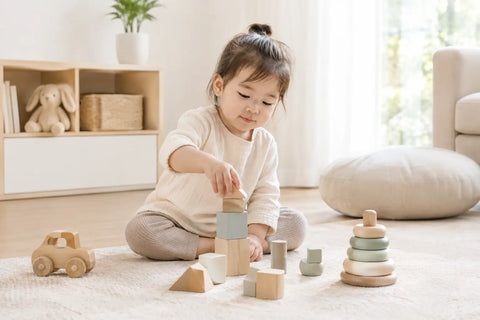
The most useful toddler play space essentials are rarely the loudest or the largest. They are the pieces that make an ordinary afternoon easier: a comfortable surface for sitting and building, a clear place for favourite toys, and enough room for a toddler to move while a parent stays close by. A well-planned area can feel calm and considered without taking over the whole home.
For many families, the aim is not to create a picture-perfect playroom. It is to create a practical corner that works between breakfast, work calls, naps and the evening tidy-up. Start with how your family actually lives, then choose fewer items that earn their place every day.
Start with the space, not the shopping list
Before choosing furniture or toys, look at the room from a toddler's height. Notice where the natural light falls, where adults need to walk, and which parts of the room are already used for daily life. A compact living room corner may need a play area that packs away neatly. A dedicated room may allow for more permanent storage and a larger activity zone.
Give the space a clear boundary where possible. This might be a play mat, a playpen used in line with its instructions, or simply a low shelf that visually separates toys from the rest of the room. Defined edges help the area feel intentional, particularly in open-plan homes where toys can otherwise spread quickly.
Leave comfortable routes around the area. Toddlers enjoy carrying objects, pushing toys and changing direction without much warning, while adults need an easy path through the room. A layout that looks spacious on paper can feel crowded once the whole family is using it.
Build your toddler play space essentials from the ground up
A comfortable, easy-care play surface
The floor is where much of toddler play happens. A supportive play mat can make floor time more comfortable for adults and children alike, while also giving a clear visual base to the play area. Choose a size that suits the room rather than automatically choosing the biggest option. In a smaller home, a well-proportioned mat can make the area feel calmer and easier to manage.
Easy cleaning matters just as much as appearance. Meals, crayons, water play and everyday mess are part of family life. A surface that can be wiped down simply is likely to stay in regular use. For a neutral interior, soft, understated colours can help the play zone sit naturally alongside the rest of your furniture rather than making the room feel overly busy.
If you add a rug over or near a play surface, consider how it will behave during active play. It should lie flat and be easy to care for. Keep the area free from loose household items that could become distracting or create clutter underfoot.
A contained area when it suits your routine
A playpen can be helpful for families who want a defined space for supervised play, especially when there are different activities happening at home. The right choice depends on your layout, your child's stage and whether you need something fixed in place or easier to move.
Focus on practical details. Consider the footprint, access, height, how the panels or frame fit into your room, and how straightforward it is to clean. Always follow the manufacturer's assembly, use and age guidance. A playpen is not essential for every family, but for some households it creates welcome structure without requiring a separate playroom.
Storage a toddler can understand
The best storage is simple enough to use every day. Low baskets, open bins and a child-height shelf make it easier to see what is available and easier for a toddler to help put things away. You do not need a large collection of containers. A small number of roomy, clearly grouped options is often more useful than lots of tiny boxes.
Try organising toys by how they are played with: building pieces together, pretend-play items together, books in one place and art materials in another. Rotate some toys rather than keeping every item out at once. This can make the space feel less crowded and makes rediscovering a familiar toy feel fresh.
For art supplies or smaller pieces, use storage that an adult can manage and bring out when appropriate. Keeping the visible play area simple makes the end-of-day reset much less demanding.
Choose furniture that supports everyday independence
A low table and small chair can be worthwhile once your toddler enjoys drawing, puzzles or snack-time activities at a seated height. Measure first. The furniture should suit both the child and the room, with enough surrounding space for an adult to pull up a chair or help with an activity.
Avoid filling the room with child-sized furniture simply because it looks charming. One purposeful table, a book display or a low shelf may be enough. The rest of the room can stay flexible for blocks, music, movement and shared family time.
A book area is another gentle addition. Front-facing book storage can make covers easy to spot, while a soft cushion or mat nearby creates an inviting place to sit together. Keep only a small selection within view and change it from time to time. This is easier to maintain than an overflowing shelf and keeps the visual mood of the room quieter.
Bring in toys with purpose, not pressure
A thoughtfully planned play space does not need every kind of toy. Toddlers often return to open-ended items that can be used in different ways, such as blocks, simple figures, nesting pieces, vehicles or pretend-play accessories. These types of toys can grow with changing interests and do not dictate one single way to play.
Balance quieter activities with movement-friendly options. A basket of books and puzzles works well alongside clear floor space for pushing, stacking and imaginative games. If your home is compact, choose toys that store efficiently and avoid buying duplicates of the same play experience.
Consider the noise and visual effect too. A room full of bright, electronic toys may feel lively, but it can also be harder for parents to relax in at the end of the day. This is a personal preference, not a rule. A few much-loved colourful toys can sit beautifully in a neutral space when the overall storage system is working.
Make the room work for parents too
The most successful toddler area is one that adults can maintain without constant effort. Put a small wipe-clean basket or tray nearby for everyday clean-ups. Keep a comfortable seat close enough for reading, joining play or simply taking a pause. If toys live in the living room, select storage and surfaces that complement the room rather than feeling temporary.
Think about the evening reset while you are planning the layout. Can larger toys return to one basket? Is there a home for books? Can you clear the floor in a few minutes before guests arrive or before you want the room back for yourself? These small decisions make a significant difference over time.
For Singapore homes, where space often has to work hard, flexible pieces are particularly valuable. A quality play mat, practical storage and furniture with a modest footprint can create a complete play area without making the home feel crowded. RaaB Family’s approach to calm, easy-care family spaces can be a useful reference point when you are choosing pieces that need to fit naturally into daily routines.
Keep the play area responsive to your child
A toddler play space should change as interests change. What works for a child who loves stacking may need adjusting when they become more interested in drawing, role play or longer book sessions. Review the area every few months instead of trying to create a finished room from the start.
Remove what is no longer being used, repair or replace items that are worn, and make room for the activities your child returns to most. Check furniture, mats and play equipment regularly, and use each item according to its care and safety guidance.
A calm play space is not about having less for the sake of it. It is about making room for the things that matter: play that can begin easily, tidying that does not feel overwhelming, and a home that continues to feel welcoming for every member of the family.