
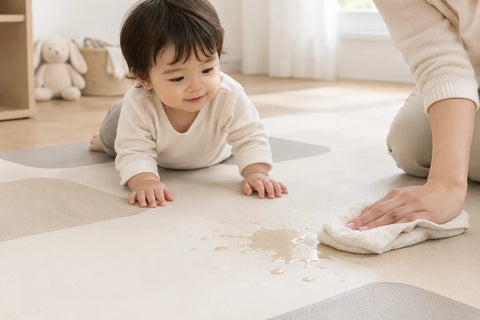
A tipped cup of water, a dropped spoonful of yoghurt, paint escaping its pot - these are ordinary moments in a family home. Knowing how to protect play mats from spills is less about keeping every activity perfectly tidy and more about making clean-up feel manageable. With a few thoughtful habits, your child can explore, eat and play while the mat remains a comfortable, welcoming part of the room.
Protect Play Mats From Spills With Fast Action
The most useful rule is simple: deal with a spill while it is still sitting on the surface. Fresh liquid is usually easier to lift than a dried patch, especially around textured areas, seams or the edges of a mat.
Start by blotting rather than rubbing. Use a clean, dry cloth or kitchen towel to absorb as much liquid as possible, pressing gently from the outside of the spill towards the centre. Rubbing can spread colour, push food into the texture and make a small mess look larger than it is.
For thicker spills such as porridge, yoghurt or sauce, lift away the excess with a soft spoon or cloth first. Then wipe the area with a lightly damp cloth. Avoid soaking the mat unless its care guidance specifically permits this, as excess water can be difficult to remove from joins, undersides or surrounding flooring.
A quick response matters, but there is no need to panic over every mark. Pause play, clear the immediate area, and return to the mat once it is clean and dry. That small routine is often enough to prevent a spill becoming a lingering chore.
Build a Simple Everyday Clean-Up Routine
Regular light cleaning is kinder to a play mat than occasional intensive scrubbing. At the end of the day, take a minute to remove crumbs, wipe away sticky fingerprints and check around the mat’s edges. This is particularly helpful in open-plan homes, where kitchen activity and playtime naturally overlap.
Use only the cleaning method recommended by your mat’s manufacturer. In many cases, a soft cloth dampened with water and a mild cleaner suitable for the material is sufficient. Harsh chemicals, abrasive sponges and strong fragranced products may affect the surface or leave residues that require extra wiping. When trying a new cleaner, test it first on a small, less visible area if the product guidance allows.
Drying is just as worthwhile as wiping. Leave the mat uncovered until the surface is fully dry, particularly before putting toys, cushions or a playpen back in place. This keeps the space feeling fresh and avoids trapping moisture beneath everyday items.
Keep a small spill kit nearby
A cleaning cupboard across the home is not much help when a toddler has just squeezed a fruit pouch onto the floor. Keep a small, child-safe clean-up kit in a nearby cabinet or high shelf, out of children’s reach. It only needs a few practical essentials:
- clean microfibre cloths or soft towels
- kitchen towel for absorbing larger liquid spills
- a soft brush for crumbs in textured surfaces
- a cleaner approved for your particular play mat
Create Clear Zones for Messier Activities
Some spills are unavoidable, but their location can be planned. A play mat may be the heart of family life, yet it does not need to be the surface for every snack, craft session or sensory activity.
For everyday meals and drinks, a highchair area with an easy-wipe floor beneath it may be the more practical choice. If your child enjoys picnics, tea parties or snacks on the mat, use a wipeable tray, small table or placemat to create a clear eating zone. This catches many crumbs and drips before they reach the mat.
Arts and crafts deserve their own preparation too. Place painting, modelling dough and glue projects on a washable cover or dedicated activity table where possible. A large reusable surface protector can work well for occasional messy play, provided it sits flat and does not create a curling edge or a slipping hazard. Check that children have a stable, comfortable area to sit and that the cover is removed and cleaned after use.
There is a balance here. Overprotecting the mat can make the room feel less usable, while allowing every activity directly on it may increase cleaning. Choose the approach that fits your routine. A mat in a quiet nursery may need little more than prompt wiping; one in a busy family room may benefit from more defined zones.
Choose Habits That Help Prevent Repeat Spills
The small details around playtime can make a noticeable difference. Offer drinks in cups suited to your child’s current stage and place them on a stable surface rather than among loose toys. Keep open food containers away from energetic games. If a snack on the mat is part of your family routine, choose less messy options when possible and bring a cloth before you sit down.
It also helps to avoid leaving a damp cup, wet swimming clothes or a just-cleaned toy on the mat for long periods. Place these on a towel or drying rack instead. This protects the surface and helps you spot moisture before it reaches the floor underneath.
Shoes are another consideration, especially after rainy days in Singapore. A simple entry routine - shoes off, hands washed, bags placed in one spot - reduces tracked-in water and food marks without making arrivals feel formal. For families coming home with a pram, groceries and a tired child, the easiest routine is the one that will actually be followed.
Handle Stains Without Over-Cleaning
A visible mark can tempt you to scrub harder, but more pressure is not always the answer. Follow the mat’s care instructions closely, work gently and repeat a mild cleaning step if needed. Give the area time to dry before deciding whether a mark remains, as a damp surface can look different from a dry one.
Avoid using heat, bleach, solvents or unapproved stain removers unless the manufacturer explicitly confirms they are suitable. These methods can affect colour, texture or the finish of a play mat. Similarly, do not use sharp tools to remove dried food or craft material. Soften it with a lightly damp cloth where appropriate, then lift it away patiently.
If a spill has reached the floor beneath the mat, clean and dry both surfaces before putting everything back. This is especially useful with interlocking pieces or mats that sit close to skirting boards, where moisture can be easy to miss. Check the underside occasionally as part of your usual home cleaning routine.
Protect the Mat During Storage and Changes at Home
Play mats often move between rooms, get temporarily packed away for guests, or make space for seasonal decorations. Before storing one, make sure it is completely clean and dry. Fold, roll or disassemble it only in the way advised for that design, then keep it in a dry indoor place away from direct heat and heavy objects.
When rearranging furniture, lift items rather than dragging them across the mat. Place heavy furniture only where the product guidance says it is appropriate, and avoid putting sharp-edged items directly on the surface. These simple choices help the mat stay neat and ready for daily use.
If you are choosing a new mat, consider the reality of your household rather than only the colour or size. An easy-care surface, a layout that suits your room and care instructions you can realistically follow are all useful factors. A calm, neutral play space can still be a place for water play, snacks and creative afternoons - it just benefits from a little preparation.
A well-used play mat will see plenty of family life, and that is part of its purpose. Keep a cloth nearby, act promptly when spills happen and give the surface a gentle daily reset. The goal is not a flawless floor, but a comfortable space that is ready for the next story, block tower or quiet cuddle.