
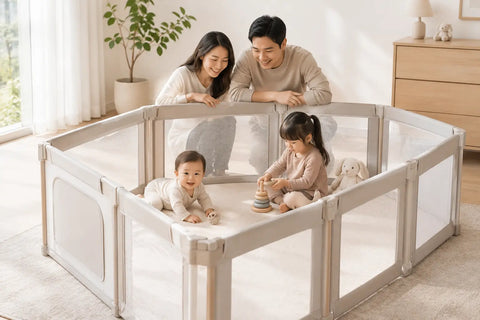
A playpen often begins as a small protected play area beside the sofa. Before long, it may need to work around a coffee table, define a corner in an open-plan home, or make room for a child who is suddenly on the move. This modular playpen buyer review focuses on the details that make that change easier, so you can choose a setup that feels useful not just on delivery day, but through everyday family life.
What makes a modular playpen different?
A modular playpen is made from separate panels that connect to create an enclosed play space. Unlike a fixed rectangular design, the layout can usually be adjusted to suit the room, whether that means a square for a compact living area, a wider shape along one wall, or an expanded zone as your child’s needs change.
That flexibility is the main reason many families choose modular designs. It is also where careful buying matters. More panels may offer more layout options, but they can take up more storage space when not in use. A very large setup can look generous on paper yet leave little comfortable walking room in a typical flat. The right choice is not necessarily the biggest one. It is the one that works with the way your household actually moves through the day.
For families in Singapore, a playpen is often part of a shared living space rather than a separate nursery. A neutral, considered design can help it sit more naturally alongside the furniture you already own, while practical features make it easier to live with through meals, play and tidying up.
A modular playpen buyer review: what to check first
Start with your available floor space
Measure the intended area before comparing playpen dimensions. Include the space needed to open the gate comfortably and to walk around the outside. If the playpen will sit on a play mat, measure the mat too. An attractive layout is less helpful if a panel overlaps the mat edge or blocks a frequently used route to the kitchen.
It helps to mark the proposed footprint on the floor with masking tape for a day or two. This simple step shows how the playpen will affect everyday routines, including where adults sit, where toys collect and how easily you can carry laundry or groceries past it.
Think about the shape as well as the size. A square or rectangular configuration often makes the most efficient use of a room, while a wider format may suit families who want a child to have more visible play space from the dining area. If you expect to reposition the playpen between rooms, look for a layout that is straightforward to adapt rather than one that only works in one precise spot.
Consider the gate as part of daily use
The gate is likely to be used many times a day. Check how it opens, where it sits within the panel arrangement and whether an adult can operate it comfortably while carrying everyday essentials. A gate placed close to the sofa may be convenient, but it should not create an awkward pinch point when opened.
Look at the manufacturer’s current instructions for how the gate and panels are intended to be assembled. The connection system should be used exactly as directed, and the playpen should be checked regularly for secure fitting and signs of wear. These are simple habits that support a calmer setup routine.
Choose materials with care and clarity
Materials affect both the look of a playpen and how it feels to maintain. Parents often appreciate smooth surfaces that can be wiped after snack crumbs, sticky hands or busy craft sessions. If fabric elements are included, check the care guidance before purchasing, especially if you prefer covers or components that can be removed for cleaning.
Rather than relying on broad marketing terms, read the product information for the specific model. Look for clear details on materials, cleaning methods, recommended use and included parts. If a product refers to testing or certifications, confirm that the claim applies to that exact playpen rather than assuming it covers an entire range.
Colour deserves a practical thought too. Light, calm tones can complement modern interiors and make a room feel open, while a slightly deeper neutral shade may better disguise the marks of a busy afternoon. There is no wrong answer, provided the finish suits your home and your cleaning routine.
Think beyond the first few weeks
A modular playpen can be a considered purchase when it has room to adapt. Ask whether extra panels are available if your household needs change, and whether the configuration can be made smaller as well as larger. For some families, a compact enclosed area is all that is needed. For others, a larger format may be useful once a child has more interest in independent floor play.
Also consider where components will go if you need to reclaim the room for visitors, holidays or a family gathering. Panels that can be separated and stored neatly are valuable in homes where each room serves more than one purpose.
Everyday details that shape the experience
The most successful playpen setups are not usually the most complicated. They are the ones that support a familiar rhythm: a place for toys, a comfortable floor surface and a boundary that parents can manage without turning the living room upside down.
A compatible play mat can make the area feel more comfortable and visually complete. Check the dimensions and positioning carefully, and follow the care instructions for both products. If you are using toys, keep the selection simple enough that the floor can still be cleared and cleaned easily. A playpen can become cluttered quickly, particularly in a small home.
Assembly is another point worth considering. Review the setup guidance before the playpen arrives and allow unhurried time for the first installation. Once assembled, avoid making unapproved alterations or combining it with components not intended for that model. If you need help with a product detail, local customer support can be particularly useful for confirming what is included and how a specific configuration should work.
At RaaB Family, the most useful product guidance begins with real-life questions: how a playpen fits into your room, how it is cared for, and whether it will still suit your routine in a few months’ time. Current product pages and instructions should always be the reference point for model-specific details.
When a modular playpen is a good fit
A modular design tends to suit parents who want flexibility without making the home feel overly dedicated to baby gear. It can be especially helpful in open-plan spaces, shared living rooms and homes where the play area may need to grow, shrink or move between rooms.
It may be less suitable if you need a very lightweight option for frequent travel, or if your available space only allows for a small fixed footprint. In that case, a simpler compact playpen could be easier to manage. The decision comes down to how often you expect to reconfigure the space and how much value you place on a tailored layout.
Before you buy, return to the practical basics: room measurements, panel arrangement, gate access, cleaning guidance, storage and verified product information. These details are less glamorous than colour or styling, but they are the ones that determine whether a playpen earns its place in your home.
Choose a setup that gives your family room to settle into the day, rather than one that asks your day to fit around it. A well-planned modular playpen can become a calm, adaptable part of the living space as family routines continue to change.