
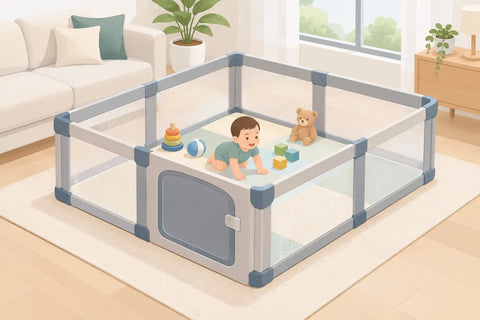
A well-planned playpen is more than a contained spot for toys. It can become the place where your baby rolls, practises sitting, pulls up, plays independently and takes a breather from the activity of a busy home. This playpen layout example is designed for parents who want that space to feel secure, easy to maintain and considered enough to sit comfortably within a modern living room.
The best arrangement is rarely the one filled with the most things. Babies need clear floor space to move, a supportive surface beneath them and a small selection of age-appropriate items within reach. Start there, then adapt the layout to your child’s stage and your home’s daily routine.
Start with the playpen’s position in the room
Before placing a mat, basket or toy, decide where the playpen should live. In many Singapore homes, the living area is the most practical choice because it lets parents prepare meals, fold laundry or spend time with older children while keeping baby in sight. Position the playpen where there is good natural or overhead light, but away from direct afternoon sun that can make the enclosure uncomfortably warm.
Avoid placing it beside a window, balcony door, television console, curtain cords or low shelving. A playpen may create a defined boundary, but it should not be relied upon to compensate for nearby hazards. Keep a sensible buffer between the panels and furniture, especially anything a child might reach through the rails or use as leverage when learning to stand.
Think about the path through the room as well. A playpen should not force everyone to squeeze past it, nor should it sit in the main route between the kitchen and entrance. A quieter edge of the room often works better than the centre. You retain a clear line of sight, while your child has a calmer place to focus and play.
A practical playpen layout example
Picture a rectangular playpen set along one side of the living room, with the entry panel facing the open side of the room. Inside, a fitted high-density foam play mat covers the full floor area with no exposed gaps at the edges. The mat is the foundation of the layout: it softens tumbles, insulates little knees from hard flooring and gives baby a clean, comfortable surface for everyday movement.
Leave the middle of the mat largely open. This is the movement zone, where a younger baby can practise tummy time and rolling, and an older baby can crawl, cruise and turn around safely. Keeping this area free also makes it easier to spot small objects that should not be there.
Place a low, soft toy basket in one corner, rather than scattering toys across the floor. Choose only a few options at a time: perhaps a fabric book, a sensory ball, a teether and a stacking toy. Rotating these every few days keeps the space interesting without creating visual clutter or making tidying feel like another household task.
At the opposite corner, place one stable activity item suitable for your child’s developmental stage. For a baby who is sitting, that may be a soft mirror panel or a simple activity board. For a child beginning to pull up, it could be a purpose-designed, stable support toy used under supervision. Do not place climbable furniture, large cushions or storage boxes against the playpen sides. Once babies discover height, they are remarkably determined problem-solvers.
Keep the gate area clear. This small detail makes entering and leaving easier, especially when carrying a sleepy baby, and prevents toys from becoming a trip hazard for adults. It also gives the playpen a calmer, more organised look.
Why a fitted mat matters
A playpen-and-mat combination works best when the mat is made to sit closely within the enclosure. A gap-free fit reduces awkward edges that may shift, collect crumbs or tempt curious fingers. It also creates a more polished, integrated appearance than a mat that bunches against the panels.
Look for a thick, high-density foam mat with an anti-slip base and a wipe-clean surface. Babies spend a great deal of time close to the floor, so material quality matters as much as cushioning. Non-toxic, child-conscious materials and easy-clean finishes are particularly useful when milk spills, snack crumbs and everyday messes are part of the routine.
Adapt the layout as your child grows
The same playpen can support several stages, but its contents should change. For newborn supervised floor time, keep the layout exceptionally simple: a clean mat, one or two high-contrast toys and plenty of uninterrupted space. At this stage, less stimulation often allows for better observation of your baby’s cues and movement.
Once your child is rolling and crawling, introduce a small variety of textures and objects that encourage reaching and exploration. Soft blocks, board books and sensory toys can all earn a place, provided they are in good condition and appropriate for the child’s age. Check them regularly for loose parts, cracks and worn seams.
When pulling up begins, review the whole setup again. Remove anything that creates a step near the panels, including firm cushions, ride-on toys and storage containers. Your child may need more room than before, not more equipment. A clear, supportive mat and sturdy playpen structure become even more valuable during this active phase.
Toddlers may use the area for calm play rather than long stretches of containment. A small selection of books, a soft doll or simple open-ended toys can turn it into a familiar retreat. It depends on your child’s temperament and how the household uses the space, but the principle remains the same: make the enclosure safe, welcoming and simple to reset.
Make safety part of the everyday routine
A thoughtfully positioned playpen is not a substitute for supervision. Babies can change their abilities quickly, particularly around rolling, climbing and standing. Treat the playpen as a safer play zone, then check it with the same care you would give any other area of the home.
Before each use, make sure the panels are firmly connected, the gate mechanism is properly secured and the mat lies flat. Keep strings, charging cables, plastic bags, hot drinks and small household items well beyond reach. If the playpen is near a sofa, ensure there is no way for baby to access the sofa or objects placed on it.
Cleaning deserves attention too. Wipe the mat after meals or messy play, and clean the panels according to the manufacturer’s guidance. A hygienic space is easier to use confidently every day. It also helps preserve the finish of premium materials over repeated use.
When choosing a playpen, prioritise certified safety standards, durable construction and materials suited to family life. A design that looks at home in your living space is valuable, but it should sit alongside secure fittings, stable panels and a surface that supports active play. This is where a coordinated system can simplify the decision, rather than trying to match unrelated pieces after purchase.
Keep the surrounding room useful for adults too
A playpen should support family life, not take over the room. Set a small lidded basket just outside the enclosure for spare wipes, muslins and a change of clothes. Keeping these essentials nearby means you can respond quickly without filling the play space with adult supplies.
If the playpen is a permanent feature of your living room, choose colours and materials that complement your existing furniture. Scandinavian-inspired neutral tones, clean panel lines and a well-fitted mat can make a child-safe zone feel intentional rather than temporary. RaaB Family’s coordinated playpen and mat solutions are designed with this balance in mind, pairing daily practicality with a neat, modern finish.
The layout does not need to be perfect on day one. Watch how your child uses the space for a week, notice where toys gather and see whether the gate position suits your routine. Small adjustments can make the playpen feel calmer, safer and far more useful - a dependable place for your child to grow while the rest of family life carries on around them.