
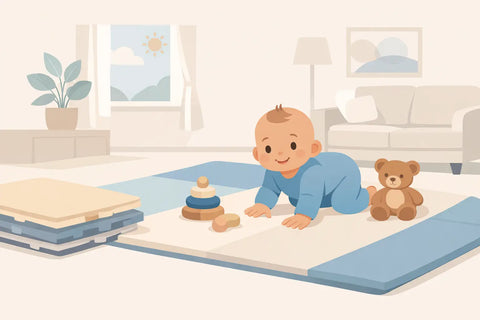
The first time your baby pushes up on their hands and knees, the floor suddenly becomes part of the nursery. A well-chosen play mat for crawling gives them a comfortable, stable place to practise those determined little movements, while giving parents greater confidence about bumps, slips and everyday mess.
Crawling is not simply a stage to get through. It helps babies develop balance, coordination, strength and spatial awareness. The right surface should support that progress without turning your living space into a difficult-to-clean obstacle course. For modern family homes, the best mats balance protective cushioning, dependable grip, hygienic materials and a design you will be happy to see every day.
Why a play mat for crawling matters
Hard flooring can be unforgiving when babies are learning to move. Even on carpet, the surface may be too soft or uneven for a baby to push against comfortably. A high-density foam mat creates a more supportive base, helping little hands, knees and elbows feel protected as your child rocks, reaches and moves forward.
That extra cushioning also matters beyond the crawling months. Babies often topple while learning to sit, pull up and cruise along furniture. A quality mat softens the impact of everyday tumbles, although it should never be treated as a substitute for close adult supervision.
The practical benefit is just as valuable. A dedicated play surface defines a clean, comfortable zone for tummy time, toys, books and family floor play. Rather than constantly moving blankets or towels that bunch up under active babies, you have a stable area designed for real daily use.
What makes a good play mat for crawling?
The best choice depends on your room size, flooring and how you expect to use the mat. Still, a few features deserve closer attention before you buy.
Supportive thickness, not just softness
Thickness is often the first specification parents compare, and understandably so. A thicker mat can offer better shock absorption over tiles, stone or timber flooring. Yet thickness alone does not guarantee support. Very soft foam may feel plush at first but compress too easily under your baby’s weight, making it less stable for crawling and early standing.
Look for high-density foam that cushions impacts while retaining a firm, level feel. This combination lets babies press their palms and knees into the surface with confidence. It also gives parents a more comfortable place to sit alongside them during playtime.
Consider the floor underneath. In a home with hard tiles, a thicker, denser mat is often worth prioritising. If it will sit over a well-padded carpet, you may place more emphasis on size, wipe-clean practicality and how neatly it fits the room.
A genuinely anti-slip base
A crawling mat should stay in place when your baby moves, rolls and changes direction. This is especially relevant on smooth floors, where an unsecured mat can shift under pressure. An anti-slip backing helps the mat remain stable and creates a more reliable surface for early movement.
Check that the base is designed to grip your particular flooring type. Dust, moisture and uneven surfaces can affect performance, so keep both the floor and underside of the mat clean. Avoid placing it over loose rugs, as layers can slide against each other and create an avoidable hazard.
Non-toxic materials for close contact
Babies spend a remarkable amount of time close to their play mat. They lie face down, chew toys that have touched the surface and explore textures with their hands. Material quality is therefore a core safety consideration, not a decorative extra.
Choose a mat made with non-toxic, child-safe materials and look for clear product information around testing and safety standards. Parents may also prefer eco-conscious materials with low-odour finishes, particularly for indoor areas with limited ventilation. If a new mat has any noticeable smell when unpacked, allow it to air in a well-ventilated room before your baby uses it.
A premium-quality mat should feel reassuring from the moment it arrives: smooth at the seams, free from sharp edges and made for frequent contact with curious little hands.
An easy-clean, hygienic finish
Milk dribbles, teething toys, snack crumbs and nappy-change surprises are all part of life with a baby. A wipe-clean surface makes the difference between a play space you use freely and one that feels like another chore waiting to happen.
For daily cleaning, a soft cloth with mild soap and water is usually enough. Dry the mat thoroughly before use, especially around folds and joins. Avoid harsh chemicals or abrasive scrubbers, which may damage the finish over time.
An antibacterial surface can provide an added layer of reassurance, but good cleaning habits still matter. Wipe spills promptly, clean toys regularly and inspect the mat for tears or damaged areas where dirt could collect.
The right size and shape for your space
A mat should give your baby enough room to move beyond one or two crawling steps. If space allows, choose a generous surface that accommodates tummy time, rolling, crawling and a small selection of toys without feeling crowded. Babies often move further than expected once they gain momentum.
Measure the intended area before ordering. Think about door swings, storage furniture and the route adults take through the room. In a compact home, a folding mat can be a practical option because it can be stored away when visitors arrive or when more floor space is needed.
For parents using a playpen, compatibility is especially important. A gap-free fit helps prevent small fingers, toys or crumbs from slipping between the mat and playpen frame. A matching playpen-and-mat system can simplify the decision, giving you a coordinated safe space with proportions designed to work together.
Choosing between a single-piece and folding mat
A single-piece mat offers a smooth, uninterrupted surface. It can be particularly appealing for babies who are just learning to crawl because there are no fold lines to cross. It also tends to create a cleaner, more refined look in a nursery or living area.
Folding mats offer convenience. They are easier to carry, store and reposition, making them useful for families who need their main living space to work hard throughout the day. The trade-off is that fold lines can collect dust and may need more careful cleaning. A well-made folding mat should still lie flat and feel stable when opened.
There is no single answer for every household. Choose a single-piece mat if it will have a permanent home and visual simplicity matters most. Choose a folding design if flexibility and storage are part of your daily routine.
Creating a safer crawling zone
A quality mat works best as part of a carefully prepared space. Keep the area clear of small objects, loose cords and unstable furniture. Position shelves, floor lamps and low tables beyond your baby’s immediate reach, and use appropriate furniture safety measures as your child begins to pull themselves up.
Toys should be age-appropriate and easy to clean. A few open-ended favourites are usually more useful than filling the whole mat with distractions. Leave enough open space for your baby to turn, reach and decide where to go next.
Natural light can make the area inviting, but avoid placing the mat where it receives intense direct sun for long periods, as this may make the surface uncomfortably warm and can affect the finish over time. A calm corner near family activity is often ideal. Your baby can explore safely while still seeing and hearing the people they love.
When should you start using a crawling mat?
You can introduce a play mat from the newborn stage for supervised tummy time. Early floor time gives babies an opportunity to build neck, shoulder and core strength at their own pace. As they grow, the same mat becomes a familiar place for rolling, pivoting and crawling.
Do not wait until your child is already crawling quickly. Setting up a safe floor space early helps make regular movement play part of the day. Start with short sessions when your baby is alert and content, then gradually increase the time as they become more comfortable.
Some babies crawl early, some later, and some use a different way of getting around altogether. Scooting, shuffling and bottom-sitting can all be part of normal development. The goal is not to rush a milestone, but to provide a secure, inviting place for your baby to explore.
A mat that supports family life beyond crawling
The value of a good mat continues well after the first crawl. It becomes a spot for stacking blocks, reading picture books, building train tracks and sharing quiet moments before bed. Choosing a timeless colour or Scandinavian-inspired design means it can sit naturally within your home rather than looking like a temporary compromise.
At RaaB Family, thoughtfully designed play mats are chosen to bring together safety, comfort and modern family-friendly style. When you select a mat with supportive foam, secure grip and easy-care materials, you are not only preparing for a developmental milestone. You are making room for the small, everyday discoveries that make early childhood so memorable.
Give your baby a space that invites movement, cushions their confidence and feels easy for the whole family to live with.