
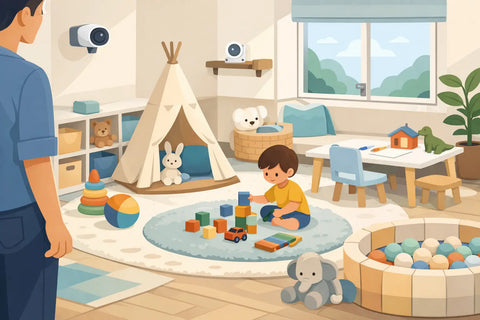
A well-planned play area gives your child a safe place to roll, crawl, explore and eventually play independently, while giving you greater peace of mind at home. When considering how to set up play area for a baby or toddler, the best place to start is not with toys. Start with the floor, the boundaries and the everyday routines that will happen there.
For families in compact homes and flats, a dedicated zone can make shared living spaces feel calmer and more organised. The goal is not to create a picture-perfect nursery corner. It is to create a comfortable, easy-to-maintain space that supports your child’s stage of development without taking over the whole home.
How to set up play area with safety first
Before choosing colours or storage baskets, assess the room from your child’s level. Get down on the floor and look for reachable cords, sharp furniture edges, unstable side tables and low shelves that could tip. A baby becomes mobile quickly, and a safe area needs to account for the child they will become in a few months, not only the baby they are today.
Choose a location where you can supervise naturally during daily life. For many households, this is a section of the living room rather than a separate bedroom. A spot near the kitchen or dining area can work well if it keeps your child in view while you prepare meals or complete small tasks. Avoid placing the play space directly beside balconies, windows, stairways or busy walkways.
Natural light is welcome, but harsh direct sun can make a play area uncomfortable and warm. Position the space away from strong afternoon light where possible, and ensure any window coverings have secured cords. If your home has tiled, marble or timber flooring, a thick protective surface is especially valuable for early rolling, crawling and inevitable tumbles.
Build from the floor up
The play mat is the foundation of the space, so it is worth choosing carefully. A thin mat may look neat initially, but it can offer limited cushioning on hard floors. For babies learning to sit, crawl and pull themselves up, high-density foam provides more comfortable impact protection and insulation from a cold floor.
Look for a mat made from non-toxic materials that is easy to wipe clean. Spills, drool, snack crumbs and nappy-free play are all part of family life. A waterproof, antibacterial surface makes everyday cleaning simpler and helps the area remain hygienic without complicated laundering. Textured or anti-slip finishes can also help reduce movement under active little feet.
Size matters as much as thickness. Measure the available floor area before purchasing, remembering to allow enough room for an adult to sit comfortably inside. A baby may only need a small space for tummy time, but crawlers benefit from room to move forward, turn and practise reaching for objects. If you are furnishing a multi-use room, a mat that fits neatly within a defined zone will make the layout feel intentional rather than crowded.
Decide whether a playpen is right for your family
A playpen creates a clear physical boundary, which can be particularly useful when a child is crawling, when older siblings are playing nearby or when the living room contains furniture you would rather not constantly police. It also gives grandparents and caregivers an obvious safe zone to use consistently.
The trade-off is space. A generously sized playpen supports freer movement and can hold your child’s attention for longer, but it needs a practical footprint in the home. If floor space is limited, choose a layout that leaves clear routes through the room and does not block cabinets, doors or access to the sofa.
For the most secure result, match the playpen dimensions with a compatible play mat. A gap-free fit prevents small toys from slipping into the edges and helps keep the mat from shifting during play. It also creates a polished, considered look in a living space. RaaB Family’s coordinated playpen-and-mat systems are designed for this kind of practical compatibility, helping parents build a safer enclosed play zone with less guesswork.
Whether you use a playpen or an open mat, inspect the setup regularly. Panels should be firmly connected, the gate should latch properly and the base should sit flat. Never rely on a playpen to make an area completely risk-free. Active supervision remains essential, especially once your child begins standing and climbing.
Keep the layout simple and purposeful
A good play area has room for movement first, then a small number of age-appropriate activities. Too many toys can create visual clutter and make it harder for a baby to focus. Begin with a clear central floor space, then place a few chosen items around the edge.
For a young baby, this may mean a soft sensory toy, a baby-safe mirror and a few high-contrast cards during supervised tummy time. As crawling begins, add sturdy objects that encourage reaching, transferring from hand to hand and moving across the mat. Toddlers may enjoy a simple book basket, large stacking toys or a low activity table, provided it is stable and suitable for their age.
Keep large furniture outside the immediate play zone where possible. If a shelf is nearby, secure it to the wall and reserve the lowest levels for lightweight items. Avoid heavy décor, glass containers and anything small enough to present a choking hazard. It is better to rotate toys every few days than to leave everything out at once. Rotation keeps the area interesting and makes tidying far easier.
Create a calm visual look
A play area does not have to clash with the rest of your home. Neutral mats, soft colours and clean-lined playpen panels work naturally with contemporary interiors, while wooden or fabric storage adds warmth. This is particularly helpful in a living room, where the play space is part of the family home rather than hidden away.
The practical benefit of a calmer palette is that it can make a compact room feel less busy. Let a few books, toys or artwork provide colour instead of relying on multiple bright plastic items. Your child still gets stimulation from movement, texture and interaction, not only from a visually crowded setting.
Plan storage for real daily routines
Storage should be close enough that you can tidy the area in minutes, not across the room in a cupboard you will avoid using. A low basket beside the mat works for soft toys and board books, while a lidded box can keep smaller items out of sight after playtime. Choose containers without sharp corners and do not overfill them.
Separate play items from nappy-changing supplies, medicines and cleaning products. These should always be stored well beyond your child’s reach, preferably in a secured cabinet. If your play area is in the living room, a small organised station nearby can hold wipes, a changing mat and spare clothing for quick clean-ups, but it should never become a place where unsafe items are left unattended.
Cleaning is easier when it is built into the routine. Wipe the mat after meals or messy play, shake out soft toys as needed and check for damaged or loose parts during your regular tidy-up. In warm, humid conditions, make sure the area has good airflow and that damp fabric items are dried thoroughly before being put away.
Adapt the space as your child grows
The most useful play spaces change over time. A newborn’s tummy-time corner may become a crawler’s enclosed area, then a toddler’s reading and building zone. Rather than buying everything at once, choose a strong foundation - a quality mat, safe boundaries and flexible storage - then add only what your child genuinely uses.
As your child starts pulling to stand, reassess nearby furniture and remove objects they could use to climb beyond the boundary. When they become more confident walkers, you may prefer to open up the playpen for supervised family play while retaining the mat as a familiar soft surface. There is no single correct arrangement; the right setup depends on your child’s development, your home layout and how your family uses the room.
A thoughtfully arranged play area can become one of the most-used parts of the home: a place for first rolls, wobbly crawls, favourite stories and quiet moments together. Make it safe enough for confidence, comfortable enough for long stretches of play and simple enough to maintain on even the busiest parenting days.