
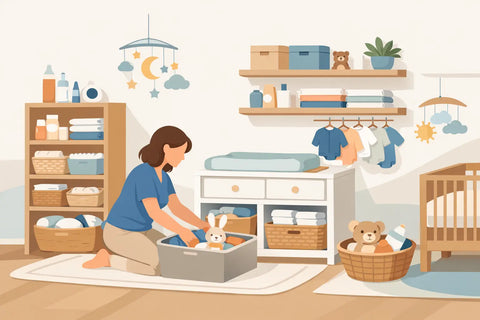
The muslin cloth you need is never the one in reach at 3 am. That is usually the moment parents realise how much easier daily care becomes when every nappy, onesie and bath item has a proper place. If you are wondering how to organise baby essentials without turning your home into a stockroom, the goal is not perfection. It is creating a safe, efficient system that supports feeding, changing, sleeping and play with less stress.
A well-organised nursery or baby corner should help you move through the day almost on autopilot. In smaller Singapore homes, that matters even more. Space is valuable, so every drawer, basket and shelf needs to work harder while still looking calm and considered.
How to organise baby essentials by routine first
The easiest mistake is organising by product type alone. It sounds tidy, but it often means wipes in one place, nappies in another and cream somewhere else entirely. In real life, you use baby items by routine, not by category.
Start by thinking in zones. Your changing zone should hold nappies, wipes, rash cream, cotton pads, spare clothes, a small bag for soiled items and anything else you reach for during a change. Your sleep zone needs swaddles or sleep bags, spare fitted sheets, burp cloths and night-time feeding basics if those are part of your routine. Your bath zone should keep towels, washcloths, baby wash and a fresh change of clothes close by.
This approach makes daily care smoother because the items that belong together stay together. It also reduces the chance of leaving baby unattended while you step away to fetch something you forgot.
Start with the big furniture pieces
Before you buy extra organisers, look at the furniture doing the heavy lifting. A nursery usually works best when the main pieces already support storage rather than forcing you to add clutter later.
A cot with a clean footprint, a proper changing station, a chest of drawers and well-planned shelves can carry most of the load. If your changing area includes drawers or shelves underneath, use that prime space for everyday essentials rather than overflow stock. The most-used items should sit between waist and chest height, where they are quickest and safest to reach.
There is also a design trade-off here. Open shelving looks airy and stylish, but it collects dust faster and makes the room feel busy if every item is visible. Closed drawers and cabinets create a neater look and better protect spare linens, nappies and clothing. Many parents find the best balance is a combination of both: concealed storage for bulk items, with one or two attractive baskets for daily grab-and-go use.
Use drawers properly, not hopefully
Drawers often become the place where tiny baby items disappear. Socks mix with bibs, mittens get buried, and the moment you need a clean muslin, you end up pulling everything out.
The fix is simple: divide the drawer before you fill it. Small organisers, trays or fabric boxes create clear homes for each category. Keep one drawer for daily clothing such as bodysuits, sleepsuits and leggings. Another can hold smaller accessories like bibs, socks and hats. If you have a third, use it for backup stock or the next clothing size.
Try not to overfill. Babies outgrow clothing quickly, and crowded drawers are harder to maintain. It is better to keep the current size accessible and store larger sizes separately until needed. This saves time and makes it easier to see what you actually have.
How to organise baby essentials in a small nursery
When space is limited, vertical storage becomes your best friend. Wall shelves, slim cabinets and over-door organisers can all help, but they need to be used with safety in mind. Anything mounted above a cot or changing station must be secure and positioned carefully. Heavier items should always stay lower down.
In compact homes, multi-purpose furniture is often the smartest investment. A changing unit with built-in drawers, a playpen that fits neatly with a compatible mat, or storage furniture that transitions beyond the newborn stage can prevent the nursery from feeling overcrowded. Parents often save money in the long run by choosing fewer, better-designed pieces instead of layering temporary fixes.
It also helps to limit duplicates. Yes, it is practical to keep essentials in more than one place, but too many mini-stashes create confusion and overbuying. One main nursery station and one smaller portable caddy for the living area is usually enough.
Keep hygiene products clean and contained
Baby essentials are not just about convenience. Hygiene matters, particularly for feeding gear, changing supplies and anything used on delicate skin. That means storage should support cleanliness as much as order.
Store creams, grooming items and medicines in a dedicated container rather than scattering them across different surfaces. Keep unopened nappies and wipes in a dry, clean cupboard if possible. Feeding accessories should have their own storage area, away from bathroom humidity or household dust.
This is one area where materials make a difference. Easy-wipe surfaces, well-finished storage furniture and organisers that do not trap dust are far easier to maintain in a busy family home. Premium-quality nursery pieces are not only about appearance. They often make everyday cleaning simpler, which is something every parent appreciates after the first few weeks.
Create a realistic restocking system
Organising baby essentials once is easy. Keeping them organised is the part that tests any system. The trick is to build in a quick restocking habit so the setup continues to work when you are tired.
Think of your nursery like a mini station that needs topping up. Keep a small amount of stock in the active zone and store the surplus elsewhere. When the front basket of nappies gets low, refill from the cupboard. When one drawer of muslins runs down, restock from your backup shelf. This avoids the visual clutter of storing everything at the point of use while still keeping essentials close.
Labels can help, especially if grandparents, helpers or your partner also use the space. They do not need to look clinical. Even simple, discreet labels inside drawers or on storage baskets make a surprising difference when several people are trying to keep the same system going.
Do not forget the play area
As babies grow, the play area quickly becomes another hotspot for clutter. Toys, books, teethers and soft items spread fast, especially when the space also needs to feel safe and clean.
This is where defined boundaries help. If you use a playpen or a designated play mat area, keep nearby storage simple and easy to access. A low basket for soft toys, a small bin for teethers and a shelf for books is often enough in the early stages. Too much storage can tempt parents to overfill the area with things baby does not need yet.
Safety should guide every decision here. Flooring and play surfaces should be stable, easy to clean and suitable for regular family use. Storage near the play area should not include sharp corners, tipping risks or loose parts. A calm, well-planned setup looks better, but more importantly, it supports safer independent play.
Edit regularly as your baby grows
One reason nursery storage stops working is that babies change faster than the room does. Newborn systems are built around nappies, swaddles and frequent changes. A few months later, you may need more space for larger clothing, toys, feeding items and weaning accessories.
That is why organisation should be reviewed in stages. Every few weeks, take a quick look through drawers, shelves and baskets. Remove clothes that no longer fit, donate duplicates you do not use, and shift out products your baby has outgrown. The best nursery setups are not static. They evolve with your routine.
For many families, this is where specialist baby furniture proves its value. Storage that feels considered, durable and made for real parenting use tends to adapt more easily over time. At RaaB Family, that practical, safety-led thinking is what makes a nursery feel less like a showroom and more like a space that truly supports family life.
A simple rule for what stays within reach
If you use it several times a day, keep it at arm's length. If you use it once a week, store it nearby but out of sight. If you are saving it for later, move it out of the nursery altogether.
That one rule helps cut through a lot of the overwhelm. You do not need a complicated storage formula to organise baby essentials well. You need a layout that respects your space, supports safer care routines and makes everyday parenting feel just a little lighter.
When the room works with you, not against you, even the busiest days at home start to feel more manageable.