
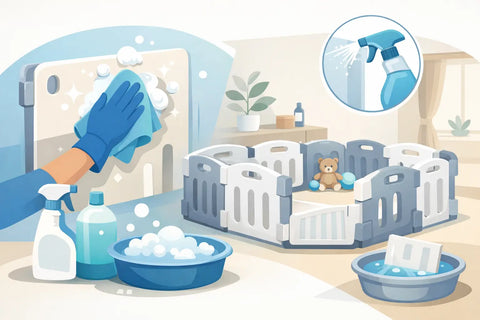
A playpen panel can look clean at a glance while carrying the sticky evidence of snack time, post-nappy-change hands and determined little fingerprints. Knowing how to clean playpen panels properly helps protect the hygienic, comfortable play space you have created for your child - without exposing the panels to harsh chemicals or damaging their finish.
For most families, a quick wipe after a messy day and a more thorough clean each week is enough. The right routine depends on the panel material, how often the playpen is used and whether your little one is currently mouthing, crawling or bringing food into the enclosure. The goal is simple: remove dirt, deal with germs sensibly and allow every surface to dry fully before play begins again.
Start with the panel material and care instructions
Before reaching for a cleaning spray, check the manufacturer’s care label or product manual. Many modern modular playpens use smooth, durable plastic panels that are designed for easy everyday wiping. Others may have fabric mesh, padded sections, metal connectors or anti-slip feet that need slightly different treatment.
A mild cleaning approach is usually the safest choice for plastic panels. Strong bleach solutions, abrasive scouring powders, solvent-based cleaners and rough scrubbers can dull the surface, weaken printed details or leave residues where small hands and mouths may come into contact. Even a product marketed as antibacterial may not be appropriate for a child’s play area unless its instructions clearly say it is suitable for that material and safe around children when used as directed.
If the playpen has a matching play mat, clean it separately according to its own care guidance. Removing the panels first, where the design allows, also makes it easier to reach the floor edges and the spaces around connectors where crumbs tend to settle.
How to clean playpen panels in four careful stages
1. Clear loose dirt before adding moisture
Take toys, books and soft furnishings out of the playpen. Use a dry microfibre cloth to lift dust, hair and crumbs from the panel faces, hinges, slots and lower edges. A soft brush can help around textured areas, but avoid forcing bristles into small gaps.
This first step matters more than it seems. Wiping a gritty surface with a wet cloth can drag particles across the panel and create fine scratches over time. It also stops crumbs from turning into a sticky paste around joints once water is added.
2. Wipe with warm water and a mild solution
Prepare a bowl of warm water with a small amount of mild washing-up liquid. The cloth should be damp, not dripping. Wipe each panel from top to bottom, paying close attention to hand-height areas, the top rail and corners that your child may chew or hold while pulling up.
For everyday marks, gentle pressure is usually enough. Let a damp cloth rest over dried food or milk splashes for a few seconds, then wipe again rather than scrubbing aggressively. If the panels are removable, clean one at a time and place them on a clean towel while you work.
Do not soak connectors, hinges or anti-slip bases. Excess water can become trapped in joins, particularly in foldable or interlocking designs, and may encourage odours or affect how smoothly the pieces fit together.
3. Treat stubborn marks with care
Crayon, food colouring and greasy fingerprints can need a little extra attention. First test your chosen method on a discreet area. In many cases, a soft cloth with mild soapy water will still do the job when used patiently.
If a mark remains, use a child-safe cleaner that is specifically suitable for the panel material and follow the dilution and contact-time instructions exactly. Never mix cleaning products. Mixing common household products can release harmful fumes, and stronger is not automatically safer or more effective in a nursery or play area.
Avoid using alcohol wipes as a default solution unless the manufacturer permits them. They can be useful for certain hard surfaces, but frequent use may dry or discolour some plastics and finishes. The same applies to vinegar: it is popular as a household cleaner, but it is not right for every material and should not replace the care instructions supplied with the product.
4. Wipe again, then dry completely
After cleaning, go over the panels with a separate cloth dampened only with clean water. This removes any leftover soap or cleaner residue. Follow with a dry microfibre towel, especially around panel joins, locking points and the underside of the base.
Leave the playpen open in a well-ventilated room until every part feels dry to the touch. Reassembling panels or replacing a play mat while moisture is trapped underneath can lead to stale smells and make future cleaning harder. It may take a little longer, but full drying is part of a genuinely hygienic routine.
Do you need to sanitise the panels every day?
Usually, no. Daily sanitising can be unnecessary for a well-maintained home playpen and may lead to more frequent use of chemical products than your child needs. Regular cleaning with mild soap and water removes the everyday mess that gives germs somewhere to linger.
A more targeted sanitising step may make sense after illness in the household, a nappy leak, a visit from another child or a particularly messy play session. Choose a product that is suitable for children’s hard surfaces and for your panel material, use it according to the label, then rinse if the instructions require it. Keep your child away from the playpen until the surfaces are fully dry.
It is also worth cleaning high-touch toys, play mat edges and nearby furniture at the same time. Cleaning only the panels while leaving frequently handled toys covered in snack residue does not give the space the fresh reset parents are aiming for.
Don’t overlook connectors, feet and the space beneath
The most visible panel surfaces are easy to remember. The hidden areas are where a playpen can become harder to maintain. Check the connector points every week for trapped crumbs, dust or moisture, using a dry cloth or soft brush to clear them. If your playpen includes safety locks, make sure they click securely after cleaning and reassembly.
Wipe the anti-slip feet and inspect them for wear, lifting or dirt that could affect their grip on the floor. A playpen should sit level and stable, particularly on smooth flooring. If any panel is cracked, warped, loose or no longer connects securely, stop using the playpen until it has been assessed or the affected part has been replaced.
The floor underneath deserves attention too. Lift the playpen or move it carefully when practical, then vacuum or wipe the area beneath. This is particularly useful with a gap-free playpen and play mat set, where keeping both components clean supports a neater, more comfortable play zone.
Create a routine that fits real family life
A complicated cleaning schedule rarely lasts through feeds, naps and busy evenings. A simple rhythm is more effective: wipe visible marks as they happen, clean the panels thoroughly once a week and carry out a closer inspection after illness, spills or heavy use.
Keep a clean microfibre cloth and a child-appropriate cleaner nearby, but out of reach, so small messes do not become tomorrow’s stubborn stains. If you use a playpen for meals or sensory play, place a washable mat or tray beneath the activity where appropriate. That small layer of protection can reduce the amount of food reaching panel joins and floor edges.
When choosing baby furniture, easy maintenance should sit alongside safety, comfort and style. Well-designed panels with smooth wipe-clean surfaces and secure fittings make the daily routine less demanding. RaaB Family play solutions are selected with the practical realities of family homes in mind, helping parents create a safe space that continues to look considered after plenty of everyday play.
A clean playpen does not need to be perfect or smell strongly of cleaning products. It should simply feel dry, secure and ready for the next crawl, first stand or quiet moment with a favourite toy.