
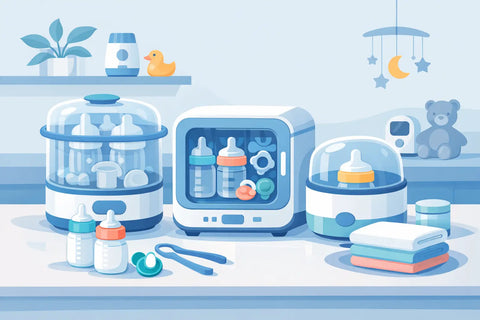
A steriliser may be one of the smallest appliances in your nursery or kitchen, yet it can quickly become part of the rhythm of early parenthood. Between bottles, teats, breast pump parts and soothers, baby sterilisers offer a practical way to keep feeding equipment hygienic after it has been thoroughly washed. The right choice is not necessarily the largest or most feature-packed model. It is the one that suits how you feed your baby, how much counter space you have, and how often you need clean items ready.
For busy families, convenience matters. But so do proper use, suitable materials and a design that is easy to maintain. Here is what to consider before choosing a steriliser for your home.
Why Sterilising Matters in the Early Months
Babies have developing immune systems, particularly in their first year. Milk residue can also cling to the narrow areas of bottle teats, pump valves and feeding accessories. Washing each item carefully is always the first step, while sterilising adds another level of hygiene for items that come into close contact with your baby’s mouth.
The precise routine can depend on your baby’s age, health needs and the advice of your healthcare professional. Many parents sterilise bottles and feeding equipment regularly in the early months, then adjust their routine as their child grows. What remains consistent is the need to clean every item first. A steriliser is not a substitute for washing away visible milk residue or grease with warm, soapy water and a dedicated bottle brush.
The Main Types of Baby Sterilisers
There is no single best method for every household. Steam, UV and cold-water sterilising each have strengths, and the most suitable option depends on your daily routine.
Electric steam sterilisers
Electric steam sterilisers use high-temperature steam to sterilise bottles and compatible accessories. They are popular because they are straightforward: add the required amount of water, load clean items according to the instructions and start the cycle. Most can sterilise several bottles at once, which is especially useful for parents who prepare multiple feeds each day.
Steam models generally offer good capacity for their footprint, but they need regular descaling. Singapore’s humid climate and busy family routines can make it tempting to leave the appliance until the next use, yet allowing it to dry, emptying leftover water and following the manufacturer’s cleaning guidance will help keep it performing well. They also release heat and moisture, so place them on a stable, heat-resistant surface with adequate space around them.
Microwave steam sterilisers
Microwave sterilisers work with steam too, but use a microwave-safe container rather than a powered unit. They can be a practical, compact choice for smaller kitchens, travel or occasional use. They are often more affordable and do not need a permanent spot on the worktop.
The trade-off is that capacity is limited by the size of your microwave, and cycle times can vary. You must also take care when removing the unit, as steam can cause burns. Check that your bottles, pump parts and accessories are microwave-safe before use.
UV baby sterilisers
UV baby sterilisers use ultraviolet light to sterilise compatible items without water or steam. Their dry operation is a major attraction for families who want to avoid damp bottles after a cycle. Many UV units also offer drying functions, making them particularly convenient when you need bottles ready to use promptly.
Unlike steam, UV light works where it can reach. Items need to be positioned correctly, without one component blocking another, and they should be clean before they go inside. A larger cabinet-style unit may also be useful beyond bottle-feeding, depending on the manufacturer’s guidance, for items such as soothers or small baby accessories. For parents planning a polished, organised feeding station, a well-designed UV steriliser can feel like a natural part of the space rather than another item to hide away.
Cold-water sterilising
Cold-water sterilising uses a sterilising solution or tablets in a container of water. It needs no electricity, no microwave and no hot surfaces, making it useful when travelling, staying with family or managing a temporary feeding set-up.
It does require careful measuring and adherence to the stated contact time. Some parents also prefer not to handle the solution repeatedly or find the process less convenient than pressing a button. Still, it is a dependable option to have in mind when power, space or portability is the priority.
What to Look for When Choosing a Steriliser
Start with the feeding equipment you already own or expect to use. Bottle shapes vary, and breast pump parts can be awkwardly sized. Check the internal capacity and layout, rather than relying only on a claim such as “holds six bottles”. A unit that holds six standard bottles may not accommodate wide-neck bottles, tall bottles, teats, caps and pump components in the same way.
Size matters beyond capacity. Measure your worktop and consider where the appliance will live when not in use. A tall UV steriliser may provide excellent storage and drying, while a compact steam unit can be easier to fit into a smaller kitchen. Think about plug access too. A safe set-up should not rely on trailing leads near the sink or areas where children may tug at them.
Drying is another valuable feature, especially in humid weather. Sterilised items should be handled with clean hands and stored in a clean, dry place. If you often need to sterilise just before a feed, a model with a drying cycle can reduce the need to air-dry bottles on a rack. If you prefer steam or microwave sterilising, make sure you have a clean space where items can cool and dry without being touched unnecessarily.
Ease of cleaning should influence the decision as much as the cycle time. Removable racks, a wide opening and clearly marked water levels can make everyday use simpler. For steam appliances, look for accessible heating plates that can be descaled as directed. For UV models, follow the care instructions for the interior and lamps, and do not use harsh cleaners that may damage the unit.
Finally, choose a product from a reputable baby specialist and review the safety guidance carefully. Look for clear instructions, compatible materials and a stable construction suited to daily family use. Premium-quality nursery essentials should make routines calmer, not create another manual to decipher at midnight.
How to Use Baby Sterilisers Safely
A safe routine begins before the cycle starts. Take bottles apart fully, separating teats, rings, caps, valves and any pump pieces. Wash all surfaces thoroughly, rinse them well and check that no milk residue remains in narrow openings. Load items with enough spacing for steam or UV light to reach the relevant surfaces, following your specific appliance instructions.
After sterilising, avoid touching the inside of teats or bottles. Use clean hands or sterilised tongs where supplied, and assemble bottles on a clean surface. If your steriliser has a lid that keeps contents protected for a stated period, leave it closed until you need the items. Once the lid is opened, treat the equipment as exposed and follow the manufacturer’s advice on whether it needs to be used promptly or sterilised again.
Do not put non-compatible materials into a steam, microwave or UV steriliser simply because they look similar to baby feeding accessories. Heat can warp some plastics, while UV exposure may not be appropriate for every material. Always check the care label on the bottle or accessory as well as the steriliser manual.
Creating a Feeding Station That Works for Your Family
The most efficient homes are not necessarily the ones with the most equipment. They are the ones where everyday items have a clear, safe place. Position your steriliser near the sink if practical, but keep it away from splashing water. Store clean bottles in a covered cupboard or within the steriliser if its instructions permit, and keep bottle brushes separate from general washing-up tools.
If you are furnishing a nursery or planning a complete baby-care area, consider how hygiene appliances fit alongside your changing station, storage and feeding supplies. A calm, uncluttered set-up makes late-night feeds easier, particularly when one parent is preparing a bottle while the other is settling the baby. RaaB Family’s considered range of UV sterilisers and nursery essentials is designed with that balance of daily practicality, safety and modern home styling in mind.
The best steriliser is the one you will use correctly and maintain consistently. Choose a method that fits your feeding routine, keep the cleaning process simple, and give yourself a set-up that leaves more attention for the moments that matter most: feeding, comforting and getting to know your baby.