
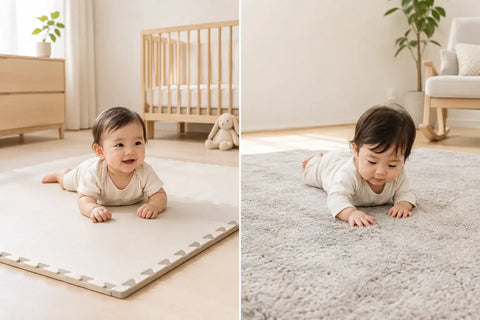
A mat often becomes the busiest surface in a family home. It catches block towers, milk drips, nappy-free moments and the quiet pause between playtimes. When deciding between a foam mat vs fabric mat, the right choice is less about one material being universally better and more about how your household really uses the space.
For some families, wipe-clean practicality is the priority. For others, a softer textile finish that blends into the living room matters most. Looking at the material, care needs, room layout and age of your child can make the decision feel much clearer.
Start with your everyday routine
Think about where the mat will live before thinking about colour or pattern. A mat used beneath a playpen in the living area has different demands from one placed in a nursery reading corner or brought out for occasional floor play.
If snacks, drinks and messy play are part of the routine, easy cleaning may sit at the top of your list. If the mat is primarily for sitting together, reading books or creating a cosy play zone, its texture and appearance may carry more weight. Neither priority is superficial. A mat that suits your routine is more likely to stay in use every day.
It also helps to consider whether the mat needs to be moved often. A lightweight fabric mat can be easy to fold away, while a foam mat may be more convenient when you want a dedicated play surface that remains in place.
Foam Mat vs Fabric Mat: the practical differences
Foam and fabric mats can both create a comfortable area for supervised floor play, but they feel and function differently. Product construction varies, so always check the individual product description and care instructions rather than assuming all mats in a category perform the same way.
Feel underfoot and under play
Foam mats generally offer a firmer, cushioned surface. This can feel comfortable for parents sitting on the floor and provides a more structured base for toys, books and everyday play. The level of cushioning depends on the foam type and thickness, so it is worth checking the specifications when comparing options.
Fabric mats tend to have a softer, more textile-like finish. Quilted or padded styles can make a room feel warm and relaxed, particularly in bedrooms or neutral living spaces. They may feel less structured beneath heavier toys or furniture, depending on the padding and the floor underneath.
A foam mat may suit families looking for a defined activity area with a supportive feel. A fabric mat may suit those who want a softer layer that feels closer to a rug or blanket. The floor below still matters. Hard tile, vinyl and timber floors will feel different from carpet, even with the same mat on top.
Cleaning and everyday care
This is often the deciding factor for busy parents. Many foam mats have a wipeable surface, making them practical for small spills and the regular marks that come with family life. A gentle wipe after use can help keep the area ready for the next activity. Always use cleaning methods recommended by the manufacturer, as harsh products may affect the finish over time.
Fabric mats usually need more involved care. Depending on the design, they may be machine washable, spot-clean only or require a particular wash setting. That can be perfectly manageable for a mat used in a lower-mess area, but it is worth considering how often you are likely to wash it and where it will dry in a humid Singapore home.
A removable, washable fabric cover can be useful, but it still means planning around laundry time. For families who want the quickest reset after meals or creative play, foam often has the advantage.
Grip, movement and placement
A mat should sit neatly within the space rather than curling at the edges or shifting constantly during use. Foam mats are often weightier and may stay put well on flat floors, though this depends on the base material and surface beneath. Fabric mats can be lighter and may move more easily, especially on smooth flooring.
Before setting up any mat, make sure the floor is clean and dry. Position it away from door swings, busy walkways and areas where it may become a trip hazard. If you are placing a mat inside or beneath a playpen, check that the sizing works with the playpen’s intended setup and that the mat does not interfere with its base or structure.
Style in a shared home
A foam mat can look clean and considered in a shared living space, particularly in simple colours or subtle prints. It can help visually define a play zone without turning the room into a children’s area from wall to wall.
Fabric mats bring softness and texture. They may be appealing when you want the play area to sit naturally alongside cushions, curtains and rugs. However, lighter fabrics can show marks more readily, while highly textured surfaces may hold onto crumbs or pet hair.
The best visual choice is usually the one you will be happy to see every day. A calm, neutral mat can work beautifully in a modern family home, but a practical darker tone may suit a particularly busy corner.
When a foam mat may suit your family
A foam mat can be a practical choice if you want a dedicated, easy-care surface for regular play. It is especially useful in a main family area where the mat sees frequent use and needs to be cleaned quickly between activities.
It may also suit parents who prefer a more structured setup. If you are creating a clear zone for a playpen, activity toys or everyday floor time, a foam mat can give the area a tidy, purposeful look. Choose a size that leaves enough clear floor space around furniture and allows adults to move comfortably through the room.
For families who prefer minimal laundry and a quick wipe-down routine, the convenience can make a real difference. That said, a foam mat is not always the easiest option to store if you need to pack it away after every use. Check whether the design folds, rolls or comes in sections before deciding.
When a fabric mat may suit your family
A fabric mat can be a lovely option for a quieter play corner, nursery or bedroom. Its softer look can make an area feel inviting for books, puzzles and time spent together on the floor.
It can also be useful when you need something flexible and easy to fold. Some families like having a fabric mat that can move from the nursery to the living room, or come along when visiting grandparents. The trade-off is care: fabric usually needs more attention after spills, and regular washing may be part of the routine.
A fabric mat may be the better fit if it complements how you want the room to feel and you are comfortable with its cleaning requirements. Look closely at washing instructions, drying guidance and whether any inner filling is designed to keep its shape after repeated laundering.
Questions worth asking before you choose
Rather than choosing based on appearance alone, picture a typical weekday. Will the mat be used around meals, water play or craft time? Does it need to fit inside a particular playpen? Will it remain in the living room, or be folded away before guests arrive?
Also consider the size of the usable play area, not just the overall room dimensions. A mat that is too small can feel limiting, while an oversized mat can make access around sofas, storage units and doors awkward. Measure the intended space, including the footprint of any furniture that will sit nearby.
Finally, check the practical details on the exact product: materials, dimensions, care instructions, recommended setup and any stated compatibility guidance. If a product has a particular use or maintenance requirement, following the manufacturer’s instructions helps it remain in good condition.
Set up a space that works beyond the first week
The most useful family spaces are easy to reset. Keep a small basket nearby for toys, books and muslins so the mat can return to a calm surface at the end of the day. Rotate a few favourite toys rather than filling the whole area, especially if the mat sits in a shared room.
Inspect the mat regularly for wear, loose edges or damage, and clean it according to its care guidance. A dry, level floor and a thoughtful layout help create a more comfortable space for everyday supervised play.
Whether you choose foam or fabric, aim for the mat that makes family life feel simpler. The right one will suit your room, support your routine and still look at home when playtime is over.