
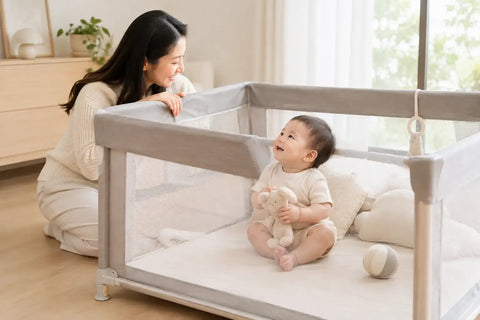
A playpen quickly becomes more than a contained play space. It may be where your baby practises tummy time, where a toddler settles with books while you prepare lunch, or where the family gathers on the floor at the end of the day. The best playpen accessories support those ordinary moments without making the space crowded, difficult to clean or harder to supervise.
For many families, the most useful choices are not necessarily the most decorative ones. Start with comfort underfoot, storage that keeps essentials close by, and a small rotation of engaging toys. Then choose only accessories that are designed to work with your specific playpen and suit the way your home is used.
How to choose the best playpen accessories
Before adding anything, consider the playpen’s dimensions, wall height, entry point and manufacturer guidance. An accessory that looks useful in isolation can become awkward if it reduces usable floor space, blocks an opening or cannot sit securely in place.
Think about the age and habits of the child using it, too. Babies often benefit from a clear, comfortable floor area with a few simple items nearby. Toddlers may make better use of a small book basket or activity rotation. In both cases, leaving room to move matters more than filling every corner.
It also helps to decide what role the playpen has in your home. Is it a main play zone in the living room, a temporary area during household tasks, or a flexible space that is packed away between uses? Your answer will guide whether a substantial padded mat, a compact storage solution or a travel-friendly accessory is the better investment.
A compatible floor mat or padded insert
A supportive, well-fitting floor surface is often the accessory parents notice most. It makes floor play more comfortable and gives the playpen a finished, inviting feel. For families with tiled or hard flooring, this can make a meaningful difference to everyday use.
Choose a mat or insert made for the dimensions and intended use of your playpen. Measure the internal floor area rather than relying on the external size, and check that corners lie flat without curling or lifting. A mat that shifts, bunches or leaves large gaps around the edge is unlikely to be practical.
Ease of care is equally valuable. Play spaces see milk spills, crumbs and frequent little messes, particularly as children grow. A wipeable surface or a removable, washable cover can reduce the work involved in keeping the area fresh. If you prefer a softer textile finish, consider whether it can be cleaned easily and dried promptly in Singapore’s humid weather.
Keep the floor setup simple. Accessories intended for play should not be assumed suitable for sleep, and it is sensible to follow the guidance supplied with both the playpen and the floor product.
Storage that keeps the room calm
The right storage can make a playpen feel easier to use because the items you reach for most are already nearby. A compact basket beside the playpen is often enough for books, soft toys, wipes and a spare change of clothes. It also makes tidying up quicker when visitors arrive or the evening routine begins.
If you choose a hanging organiser or caddy, check that it is specifically compatible with your playpen and does not affect access, stability or visibility. Many parents prefer storage placed outside the play area, where items remain within reach of an adult but are not taking up precious floor space.
A calm colour palette can help the playpen sit naturally within a modern living room or nursery. Neutral storage does not have to mean plain. Natural textures, soft colours and well-considered shapes can keep the room looking considered while allowing the child’s books and toys to bring personality.
A small, rotating toy selection
It is tempting to keep every favourite toy in one place. In practice, a smaller selection is easier for children to explore and easier for parents to reset. Try keeping a few age-appropriate toys in the playpen and rotating them every few days, rather than adding more whenever interest fades.
For younger babies, simple soft toys, cloth books and floor-level sensory items can offer variety without overwhelming the area. For toddlers, board books, stackable cups, simple building pieces or pretend-play items may suit quiet independent play. Always select items appropriate for your child’s age and current stage, and supervise play as needed.
Avoid accessories that create unnecessary clutter or encourage items to be tied, hung or balanced where they could interfere with the child’s space. A clear playpen gives you a better view and makes it easier to spot when an item needs to be removed, cleaned or put away.
Practical playpen accessories for daily routines
The most helpful accessories tend to solve a repeated household problem. If toys migrate across the living room, choose a dedicated basket. If the floor feels hard during long play sessions, prioritise a compatible padded surface. If the playpen moves between rooms, focus on lightweight items that can be lifted out in one go.
For homes where the playpen is part of the main living area, a large play mat beneath or within the setup may help define the family zone visually. Check that the mat does not create a raised edge where people walk, and that it remains flat. This is especially useful in compact homes, where one space often needs to work for play, rest and entertaining.
A washable blanket can be useful for supervised floor play outside the playpen, but it may not be the right choice inside if it slides, gathers or adds bulk. This is a good example of why an accessory should be chosen for its particular job rather than simply because it matches the room.
For families who travel locally or regularly visit grandparents, a compatible carry bag can be worthwhile if the playpen is designed to fold or move. Look for handles that feel comfortable to carry and enough space to pack the playpen as intended. A bag is less useful for a permanent home setup, so this is one area where your routine should lead the decision.
Cleaning tools worth keeping nearby
A playpen does not need a long list of add-ons, but a simple cleaning routine keeps it pleasant to use. Store a child-appropriate cleaning cloth and the care instructions for your mat or playpen where you can find them. Wipe small spills promptly, allow surfaces to dry properly, and wash removable covers according to their labels.
Check seams, fastenings and floor surfaces during regular cleaning. This is also a convenient time to remove damaged toys, tiny loose pieces or anything that no longer suits your child’s current play.
What to skip or think twice about
Not every attractive accessory adds value. Bulky cushions, oversized soft toys and too many activity items can make a playpen feel smaller and more difficult to maintain. They may also prevent a child from using the floor area freely.
Be cautious with products that are not made for your playpen model. Extensions, clips, shelves and hanging accessories may seem interchangeable, but fit and intended use matter. Where a manufacturer provides setup guidance or approved accessories, use that information as your starting point.
Decorative extras deserve the same thought. A playpen can look beautiful with a coordinated mat and a neatly chosen toy basket, but its first purpose is to be a practical space for supervised play. Prioritise a clear layout, comfortable flooring and easy access over a heavily styled look.
Creating a play space that grows with your family
The best setup is one you can adjust without replacing everything. Begin with a compatible play surface and a simple storage solution, then change the toy selection as your child’s interests develop. This keeps the space useful from one season to the next and limits unnecessary purchases.
RaaB Family’s approach to family spaces is rooted in this kind of everyday practicality: thoughtful pieces, easy-care choices and a calm look that works with real life. Whether your playpen sits in a nursery corner or at the heart of the living room, choose accessories that make the next ordinary moment simpler - a book before breakfast, a few minutes of play while dinner is prepared, or a quick tidy before the day ends.